HarrisonYoung wrote:

Hi Paul,

I'm Harrison Young. I live in Phoenix. We talked for a while at Oshkosh 2003
over greasy chicken dinners. I think you mentioned
that there was someone in Prescott who was just finishing up a
rotary-powered Lancair.
Another question. I talked to someone at Oshkosh who was selling
chain-drive reduction units for V6 conversions. He indicated
that they have quite a bit of flight history and seem very reliable.
 He quoted a chain life of 2000 hours, and a sprocket life
of 6000 hours. I doubt anyone has actually ever put 6000 hours on a
set of sprockets (or probably even 2000 hours on a chain),
but what do you think of chain drive for use with rotaries? I expect
they are probably a bit heavier, but my understanding is
that chain drives are more efficient. This is partly evidenced
by the fact that some of those guys are running their chain
drives as a separate oil sump (with no cooling). Any thoughts?

BTW, I didn't get to make it to your lecture on cooling system design.
I was really disappointed about that, but the weather was
turning rough and I decided to leave Oshkosh a little sooner than
originally planed. Maybe next year.

Thanks in advance,

Harrison Young
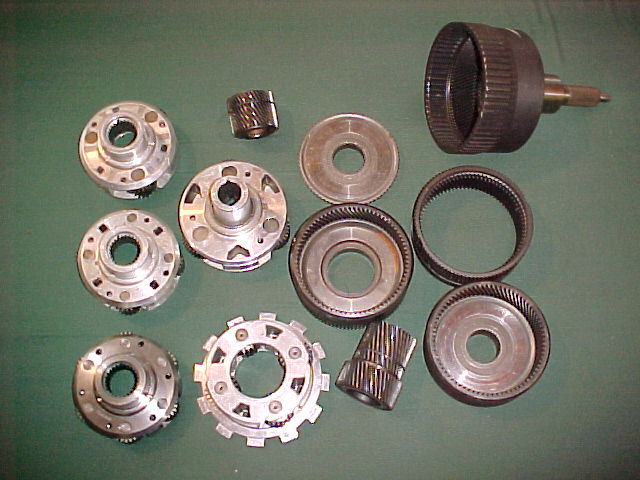
I think a planetary box would weigh half the weight of  a chain box.
The gears themselves, less the box and shafts, weigh only 8 pounds.
There are dozens of Ross and Tracy planetary drives flying with
accumulative hours in the tens of thousands.

I have never seen a chain drive PSRU and I go to a lot of air shows
and look at every airplane without an aircraft engine in it.
I have heard of them used on Geshwender Ford V8 conversions but those
are no longer around. I did not see one at OSH but I could have missed it.

I kind of doubt those life numbers as nobody has flown one for
2000 hours to my knowledge.

To put one on a rotary would be a whole new R&D program as all of our
history has been with the Ford planetary. Why bother? You will not find
a lower cost psru than the one Tracy Crook is selling. The gears themselves
cost less than $200.

Paul Lamar
HarrisonYoung wrote:
Yes, it was easy to miss the guy with the chain drive. He was in a corner formed by another larger booth. He had a very small
display (basically an engine and a card table with chains and sprockets on it). The chain-drive looked very home-made. It was big.
He was also working on his own production prop for use on these 350+hp engines.

My reasons for considering a chain drive are:

1: I believe they might be more reliable long term, but even if not, they can have a separate oil-sump because they don't require
cooling circulation. If anything does go wrong, the chips don't end up in the engine.

2: My understanding is that the chain drive is considerably more efficient (which probably makes up for the added weight).

3: The display at OSH showed me that you can make a chain drive with off the shelf components and a "simple" housing (which I can
make on my CNC mill).

Perhaps by the time I actually hang rotary power on an airplane, there will be enough history with Tracy's design to make me feel
comfortable with it. Right now it seems that a lot of people have run them for 100 or 300 hours or so. As you well know 10 people
with 300 hours does not equal one engine running 3000 hours. Considering the problems with the Ross boxes (as well as with Lycoming
units costing $10,000+), I still need convincing about gear drives. Most of my reason for considering the rotary is what I perceive
to be excellent reliability. Having a weak point such as a gear box takes much away from that.

>From what you've heard, what is the longest that any single example of Tracy's reduction unit has run trouble-free?

Harrison
I meant in flying airplanes. There is lots of stuff at OSH that never flies.
Tracy's drive is a minor modification on the Ross that has been around for about
25 years. Tracy has close to 1000 hours on his. Some Ross's have 2400 hours on them
in heavy duty gyro use. As I said before there are
tens of thousands of hours of experience with this drive. No way is a chain more efficient
than a planetary. Furthermore look into a chain drive rating when you are inputting over
6000 RPM. You will find the chain riding up over the small sprocket due to
centrifugal forces. As I recall that RPM is out of the recommended use envelope for chains.

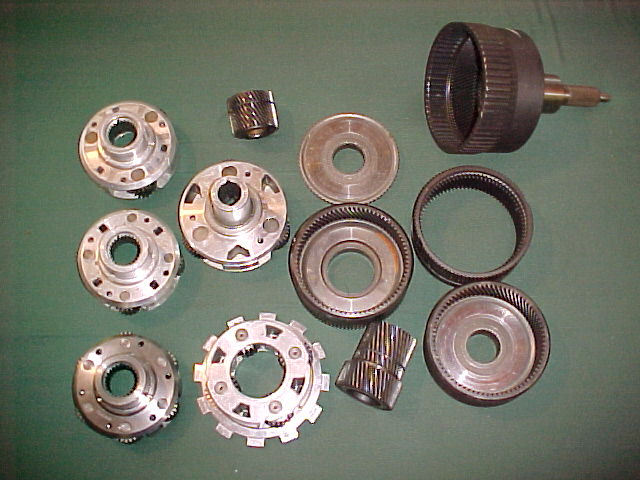
If you have an NC mill it is easy for you to build your own planetary.
There is a guy in Australia in the process of designing and casting
a bell housing that will work with this design.

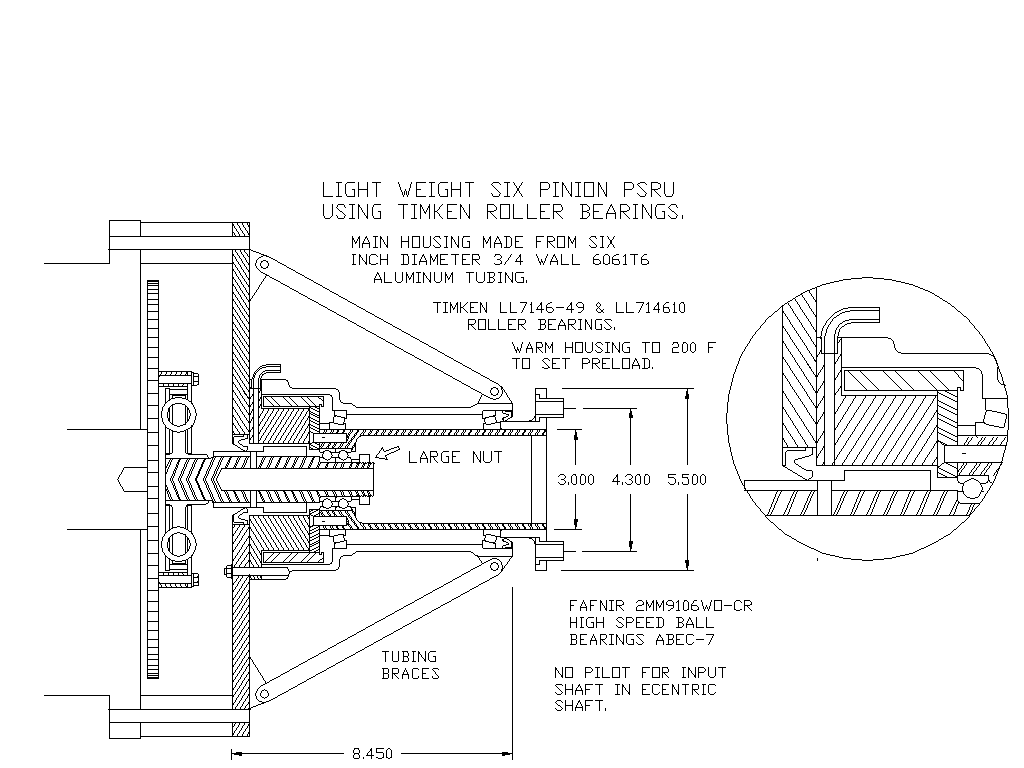
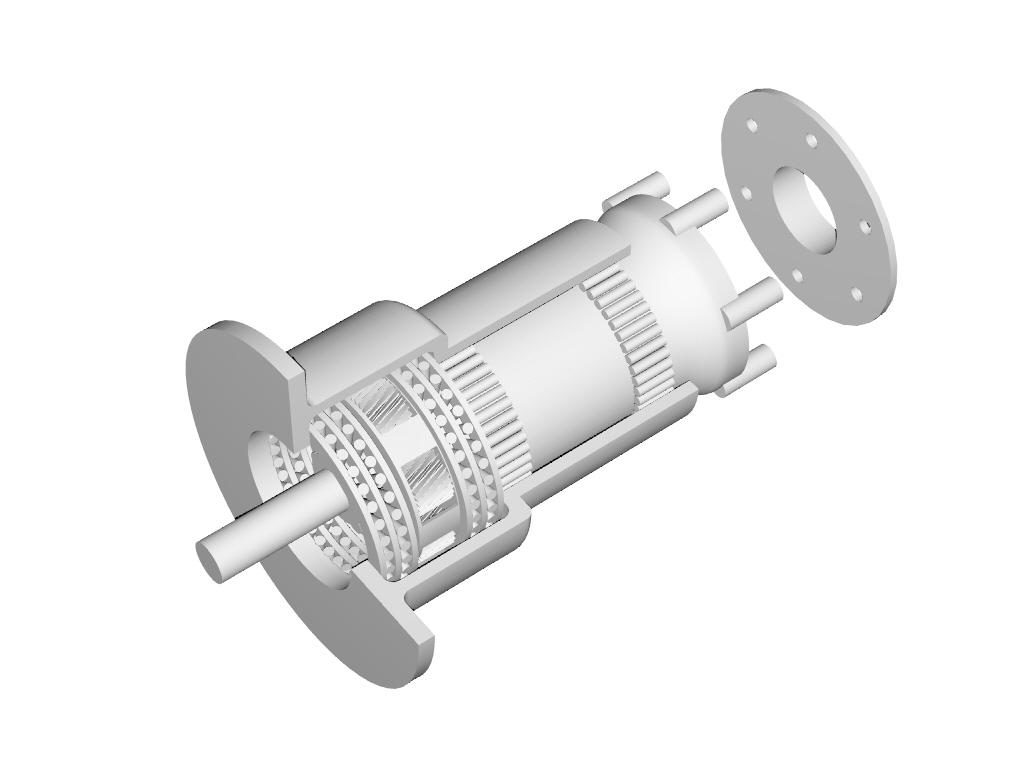
Here is a suggested design. When I get back on Monday we will discuss modifications
and ratio variations to this design.

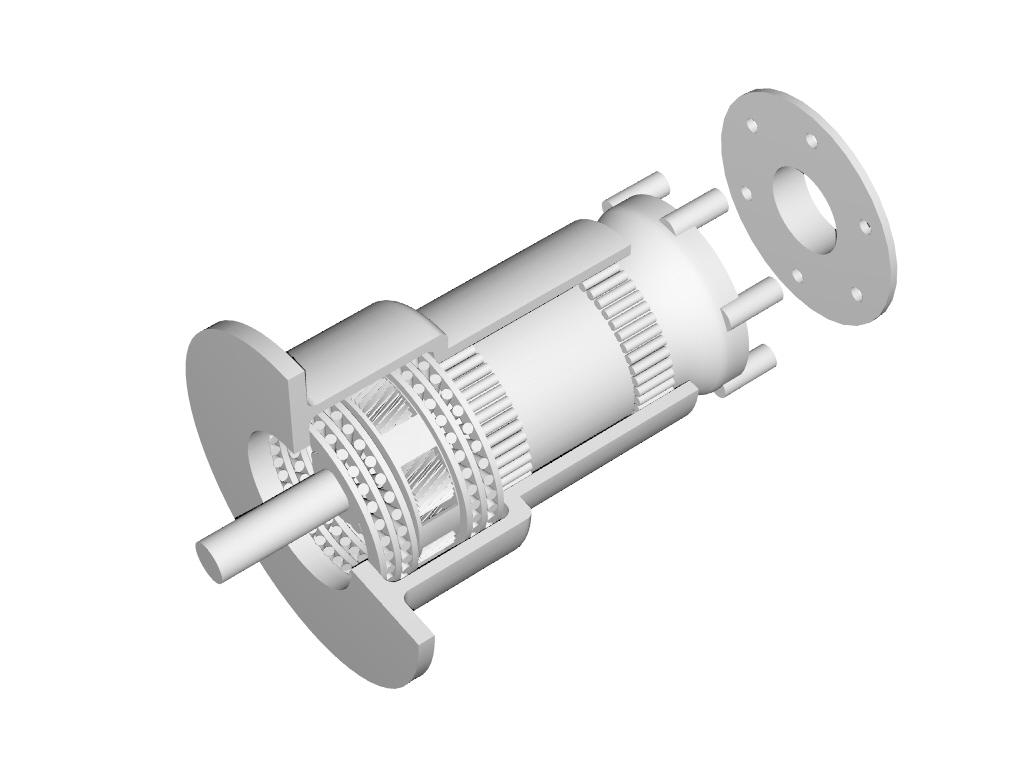
Here also is a rendering of an advanced version with a super light weight, large
diameter hollow output shaft and prop drive flange. You won't come close
to the low weight of this drive building it any other way.

Paul Lamar

The AirCraft Rotary Engine NewsLetter.  Powered by Linux.
ACRE NL web site. http://home.earthlink.net/~rotaryeng/
Copyright 1998-2003 All world wide rights reserved.