"Robinson, Chad" wrote:
Pardon me, I'm a lurker here, and I haven't found a CONSISTENT answer to this question by just listening or searching the archives. What does the current weight breakdown for a 13B turbo look like? I know the raw engine weight, but not for the turbo (can't seem to find that online), and for all the mods people have made since the Rotary Aviation FAQ that contains a weight breakdown was last updated.

Specifically:
  1. Are the two evaporator cores still accurate, and cooling effectively for everybody?
Some say yes and some say no :) IMHO they are marginal. One rad would be less plumbing.
2. How much do you expect the new bell housing to reduce the weight?
At this point in time we hope to make the overall weight including the motor
mount brackets the same while improving the cosmetics.
3. I've seen a variety of discussions on the intake, but it looks like nobody has settled on a "One True Way" here yet. Is that the case?
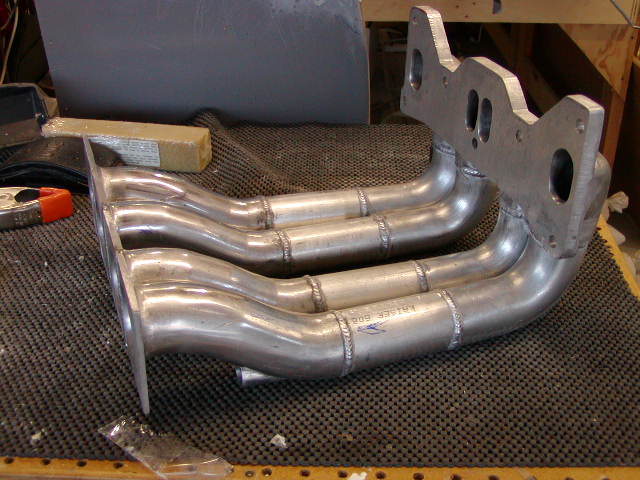
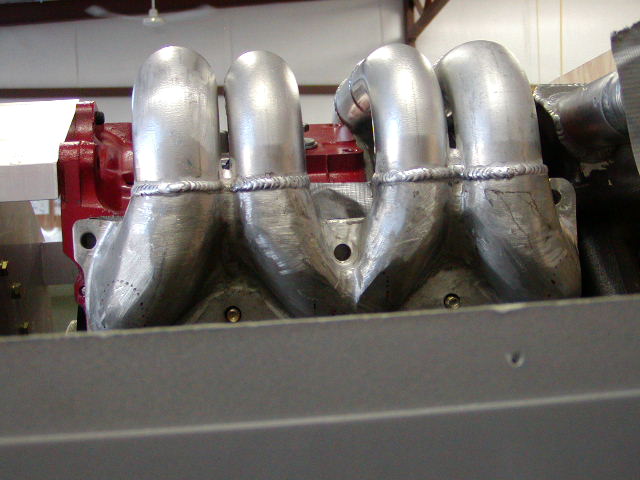
That is still not cast in concrete. Your side port HP can vary depending on street porting
and intake manifold design +/- 12 percent around 175 HP. Many people have bought
intake manifold castings so we should start getting more data in the near future.
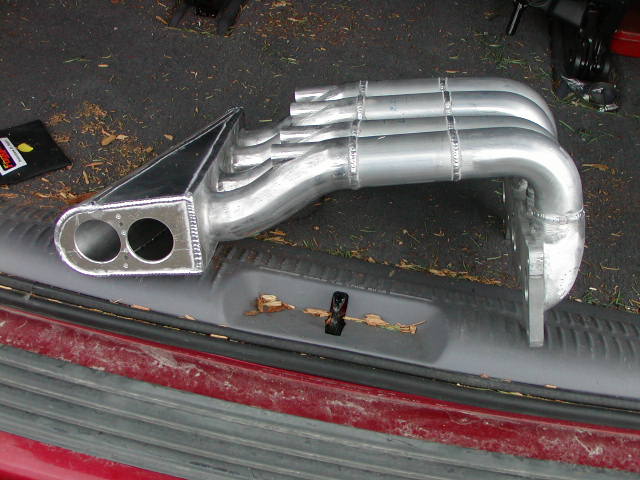
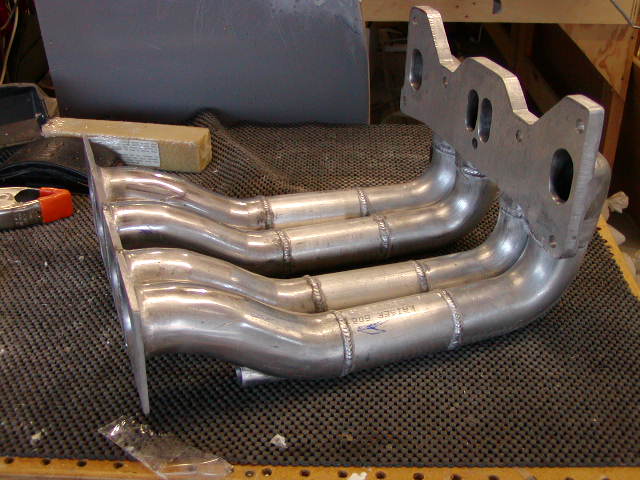
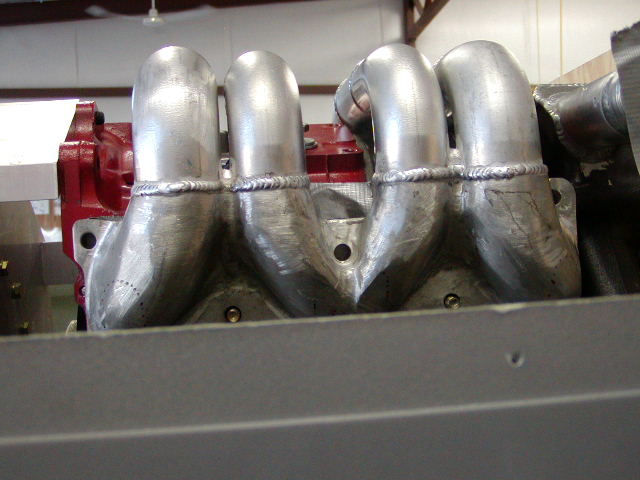
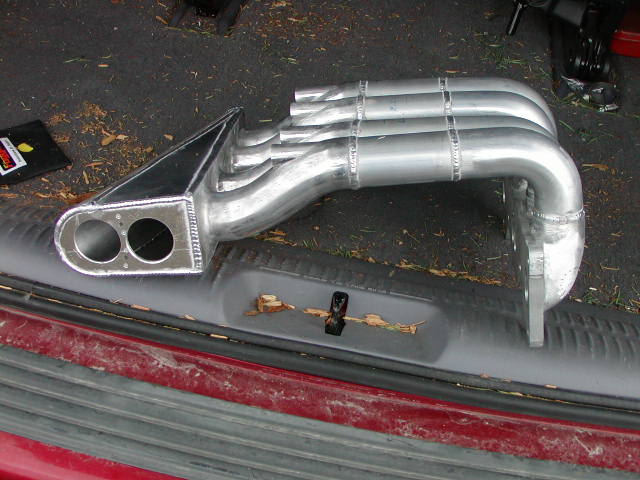
Here are some pictures of Bill Schertz's installation. We still have castings
left out of this batch. No tubing  bends are left however.

If you want to go peripheral porting you could get up to 240 HP at 6000 RPM.
Power Sport was claiming 215 HP from their peripheral port engine at 6000 and Allan Tolle
who has hundreds of hours behind a peripheral port rotary tells me it
is entirely satisfactory in every way. He went 238 MPH in the Sun 100 race
and had the fastest all time record in the time to climb to 3000 feet
years ago. (using NOX in the time to climb event.)

Also a 2.85 gear box over a 2.17 gear box will add as much as 20% to you HP numbers
depending on how well the engine is ported and by running the engine up to 8000 RPM for
takeoff and climb. Ian reports around 200 HP with his side port & 2.85 gear box and he must
have close to 300 hours so far. Ian, how many hours now?
So is 345 lbs. still a good number to work from? Should it be higher? Or lower?

Thanks!
Chad
I think that is a bit high. If you design the motor mount correctly
and pay attention to the weight of a lot of other details a firewall
forward number could be much closer to 300 pounds.

Paul Lamar

The AirCraft Rotary Engine NewsLetter.  Powered by Linux.
ACRE NL web site. http://home.earthlink.net/~rotaryeng/
Copyright 1998-2003 All world wide rights reserved.