> > > > Harrison,
 >>  >
 >>  > Here are some more pictures and illustrations for the light weight
 >>  > hollow prop shaft that nobody has tried yet. The idea here is to
 >>  > use the pinion shafts to connect the prop shaft directly to the
 >>  > rotating planet carrier. This minimize the load path and eliminates
 >>  > the cost and weight of splines. The same idea is used on the prop
 >>  > end. The prop drive lugs are welded directly to the flared hollow prop
 >>  > shaft. These are threaded internally for the prop clamping bolts.
 >>  > No conventional prop shaft steel flange is used. This in theory cuts
 >>  > the weight greatly. The prop flange (spacer, back up washer) shown
 >>  > can be light weight aluminum as there is no load on it.
 >>  >
 >>  > Since you have an NC mill and you are willing to build your own PSRU
 >>  > you are the ideal person to try this idea.
 >>  >
 >>  > I'll send some pictures of the planet gear set shortly so you can get
 >>  > a feel for how small and light weight it really is.
 >
 >
 >>  Paul,
 >>  I've been thinking about the easiest way to manufacture this
PSRU shaft and
 >>  came up with the idea, which may be the easiest way, that is
to Laser cut it
 >>  out of flat Chrome Molly (or similar material) roll it, then
weld it up -
 >>  then x-ray it.
 >>
 >>  The notches for the hollow internal threaded shafts could be done at the
 >>  time of cut-out.
 >>
 >>  I think you suggested 3/16" steel previously, naturally the thinner the
 >>  material the easier it would be to roll. perhaps it could be
thinner - may
 >>  be an 1/8".
 >>
 >>  Any comments ?
 >>  George (down under)
 >
 >1/8 inch would probably work. The FEA on the shaft did not show high
 >stress levels.
 >
 >I guess that will work but I was thinking of hogging it out of billet
 >or thick wall 4130 tubing on a big NC lathe. It must be hardened and ground
 >as the needle bearings run directly on the prop shaft.
 >Ignore the deflected pinion shafts on the input end. That was a mis-
 >understanding on the part Dan Ruggirello's of how it worked when he did
 >the first FEA's.
 >
 >Paul Lamar
    What material would you use on the pilot shaft, I find it flat
 amazing that the spline can handle that punishment without any lube.

   Ken Welter
I am confused Ken. What do you mean by the pilot shaft? Do you mean
prop shaft? I have not
shown a spline. A spline is not really necessary anywhere in this design.
That is why the pinion shafts are an integral part of the prop shaft.
The needle bearings are lubed by engine oil fed in at low pressure
the same way
the Ross is lubed with minor improvements.

Paul Lamar
   The splined shaft that connects to the torsional damper, also what
temper do you think it should have ?

  Ken
A spline is used by Tracy in that position but it is not necessary.
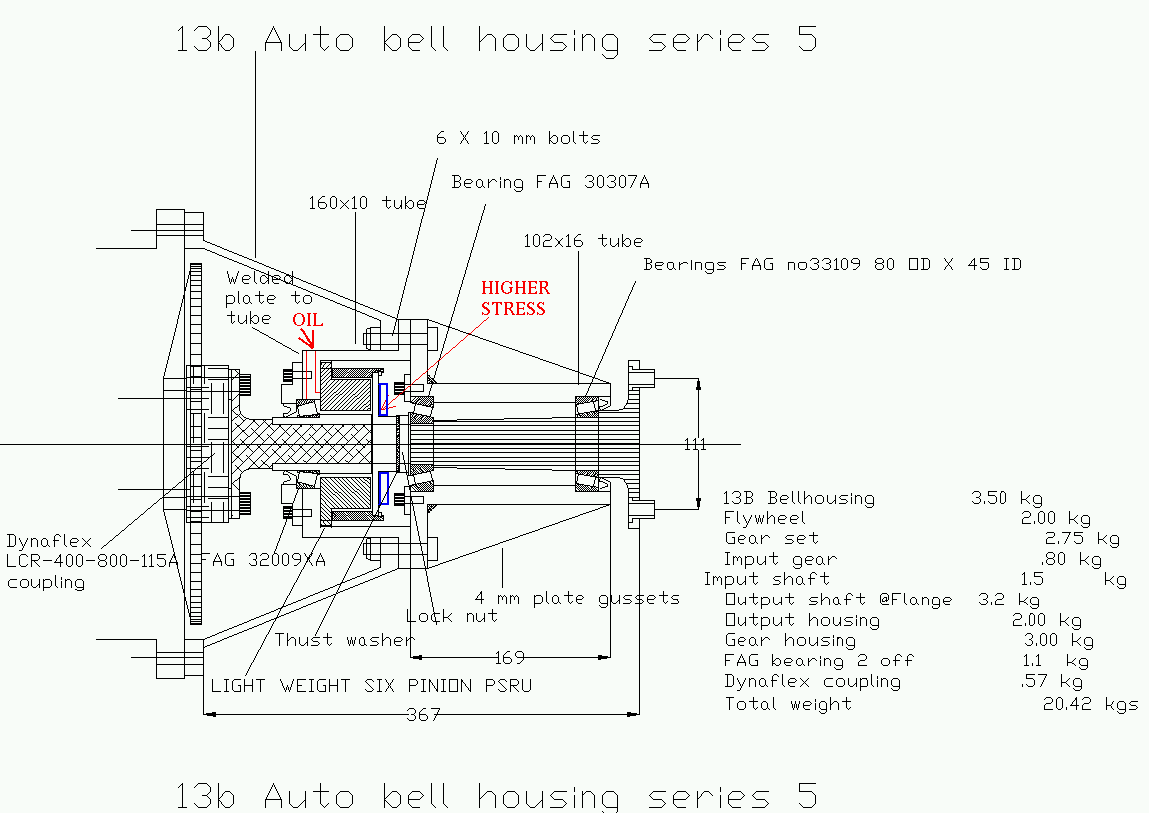
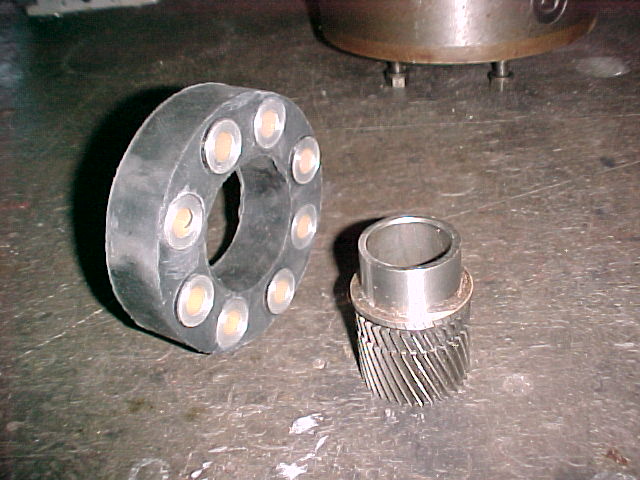
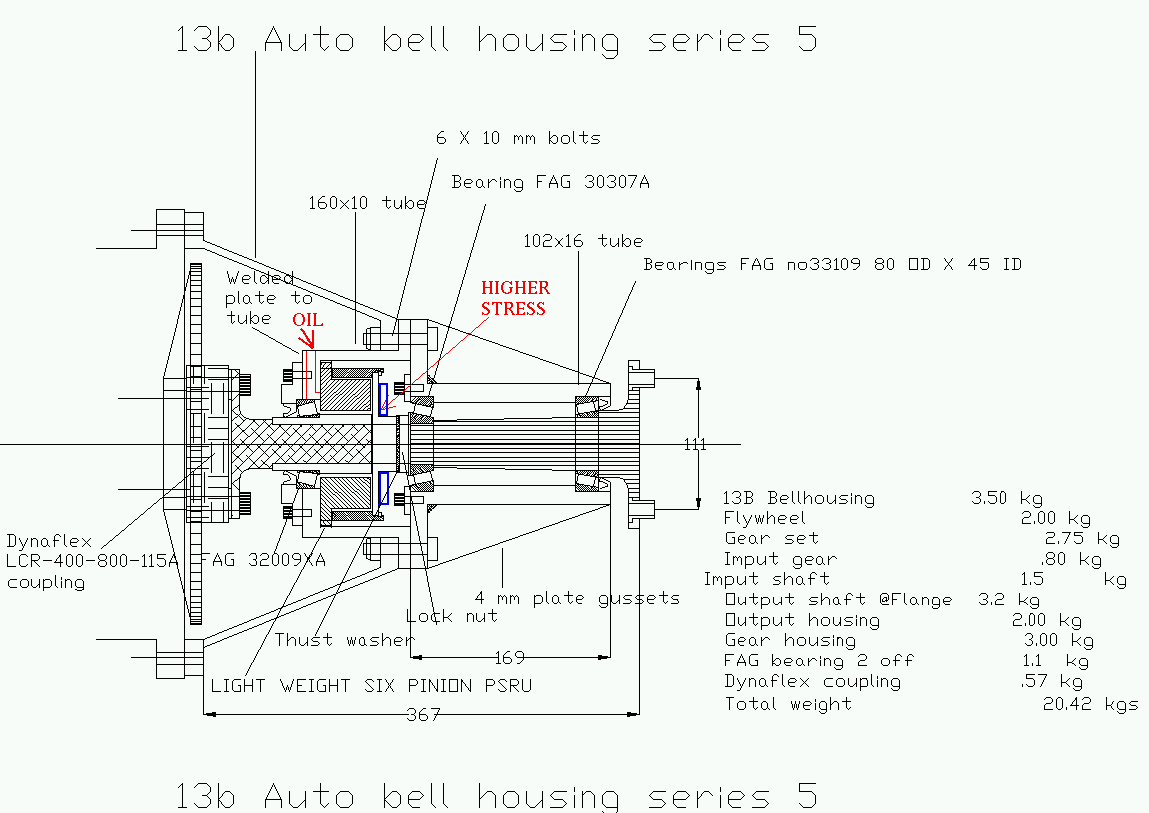
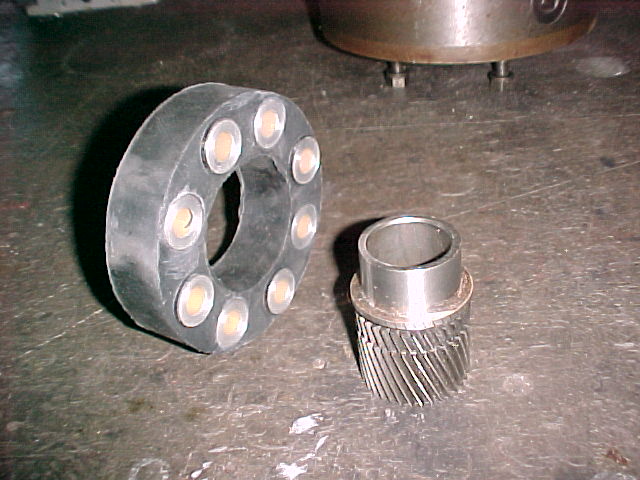
Here is a gif &  picture of Don Dunbar's set up.

I think the minimum called out by Torrington for needle bearings is Rc 58.

Paul Lamar

The AirCraft Rotary Engine NewsLetter.  Powered by Linux.
ACRE NL web site. http://home.earthlink.net/~rotaryeng/
Copyright 1998-2003 All world wide rights reserved.