Scott Gettings wrote:
Gentlemen,

I'm extremely interested in using a 13B in my Glass Goose, which is a
composite, pusher biplane amphibian.
<<<<<< MAJOR SNIP>>>>>>>>>>>>>>
One mount aft is all you need. Forward in the case of the Goose.

We got a guy in Florida almost ready to fly a 13B Glass Goose.
Harold but I can't remember his last name. Every year we get invited over
to his house for dinner but I keep forgetting to take my camera.

Paul Lamar
Paul, you were at Harold & Margaret Whorton's home.
Scott, until recently I mounted my 13B with Ross redrive and no prop
extension similar to the seahawk plans. This put the CG back too far and
ballast was needed in the nose. Now I have moved the engine forward, a 4
point mounting system using a bar picking up the oil pan bolts going into
the aft end housing and a 12A front cover with an aluminum angle bolted to
it. Rino Lacombe in Canada is also building a Goose with a turbo 13B.
Bill Hyde (still without a digital camera)
Thanks to all for the input so far.  I've spoken with Rino, who has done a lot
of beautiful work on his Goose / 13B.  Paul's implementation of the motor plate
mounts is very impressive, but I'm not sure I can make this work in the Goose.

Bill, does the 12A front cover have a better arrangement for bolting or welding
on a front mount than a standard 13B cover?  Are they otherwise interchangeable?
 Some builders have welded on an aluminum plate to handle Barry mount(s) at the
front.  Did you make another bridge within the pylon to handle the rear mount?
Like a Scherz (sp) beam?  A sketch or more details would be helpful if possible.

My concern here is that as you go farther aft on the Goose pylon, you have less
and less support.  The pylon walls are not that strong.  They can be reinforced,
but the load still has to go somewhere.  The last 18" or so hangs out aft of the
lower wing shear web.  This rear-most area should pick up some strength as the
tail structures are bonded, but it doesn't look like it would handle 1800 lbs.

Looking at Paul's motor mount dissertation on ACRE, it appears that with a low
front mount (as opposed to having a vertical firewall with a higher mounting
point), most or all of the vertical loads would be carried by any mounts near
the rear of the pylon.  This would not be good, unless a composite brige can be
built to transfer all the loads both forward AND down (to the lower wing shear
web).  Or maybe this could be done with a tubular mount?

Width is another issue going aft.  We only have about 18" pylon width to work
with at the level of the motor drive plate if this structure/location is used
for the mounts.  This is getting pretty narrow.

So the question is, what is the best approach to getting the rear engine mounts
as far aft as possible (such as all the way to the motor plate), yet still carry
the necessary loads?

Thanks again for comments and participation.

Scott
Gettings
As you move the main mounts further forward the load on the main mounts gets
higher and higher. The reason this is so is the front mount is now called
upon to hold the front of the engine down. In effect you are cantilevering
the engine off the main mounts. The loads on the main mounts are now
the sum of the engine weight plus the tension loads in the front mounts.

Perhaps the approach you should take in the Glass Goose is use one
large rear mount as far back as you can get it and two widely separated
front mounts using the 12A front cover to react the prop torque.
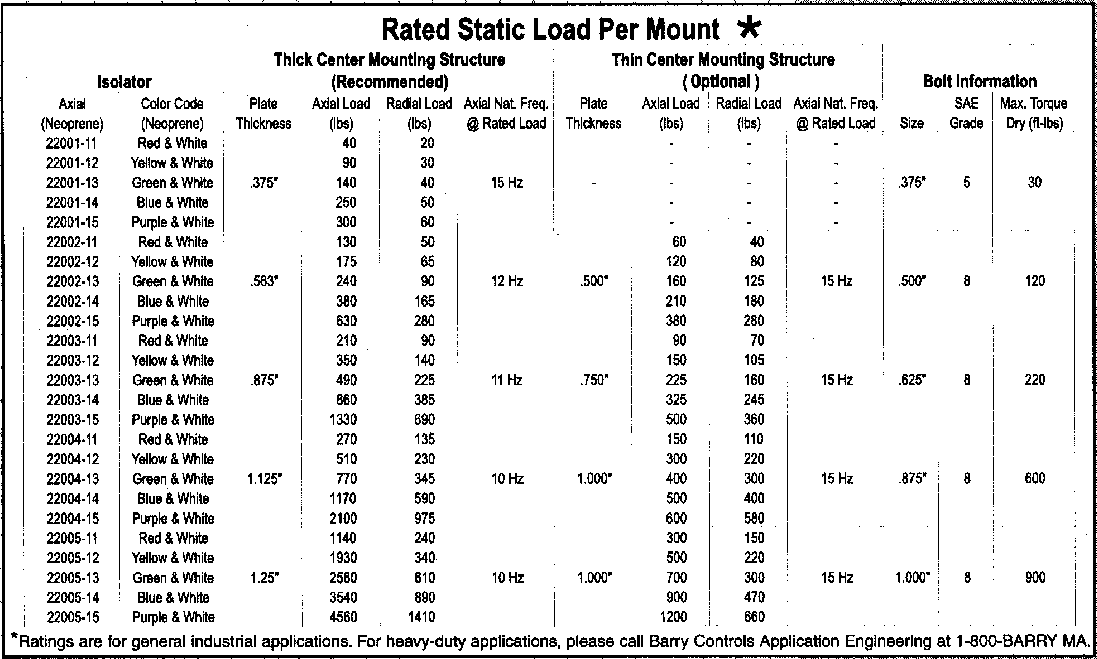
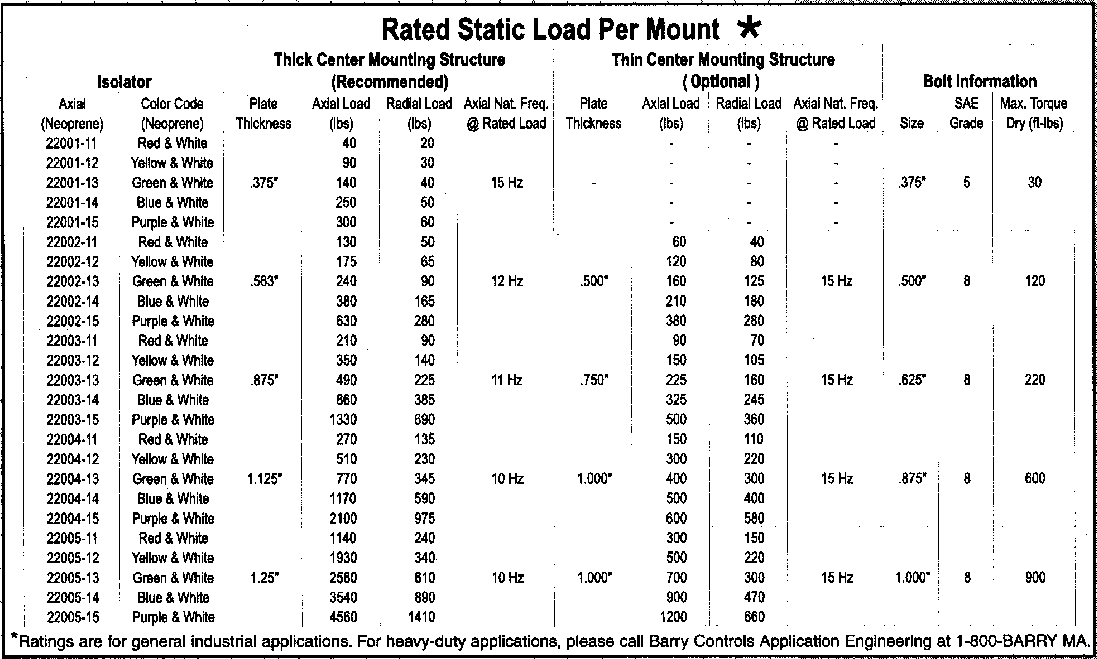
The single rear mount will then accept only 90% of the engine weight.
Beef up the structure a bit if the skin is thin in that area.

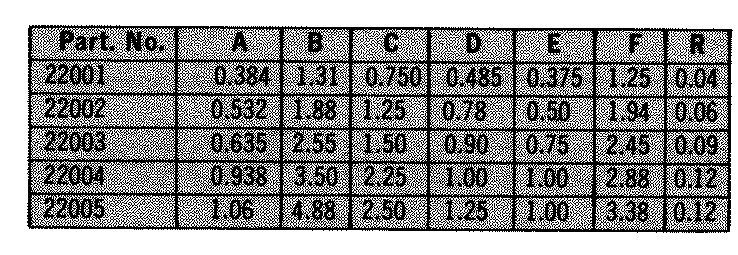
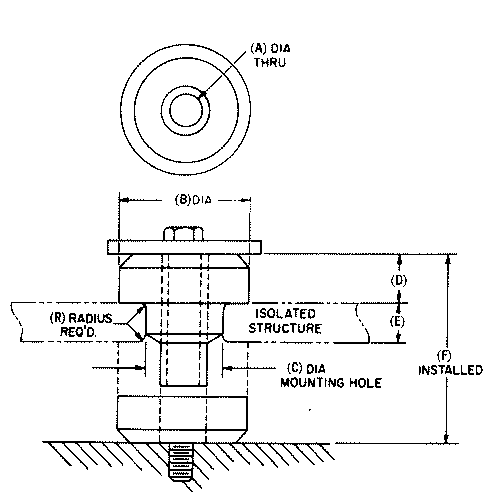
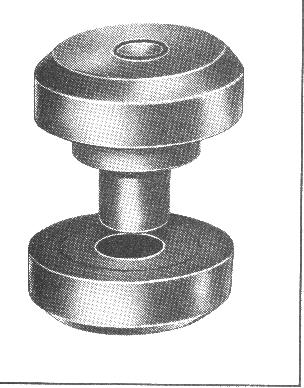
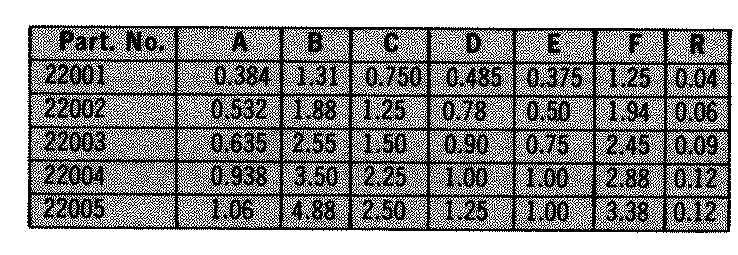
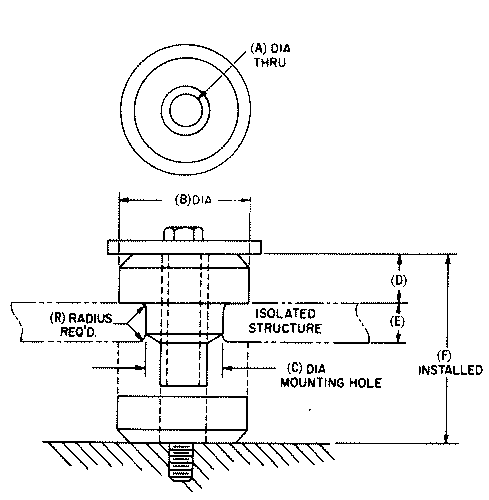
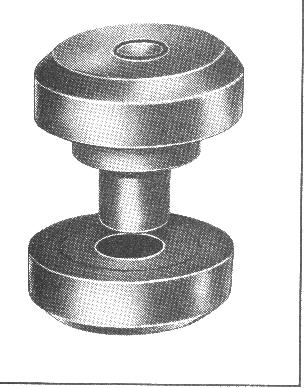
In that case you cpuld  use a Barry Controls 2003-12 for the rear mount.

Paul Lamar

The AirCraft Rotary Engine NewsLetter.  Powered by Linux.
ACRE NL web site. http://home.earthlink.net/~rotaryeng/
Copyright 1998-2003 All world wide rights reserved.