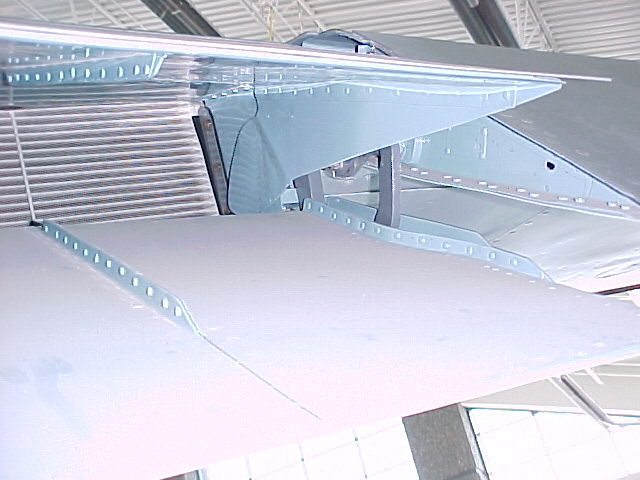
Actually the WW II P40 had un ducted rads as does a very modern  Extra 400.
Neither air plane was/is slow. I think the P39 is in that category
as well. So too the P38
Paul, It is interesting that the early versions of the P-40 had a ducted
radiator and was 10-20 mph faster.
Do you have a picture of that airplane. I have never seen one. News to me.
Many prototype air craft were super slick but when they finally go into production
and after cooling tests are completed they pick up a lot of warts.
The classic
"sharkmouth" was chosen by the military for ease of service. The fact is
that we can't compare to the flightspeeds of the mil
fighters. You have mentioned this frequently. The other item that should
be mentioned is the incredible amount of power these
planes used to acheve those speeds.
My point is the rad ducting widely varied among all these air planes with
similar power and they all were within 50 MPH of each other other more or less.
Top speed is proportional to the cube root of power so it takes one
huge bunch of additional power to go faster. Drag is the main determination
of top speed. The fact that they were fast and powerful had more to
do with the thickness of the rads used and consequently the high dynamic
pressures used to force air through the cores.
I think that the best solution for our purposes might be a
combination of  the simple and the ducted.
I disagree. The simple solution ultimately will be as low drag for
all practical purposes as the ducted solution.
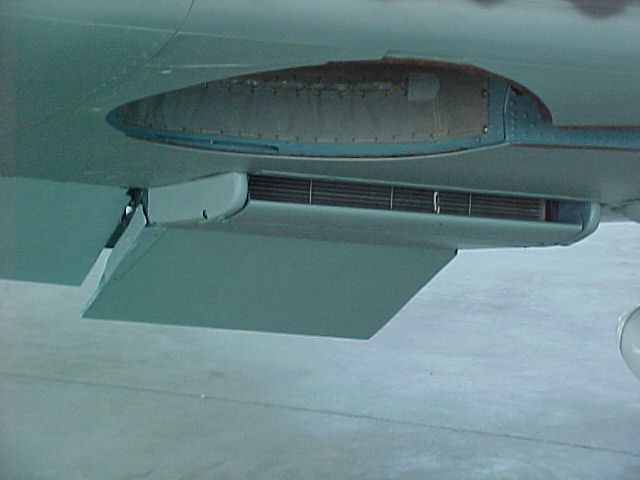
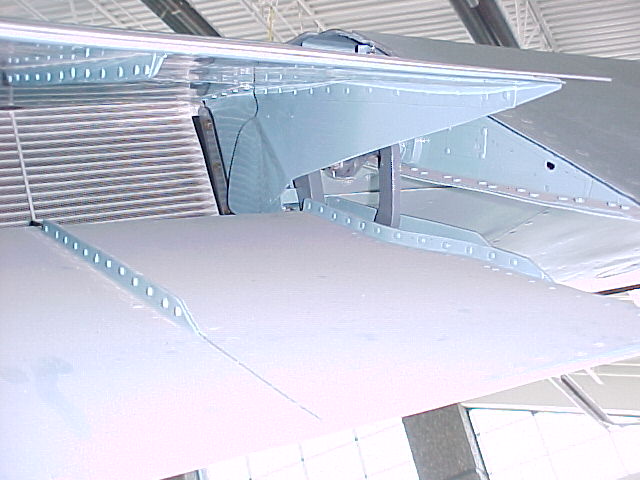
The radiator solution used
on the Me-109 using a radiator partly burried in the wing, and using
a low speed flap. It was much less draggy than the
Spitfire/hurricane system and cooled 1000+ hp in the tunisian desert.
The ducts were set in the high pressure area near the rear of the wing ,
and the outer corners were aligned to the OD of the
propeller for good performance in climb and ground taxi. Bill Jepson
The Spitfire rad was also partially buried in the wing. The pictures I have
show them to be equivalent in terms of drag. As I recall the Spitfire
had a slight advantage in speed. The Me109 wing  scoop was wider than the Spitfire
with about the same frontal area. Neither one had enough length ahead of
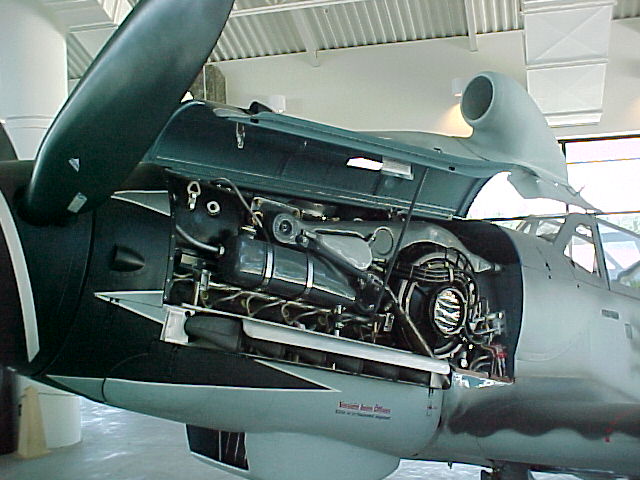
the rad for a proper  K&M duct. The Me109 also had a fuselage scoop beneath
the cowl. Probably an oil cooler or intercooler. The Me109 scored in
maximum cooling ability by using a huge split flap to suck the air
out of the rad. Did not help the drag :)

Actually the Me109 wing scoop looks something like what I am proposing :)

Do you have a copy of Hoerners Fluid Dynamic Drag Bill? Lots of good
stuff in there on radiator ducting. The K&M Aerodynamics of Propulsion
book focuses on it a bit more. Kays & London Compact Heat Exchangers
is all about it.

I'll tell you what... you build what you think is a perfect scoop, duct
and off the shelf car rad and I will mount it on top of my van and test is
using ball bearing file cabinet, drawer slides for drag and air flow.

Paul Lamar

The AirCraft Rotary Engine NewsLetter.  Powered by Linux.
ACRE NL web site. http://home.earthlink.net/~rotaryeng/
Copyright 1998-2003 All world wide rights reserved.