More of this electric pump foolishness? Oil pressure requires even more
 > power than the water pump!  Peterson makes all kinds of
 > dry sump systems, tanks, filters etc. WWW.PETERSONfluidsys.com
 > They are well known in the automotive world. They have several
 > pumps set-up for toothbelt drive. I'm considering one for the 20B.
 > good units. Bill Jepson
If I have to buy another dry sump pump, pick another brand. Unless you can
find a used old round style Peterson. The newer rectangular black pump has a
number of problems when you get close to 100 PSI. I restacked a Moroso pump to
get a big pressure section to us as a spare for my (just rebuilt again)
Peterson. I recheck the through bolts after each session. That would make for a long
preflight. If you only need 75 or 80 PSI, the Peterson might be OK, but it is a
"RACING" pump so it came on our store bought race engine. It is good for
95-100 PSI with some die grinder work in the intake side to get the flow high
enough. But not for very long. And they are not cheap. A little wear and pressure
starts to drop. With stock bearing clearances the Peterson or any other brand
would get 80 to 90 PSI, and wear on the pump would be reduced.

Maximum pressure on the dyno is 109.8 PSI at 8,300 RPM. The pressure goes
down with higher revs. The suction side supply may be too restrictive, and the
centrifugal load is fighting the pump a bit while at the same time centrifugal
force is assisting the rotor cooling spray nozzles in the crank, and adding to
flow into the rotor bearings. (I am down to 135 Webber main jets in my spray
nozzles) So extra oil is going to the inside of the rotors and that consumes
extra volume, and the actual oil pressure inside the crank is going down. I was
told by Paul Trapp that oil pressure inside the crank can be below 15 PSI at
high revs. They rigged up a slip ring fitting for the front of a crank and
measured oil pressure right out the centerline to eliminate the centrifugal
component.  Racing Beats recombination of 115 PSI for racing engines makes sense to
me now.

Lynn E. Hanover
Lynn, part of the problem is the way Mazda and most all other engines for that
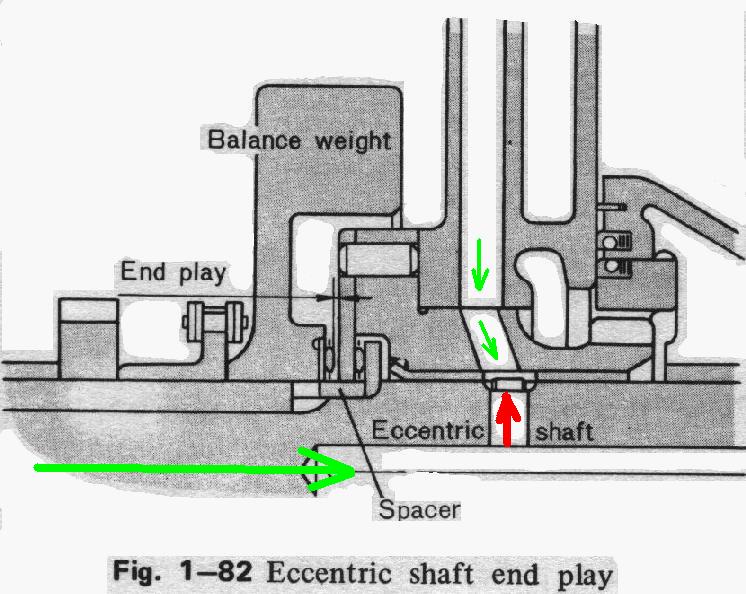
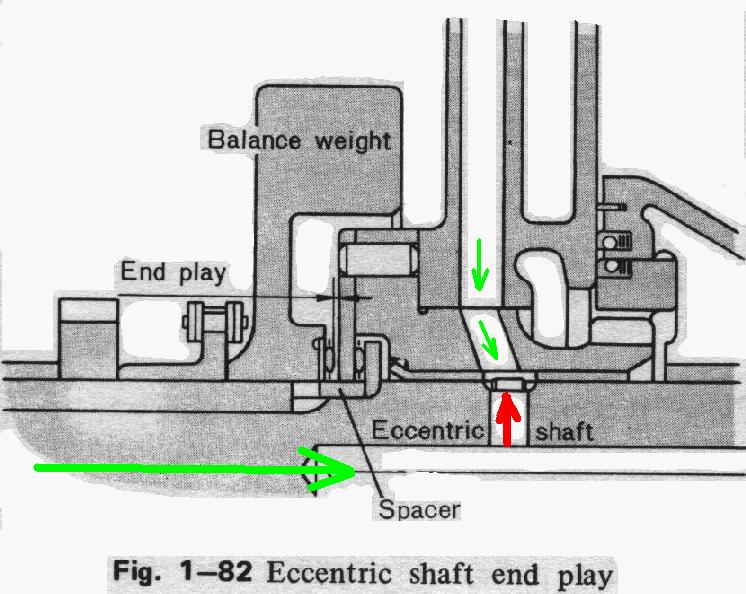
matter feed high pressure oil to the e-shaft/crank. At high RPM the hole
in the e-shaft tends to throw oil out of the e-shaft due to centrifugal
force.  What you need is an axial feed where the high pressure oil comes
into the end of the e-shaft. Porsche has been doing this for the last few years.

We don't need it as we don't run 11,000 RPM.

Paul Lamar

The AirCraft Rotary Engine NewsLetter.  Powered by Linux.
ACRE NL web site. http://home.earthlink.net/~rotaryeng/
Copyright 1998-2003 All world wide rights reserved.