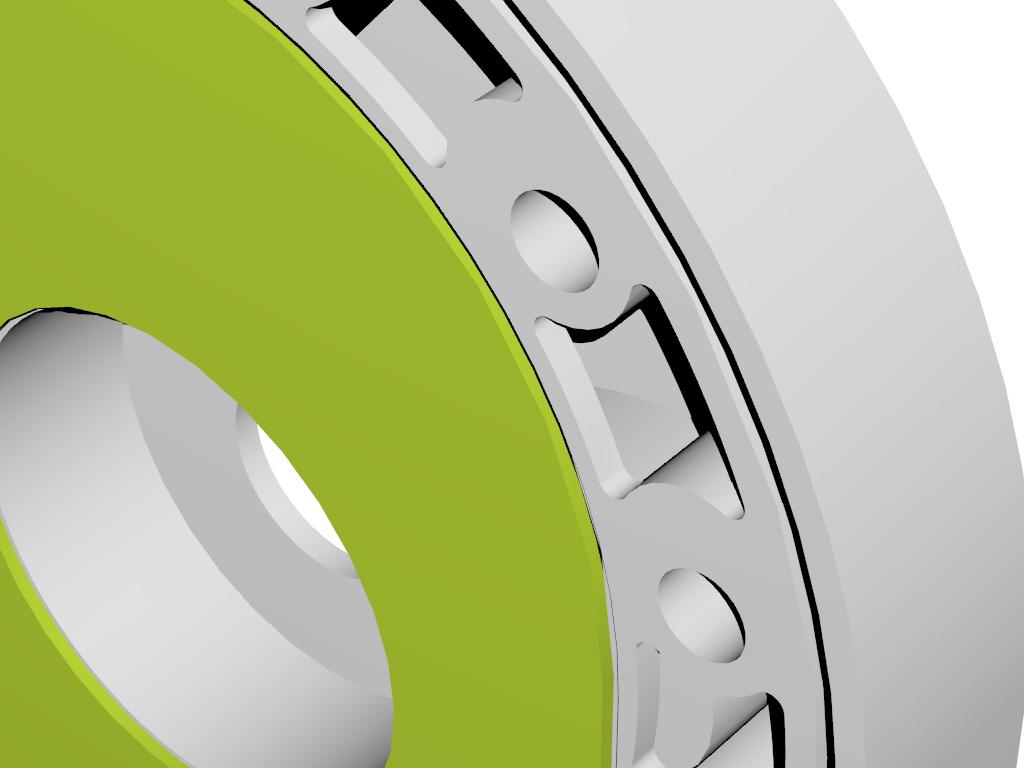
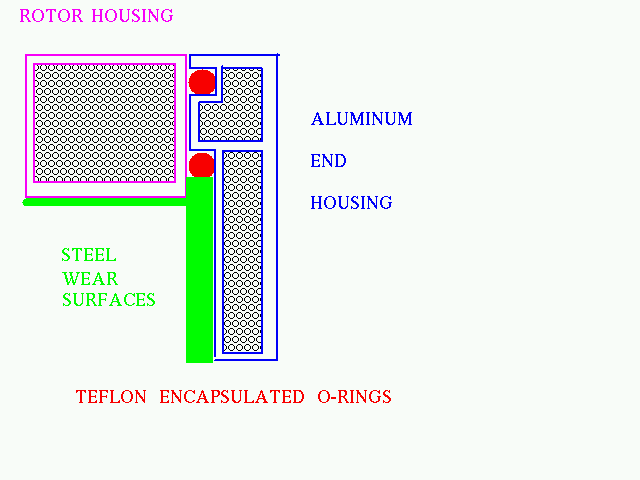
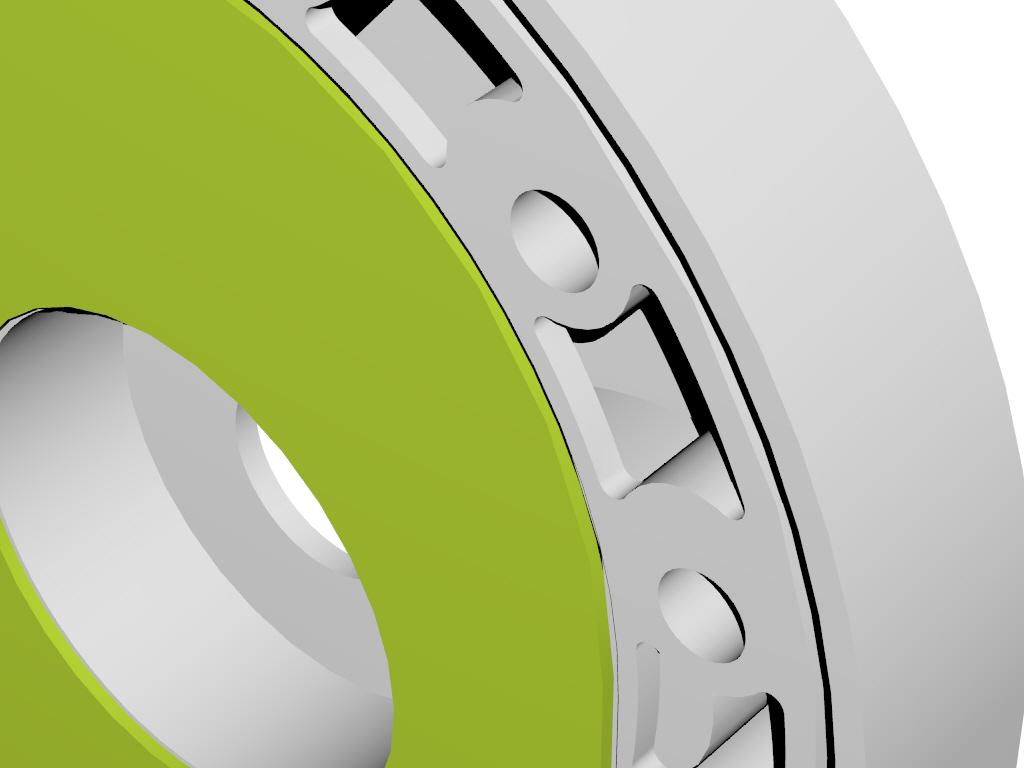
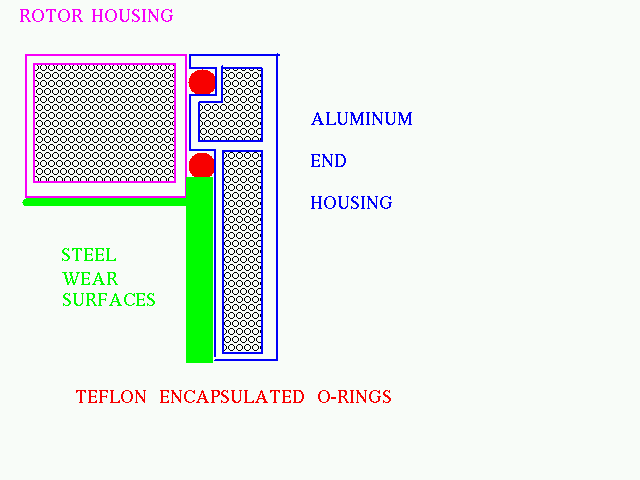
Here is my latest design on the two piece end housing.
As usual I have made one part do two jobs. The standard O-ring
now seals the steel part with the light weight aluminum part.

Here too is the original two piece end housing idea.

I am getting to the point where I need to do a pattern
for casting  the end housing in aluminum.

Perhaps I can buy the Al casting from Racing Beat without
the wear coating, mill it out with the NC mill and put in
the hardened sheet steel wear surface.

Paul Lamar
Paul,
I wouldn't pay that sort of money to chop it up - better still to make a
Prototype in a two piece aluminium and insert your steel face into a milled
section.
This way you can have reinforced areas for any faceplate  mounting bolts
added-in during the milling process of the water jacket area.
This was along the lines I was considering and you can add in any sealing
grooves at the same time.
I'm still unsure how difficult the sealing will be in a two piece design,
but it seems to being overcome in your local single rotor design being done
by Richard.
George (down under)
The largest cost in an aluminum end housing is the hard wear coating and
subsequent required diamond grinding of the surface. Hopefully Jim will cut the
$1200 cost for each cast aluminum end housing if he does not have to
do that.

Sealing of the first design open water jacket section to the steel wear
surface was always problematic. Richard Sohn seems to have it working short
term.

The new design makes coolant sealing a non issue as the cast aluminum water
jacket is sealed as it comes out of the mold. In this design the inner
TES O ring does double duty. It seals the coolant from the combustion chamber
and from the interface between the steel wear surface and the aluminum
surface of the  water jacket. No other sealing is required.

This designed is best suited to a peripheral port engine. Both
exhaust and intake.

BTW note that the rotor housing locks the steel sheet wear surface
against the aluminum end housing.

I guess this idea did not occur to me prior to the NC mill as it
would be difficult to machine without one :)

BTW I just read in the new Yamaguchi  RX8 book that Mazda built an all
aluminum two rotor back in 1987 that weighed 66 pounds less than the
13B. That would put the bare engine weight at about 124 pounds.
Add the 30 pound weight of a PSRU and we are looking at a 240 HP aircraft
engine of around 155 pounds less accessories.

We have just begun to scratch the amazing potential of the rotary engine
for aircraft use.

Paul


Paul Lamar

The AirCraft Rotary Engine NewsLetter.  Powered by Linux.
ACRE NL web site. http://home.earthlink.net/~rotaryeng/
Copyright 1998-2003 All world wide rights reserved.