The 48mm that I am running now is a lot better on the low end then
 > the 51mm I was running and I think that the 45 may be a lot better on
 > the low end and may be a better choice for the street.
 >
 >   To get proper fuel flow I throw out the screen on top out the needle
 > and seat and I drill out all the passages from the fuel line and the
 > needle and seat, I also have two fuel pumps, one pump is set at 7 PSI
 > and the other is set at 3 PSI, I takeoff with both pumps on then shut
 > off the 7 PSI pump for cruise.
 >
 >   I have tried the gross jet but had problems with it sticking in the
 > closed position, luckily it was on the ground while running down the
 > taxi way.
 >   The gross valve is a ball that seats in the seat instead of a needle
 > and the size of hole in the seat is very close to the size of the
 > ball and the ball got stuck in the seating hole.
 >
 >    Ken Welter
A good recap of your installation. Years ago at West Palm Beach Florida, I
was having trouble with a bad high speed miss in our first RX-7 tube frame.
Another RX-7 racer connected a banjo and bolt to the float bowl drain. The top of
the banjo screwed into a stand pipe demarkated in CCs. It would repeat the
fuel level in the bowl, and was a Webber tool for setting the float level. When
the engine was running you could jazz it up to maybe 5,000 RPM for just a
second, and the fuel level would drop to half full. Then he held the RPM at 5,000
and jazzed it to 8,000 RPM. The engine sounded fine, but the float bowl was
empty. The screen you removed was then the main jet, and it was too small. This
was a 48 IDF with 44MM chokes.
He loaned us a 3.5 Webber needle seat and told me to buy a Gross Jet needle
seat when I could. We took out the screen. We were stuck with pumps that only
had 5 PSI, so we were still running the engine way too lean, but it ran very
well compared to what it had been doing. I have learned that we are using the
Webber above the highest flow rates it was designed for. Filling in the bottom
of the range is done only for entertainment. This is not confusing an RPM range
with a throttle setting, or part throttle operation. One trick is to drill a
hole through the butterfly. This lets you close the throttle to almost dead
shut and still have some RPM with the edge of the butterfly still on top of the
transition holes that assist coming off idle. When the big ports or a bridge
ported engine gets a little snotty about idle, the first thing that happens is
that the idle stop screw gets turned in a turn, and everything smoothes out.
But the edge of the butterfly is passed the transition holes and if you have
not gone bigger on the idle jet size, just off idle will stumble a bit. Not a
big deal in a racer, but a bummer in a street car. If you are using premixed oil
only, keep in mind that on long closed throttle descents, there will be very
little oil for the apex seals.
Keep the exhaust well away from anything flammable. With big idle jets there
will be a sheet of flame from the exhaust as the engine spools down at high
vacuum. If you time the throttle application just right you can get a great bang
from the exhaust just at throttle up. It is not a problem, but might scare
the crap out of anyone not used to a rotary. There is enough adjustment and with
a few tricks as you have outlined, to make a Webber run rich, perfect or lean
for any CFM situation. When pressed above the rated CFM, the stock Webber
will tend to run leaner, but even this can be overcome. But as usual, I run on.

Lynn E. Hanover
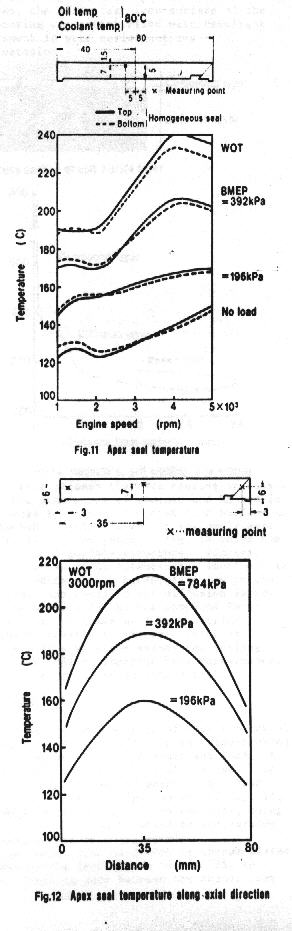
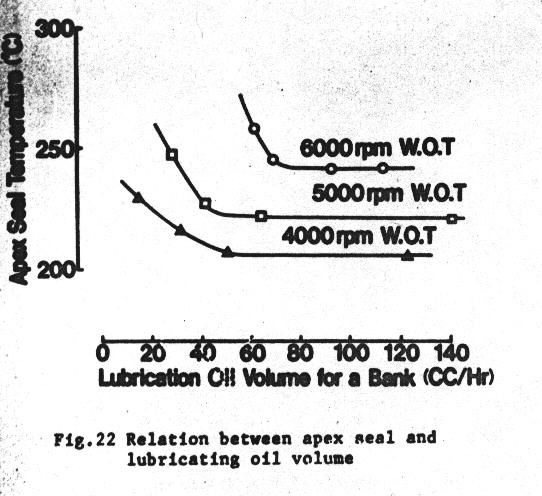
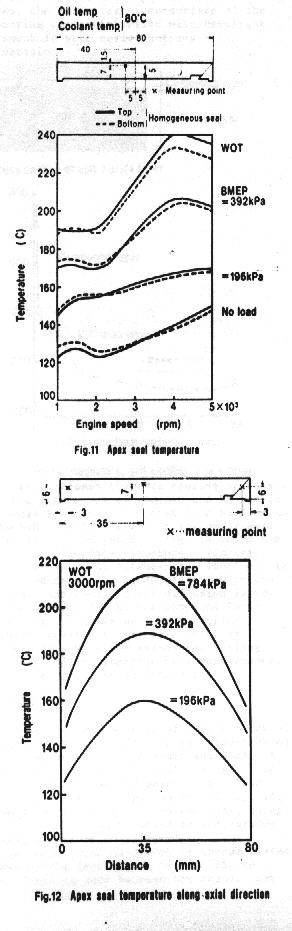
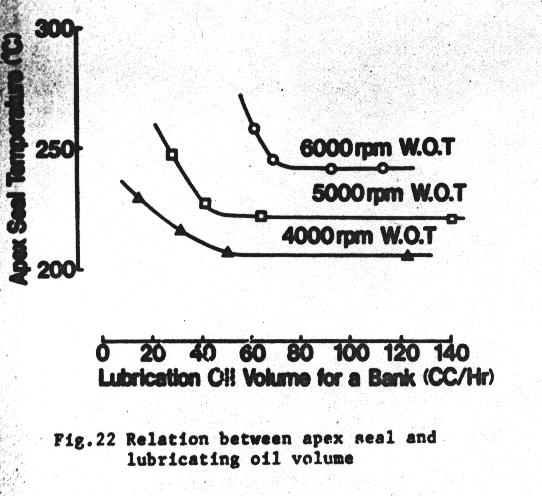
In the current engines the apex oil required is a strong function of the HP
generated. Not only does it lube the apex seals but it cools them as well.
This is because hot exhaust gases rush over them when the peripheral exhaust port
opens. At high power my guess is the center of the apex seal runs much hotter
than anything else in the engine. It cools off at low power. So a low quantity
of apex seal oil at idle is not that important.

BTW The side exhaust port RX8 uses two oil injectors, one on each end
of the apex seal and way less oil is injected. The apex seal runs much
cooler as hot exhaust gases do not rush over it.

Paul Lamar

The AirCraft Rotary Engine NewsLetter.  Powered by Linux.
ACRE NL web site. http://home.earthlink.net/~rotaryeng/
Copyright 1998-2003 All world wide rights reserved.