Vance how is that water pump dyno coming?
Do you need some help with that?

Paul Lamar
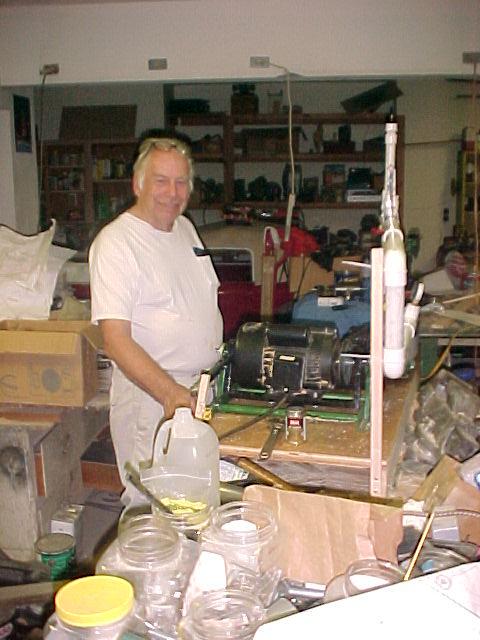
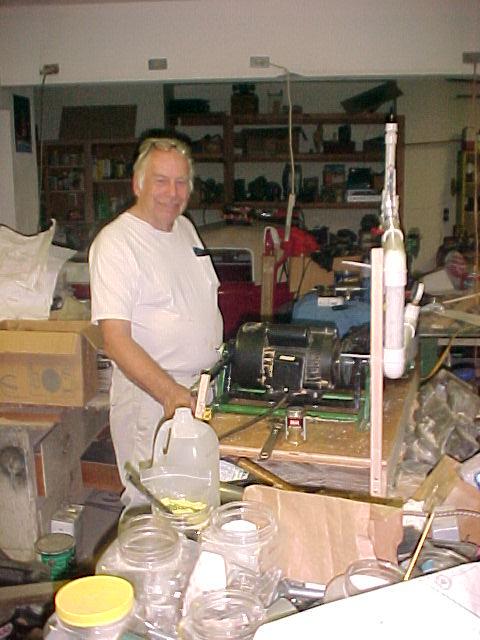
Paul - A timely question - enclosed a shot of the set up
the glue on the last joint was curing last night - now
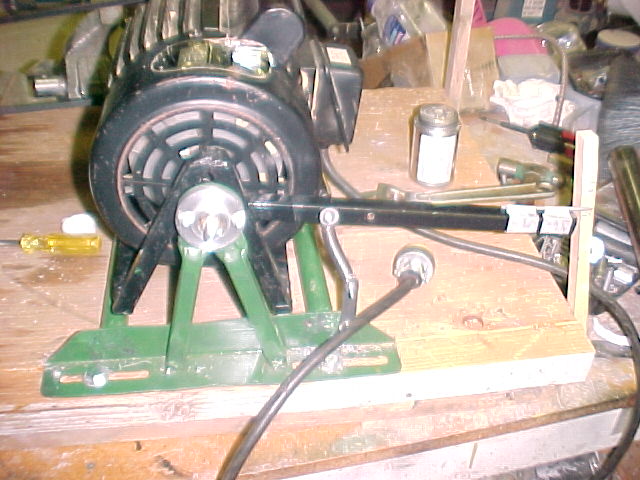
for the courage to fill it up and plug it in - I have a spring
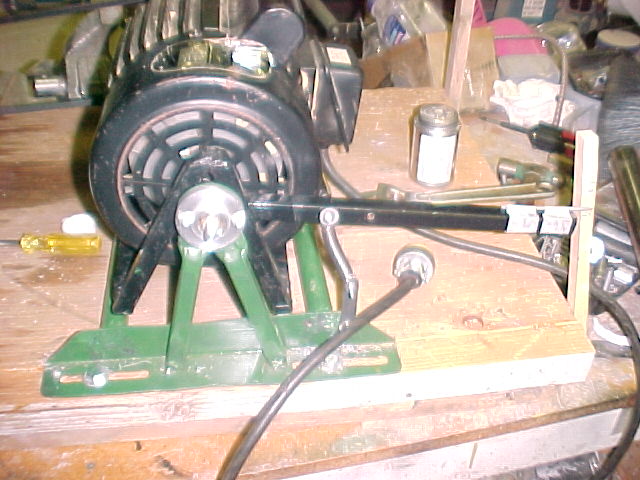
reacting the motor torque at present - I may try to
calibrate that since I do not have a suitable scale
at the present time - I think we are looking
for rough answers not lab precision - Vance.
Yes we are. Looking great Vance. I can hardly wait for the data.


Paul Lamar
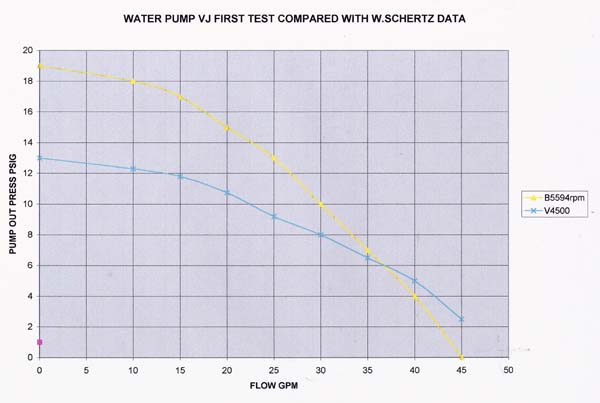
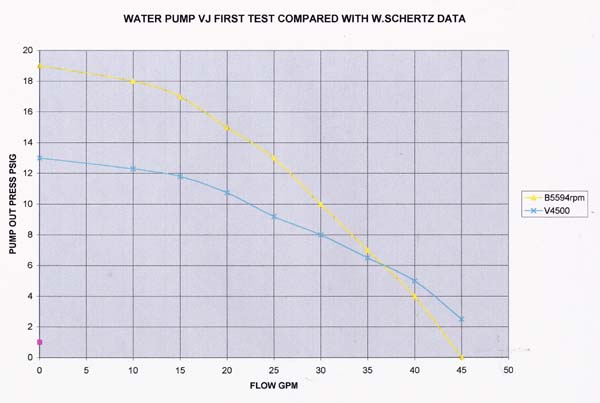
Paul - first data is pretty rough - lots of vibration with gage needles
and fussy reluctant flowmeter. Liquid in flowmeter shows
bubbles suspicius  for entrained air. The ID of the plastic is
closer to spec ID for 1 1/4 IPS. and I have a full 10 dia on
approch. Have increased this length and added a flow straightener
u/s of the flowmeter. pump speed reads at 4500 rpm flow curve
is extended flatter than Bill S data - I thnk as the result of
input flow velo to the pump on a closed circuit system, tho
the pump inlet press shows little or no indication..
Very rough torque readings on the dyno show well under
1 hp, and half of that is driveline and bearings as tested
empty - This would suggest that electric drive is a valid
approach - planning (and already conducting)  more runs
to average out the data- Vance
I went over and looked at Vance's set up. We need to refine the
dyno part a bit as the pump motor is unbalanced causing a counter
torque. Bottom line is the jury is still out on the HP measurements.
Also there is room for a larger V belt motor pulley so we can get data at
higher pump RPMs. Vance had a minor leak so we were unable to
pressurize the over all system to 20 or 30 psi.

Potentially we can get a lot more HP out of this motor as it is a
220 volt motor. Bill and I were both blowing 30 amp circuit
breakers at around 4500 pump RPM and with 110 volt motors.
That is 3300 watts or around 4 HP. My drive system was rather
convoluted with three stages of V belt reduction. This system
use only one V belt so the drive should be more efficient.

We will see what happens when we speed up the pump.

BTW one HP is 746 watts. At 14 volts with the alternator running
that is 53 amps. In theory it does not take much HP to pump water
at this flow rate and pressure. This is a stock Mazda
13B water pump. Any reduction in this flow rate risks
damaging the engine.


Paul Lamar

The AirCraft Rotary Engine NewsLetter.  Powered by Linux.
ACRE NL web site. http://home.earthlink.net/~rotaryeng/
Copyright 1998-2003 All world wide rights reserved.