David Carter wrote:
Today I removed two evaporator cores, both of identical size and shape - and
bigger volume (336.65 each, which is 57.14 cubic inches more, each- i.e.,
20% more than the 279.5 cubic inches of my '77-85 Chevy Caprice core.

The two "keepers" are from an '84 Olds 88 and an '83 Buick Le Sabre.   For
terminology, the dimensions are with the "end caps" vertical, i.e., 1 on
each side:
    Height:  14 rows of coolant passages, which are 9.0 inches high. (was 16
rows and 10 1/8" on Caprice core)
    Width:  10.5 inches, not counting end caps (13.5 inches wide including
end caps) (was 7 3/4" on Caprice core & 10 3/4 incl end caps)
    Depth:  3 9/16 (i.e., 3.5625, just slightly over the 3.5" we usually
speak of)  (identical to Caprice)

These 2 cores are 1 1/8" shorter than the Caprice and 2 3/4" wider (each)
than the Caprice, which is good for my RV-6 with wide engine bay - I plan to
place them vertically (perpendicular to incoming airflow) side by side under
the engine/psru/mount stuff.  (However, I am still pondering the option of
having the "end caps" be on top and bottom so welded on hose fittings are on
sides, not top and bottom . . . .then I'd want less space between end caps -
shorter in that orientation - and more rows of coolant passages . . . .)

I'm ordering my finish kit with the "no carb induction air scoop" option.
    -  Further, I plan to talk to the cowl vender about cost & feasibility
of making 1 cowl for me to be shipped in my finish kit with no "Lycoming
fin"cooling ducts either side of prop shaft hole - thus I'll have a "clean
sheet of paper" to design my own radiator inlets lower down and thus into
better airflow from prop (significant on ground for cooling).
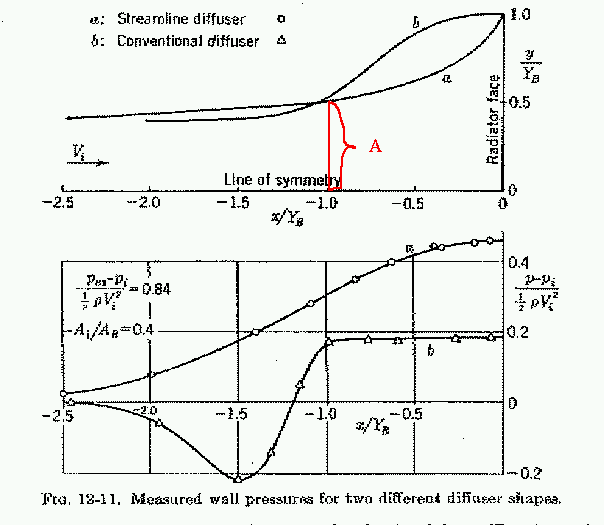
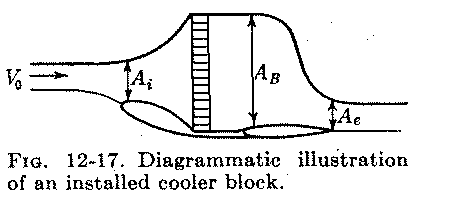
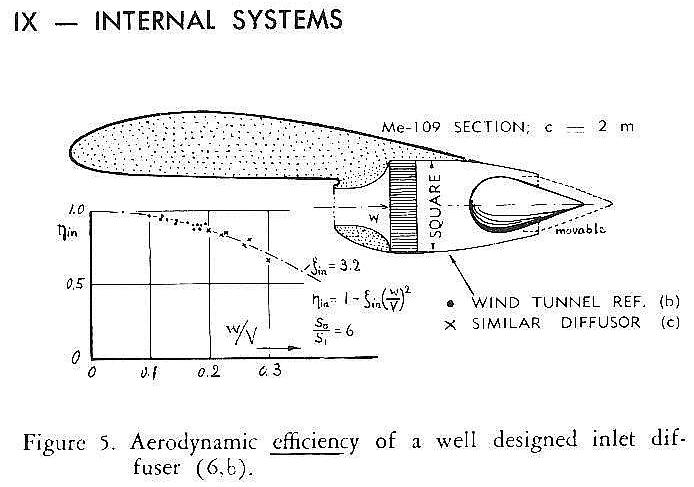
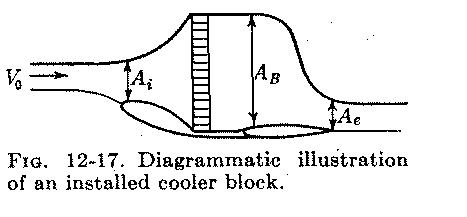
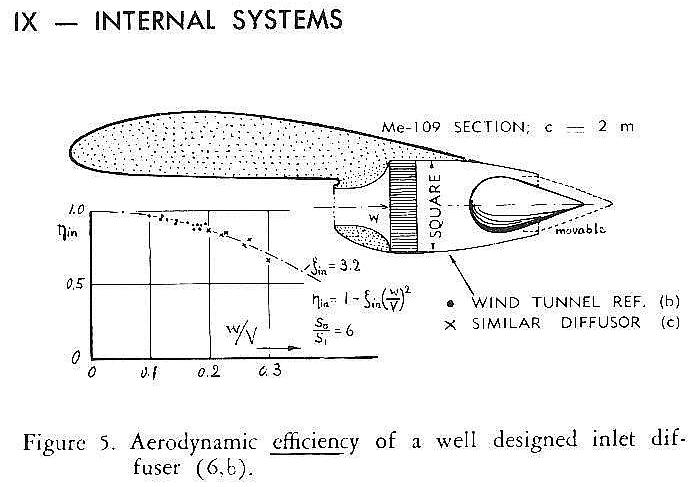
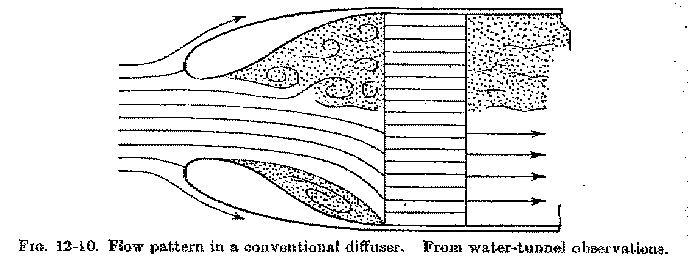
        --  I envision inlet design similar to P-51, i.e., inlet hole way
lower down than stock Van's, with cavity behind opening sloping up 7 degrees
to give a larger cavity to slow air and increase pressure.  Should be able
to design a wider & narrower (vertically) exit with cowl flap (not the std
hole where exhaust is dumped out in center 1/3 of aft cowl) with air
directed nearly straight aft (would increase profile drag an unknown amount
by having lower line of cowl be below firewall line so air could exit
parallel to flight).

I went to the web site www.frigidair.com and then called the owner of the
after market maker of "OEM speck" cores.  He said the flow path inside the
cores is exactly like a radiator - fills the end cap on one side and flows
through one time to the other side where it exits the system. Specifically,
NOT serpentine.  Now I don't have to cut open a core to find out.

David Carter
RV-6
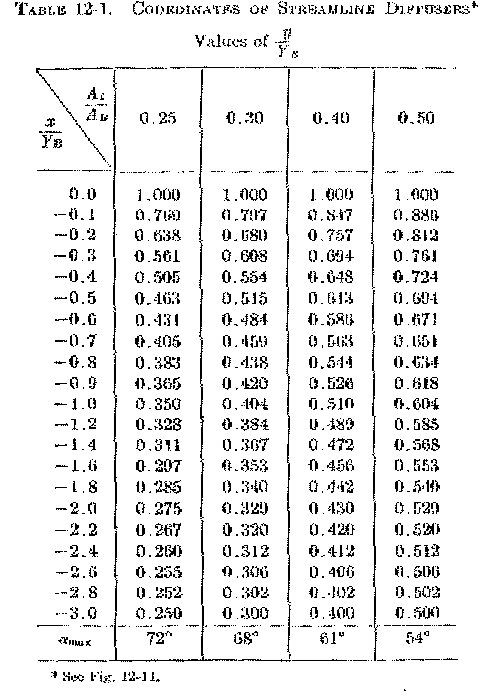
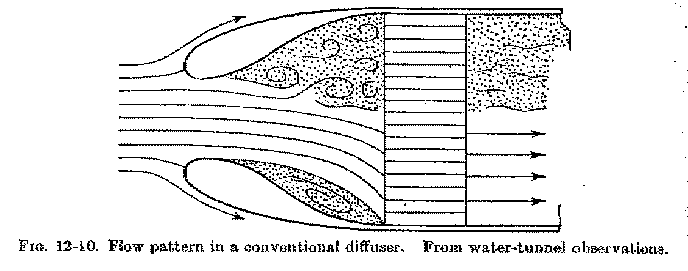
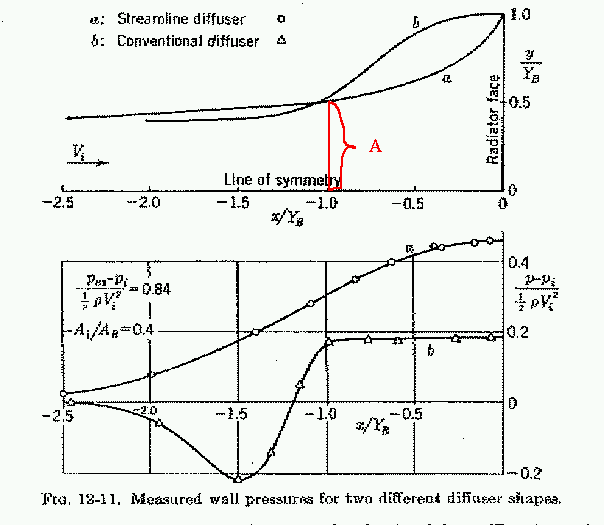
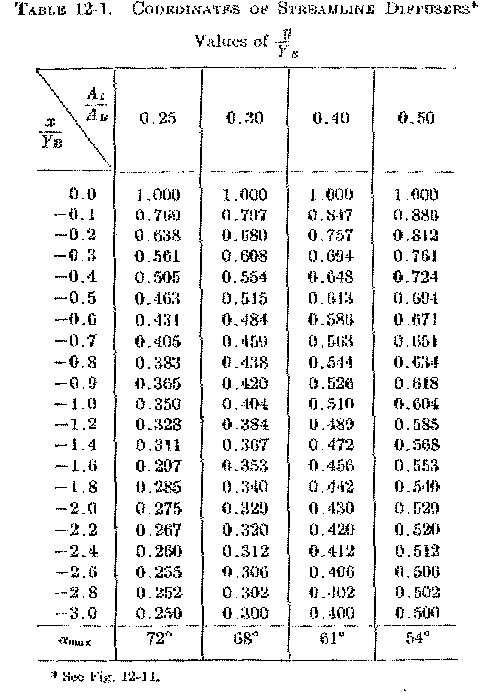
Don't use the 7 degree rule. Use the K & M bell shaped duct.
Works much better.

Paul Lamar


The AirCraft Rotary Engine NewsLetter.  Powered by Linux.
ACRE NL web site. http://home.earthlink.net/~rotaryeng/
Copyright 1998-2003 All world wide rights reserved.