Your right the light flywheel does rev quicker in the low gears in
     > the 1/4 mile but the heavy flywheel pulls harder in the last of third
     > and all of fourth gear.
     >    The punk street racer kids like light flywheels because they are
     > snappy but the people winning races are running heavy ones.
     >
     >    Ken
The race car has a cut down Chevy (Tilton) flywheel about 6" in diameter.
A 2 disc 5 1/4" clutch and a 1/8" thick aluminum disc
to carry the (aluminum) starter ring. (Lighter than a flex plate.)
The front pulley is a single sheave aluminum about 2 1/4" in
diameter. The major rotating mass, by far, is the rotors and crank.

Houston, we have a problem!!!!

If you set the idle way down to around 1000 RPM, the engine shakes
the inside of the transmission so hard that it sounds like
John Henry beating on the case with his big hammer. The engine
just kind of blubbers along when that slow, and it does not seem
like it is loping like most Mazda race motors.

Those pulses may not be going negative, but each pulse pitches
the rotating mass in the trans out ahead of it and between pulses
slows it back down with a resounding "WHACK." So instead of the
nice rump rump rump rump with no trans noise, it starts going
WHACK WHACK WHACK. It is much worse with straight cut trans gears
over spiral cut gears.

The first time I heard that I just freaked out. It sounds like two
out of 4 rods of a piston engine, running without bearings.
It goes away when the clutch pedal is depressed. When you run the idle
up over 1,200 it all goes away and sounds happy again.

Then around 1,600 RPM it does the same thing but sounds like a big
baby rattle. It is just buzzing the slop in the gear lash
rather than moving the whole thing around. Still a dreadful sound.
The best idle speed is right at 2,000 RPM so that is where it
belongs all of the time. Quicker spool up, no trans noise, and that
great Mazda rump rump rump.

When the ring gear wears out, I am going to replace it with a
flex plate to add some rotating mass. Now between shifts, the
engine spools down so quickly that the driver cannot match the
gear change properly and it make the rear end twitch a bit in
places. Some times the rear tires get in front of the front tires
and the lap times go way up.

Notice that the stock engines used to come with a 45 pound flywheel.
I have yet to find a use for one of these things. The
reason for that enormous amount of rotating weight is that the rotary
has two huge power pulses 180 degrees apart. That is a
formula for a viscous shake, and that is exactly what they do. The
torque converter is the flywheel for the automatic versions.
I suspect that the extra mass tends to make tooth and bearing
loads much more uniform, and may even reduce peak loads
substantially. I have been hearing this since 1980.

 When the engine is under high load the trans gear mass helps
out a bit, but I think actual flywheel mass might be better and
more uniform. This is something that should show up on the dyno.
Notice also that the method of connecting engines to the
apsorbsion unit is an iron disc with a bunch of clutch cover bolt
patterns drilled in it. It look like a flywheel. So the
flywheel effect may have been included in most dyno runs.

So, if somebody says that they get better performance with,
rather than without additional flywheel mass, I think it makes
sense.

Lynn E. Hanover
I do not want to leave the impression that this is any kind of problem
at all with a rotary engine used in aircraft.

I find it significant that both Ken and Lynn are using carburetors.

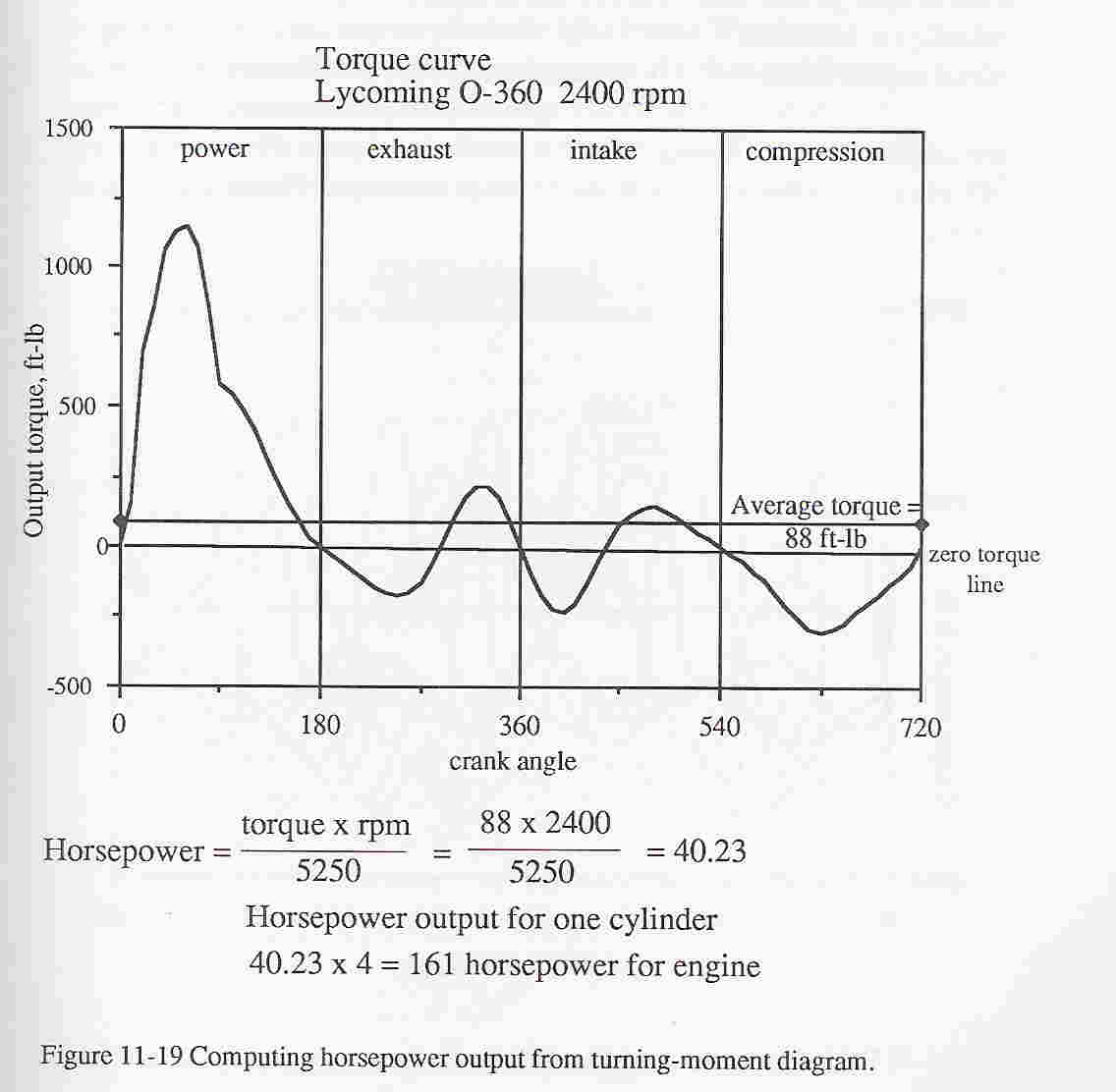
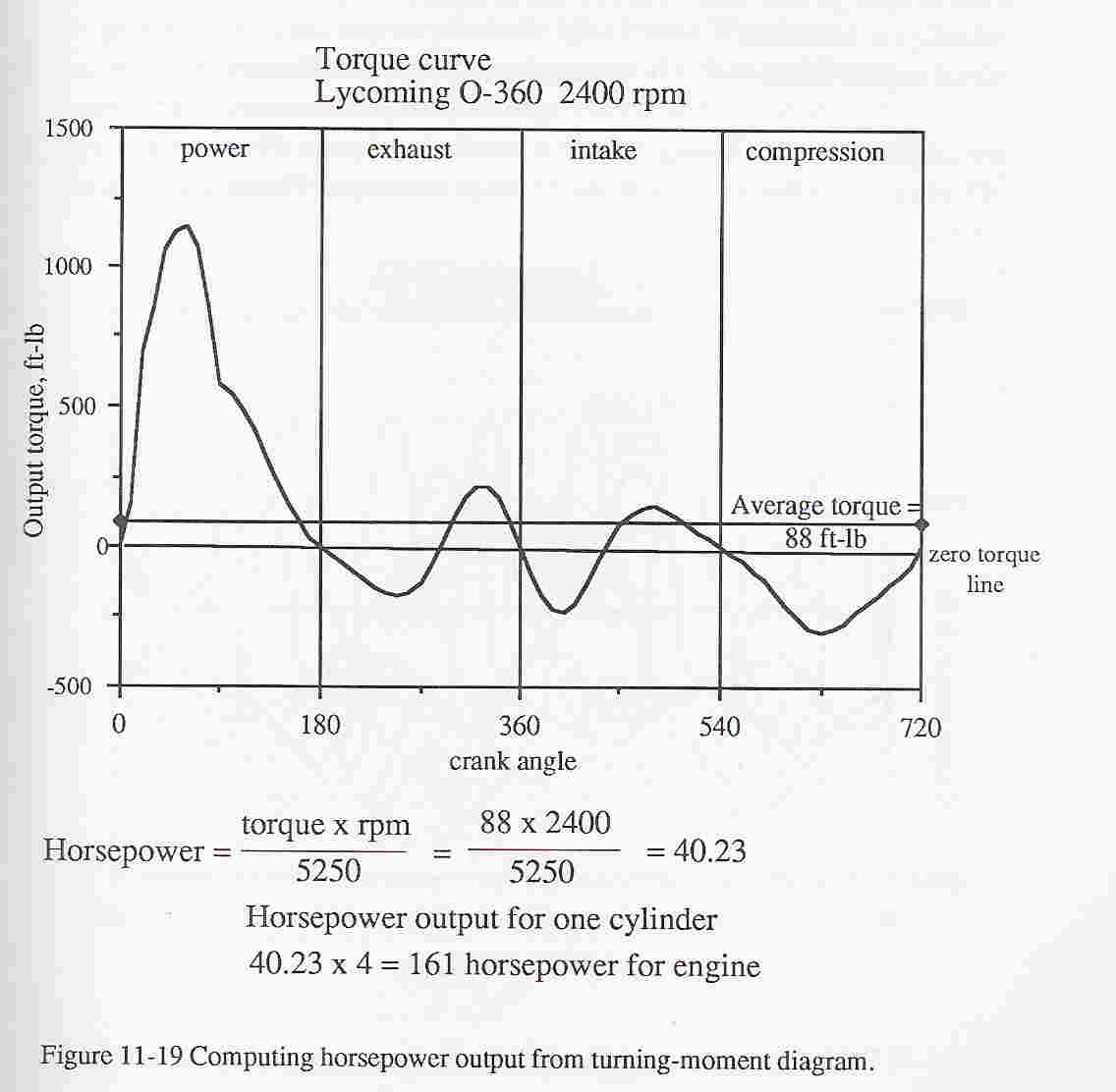
First of all a four cylinder with the same power would have much much worse
torque pulses. Much much much worse. Here is the kind of pulse you get out of
a 160 HP Lycoming aircraft engine. In the case of the 2 rotor the same number
of torque pulses per rev occur but they are half as intense because they develop
the same power at twice the RPM.

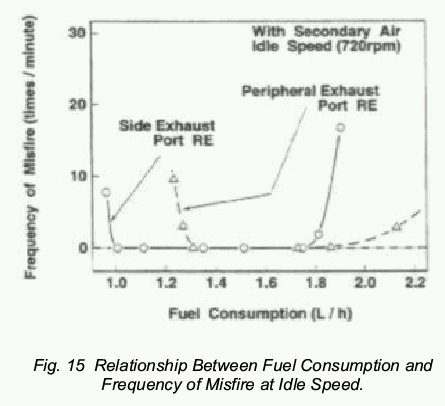
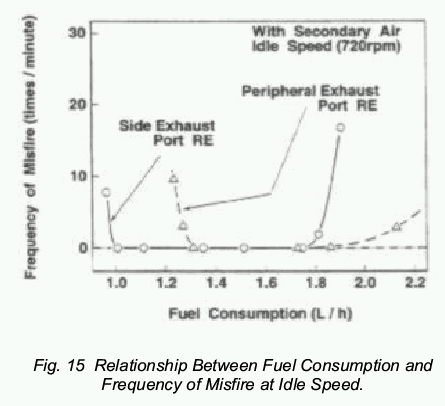
Some of the shake you are experiencing is due to miss firing because of the huge
valve overlap and huge carburetor choke sized for good power at 9000 RPM in your
typical bridge ported road racing rotary engine. You cannot begin to compare
this engine to a staged electronic fuel injection non bridge ported rotary
found in aircraft.

Tracy claims he can idle his engine down to 1000 RPM with no gear box
rattle what so ever using just the flex plate and his torsional vibration
damper. He still goes 214 MPH in his RV4.

The manual TX 237 HP RX8 with lighter rotors AND a lighter flywheel will pull
away with two people in the car from 650 RPM idle with no throttle opening
what so ever. I demonstrated this to both Vance and Bill Jepson. Maybe Chuck
Dunlap too but I forgot if I showed him this trick at Copper State. The main
reason it can do this and still rev to 9000 RPM  and generate 237 HP is the
total lack of valve overlap.

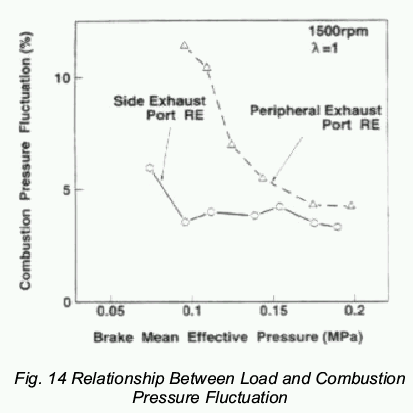
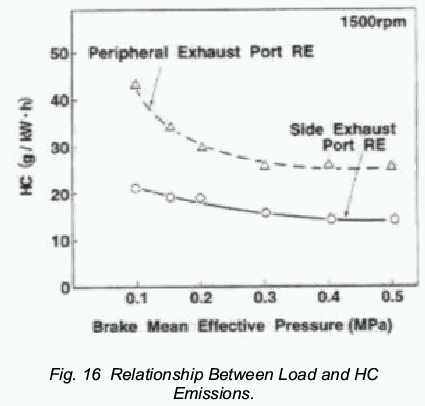
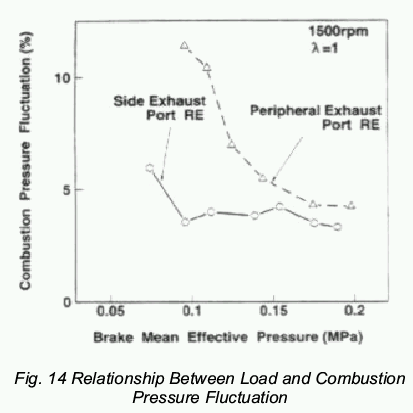
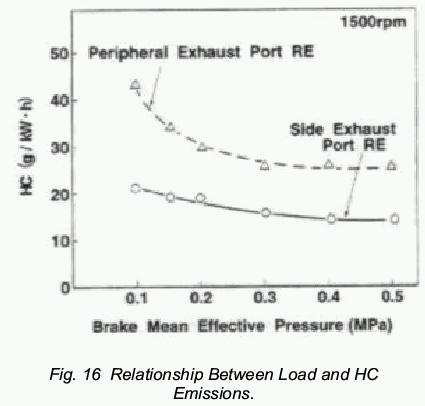
The primary goal of the side exhaust port RX8 engine was to drastically reduce
misfire at idle which was causing high idle and low power fuel consumption and
HC emissions problems. The charts are from the RX8 SAE paper available on the
Mazda papers CD for those that are interested.

Paul Lamar

The AirCraft Rotary Engine NewsLetter.  Powered by Linux.
ACRE NL web site. http://home.earthlink.net/~rotaryeng/
Copyright 1998-2003 All world wide rights reserved.