> > > > > > > > > > Hello every one You can try again and I hope
 >with better
 >>  >>  >>       > > > luck.Some hi tech glitch in cyber space...??
 >>  >>  >>       > > > Let me know.please. Cheers John.
 >>  >>  >>       >
 >>  >>  >>       > John,
> >> >> >> >
>> >> >> > I like the 3 piece housing very neat.
> >> >> >> >
 >>  >>  >>       > Do you know what RPM the BMW coupling is rated for?
 >>  >>  >>       >
 >>  >>  >>       > Can you advise of the total all-up weight.
 >>  >>  >>       >
 >>  >>  >>       > In your original assessment did you find splash oiling
 >>  >>insufficient?
 >>  >>  >>       > Thanks
 >>  >>  >>       > George
 >>  >
 >>  >>  >>   Hello George!   According to BMW (9 to 10000rpm) although
 >>I did not
 >>  >>  >>  see the specs on it! The weight of the PSRU
 >>  >>  >>  with the starter is 49 lbs.The flywheel with the
coupling is 19 lbs.
 >>  >>  >>  While I was running tests;in the first 45 hrs I
 >>  >>  >>  just ran on slpash,and the temp.never went over 205
 >>degrees! Then ,with
 >>  >>  >>  a nice spinner on the prop the temp. went up to
 >>  >>  >>  230 degrees. However with the prop pusher mode,the
temp stayed at
 >>  >>  >>  205-degrees. I used 20w50 oil! With the oil from the
 >>  >>  >>  engine directly from the cooler temp. stays around 190 degrees!
 >>  >>  >>
 >>  >>  >
 >>  >>  >19 pounds is WAY too much weight for a rotary engine flywheel John.
 >>  >>  >
 >>  >>  >Paul Lamar
 >>  >
 >>  >
 >>  >>     I disagree, I had three torsional dampers brake on my
Ross gearbox,
 >>  >>  one that went through the prop and the prop drove a piece
through the
 >>  >>  wing so I installed a 18 lb flywheel and it eliminated the problem
 >>  >>  and as a side effect there was a very noticeable gain in
power as the
 >>  >>  flywheel absorbs power pulses and gives that power back during the
 >>  >>  lull so I think it is worth its extra weight.
 >>  >>     Atkins had the same problem and installed to a flywheel and
 >>  >>  reported the same results.
 >>  >>    I also tried my cog belt without a a flywheel and didn't like the
 >>  >>  vibrations at certain rpm's so I installed a 16 lb
flywheel and again
 >>  >>  there was a noticeable performance gain that was worth the extra
 >>  >>  weight.
 >>  >>    I have also noticed this in the off road cars that I have been
 >>  >>  around, a lot of people install light flywheels but you have a lot
 >>  >>  more torque with a heavy flywheel.
 >>  >>
 >>  >>     Ken
 >
 >
 >>  >There is no doubt that a heavy flywheel smoothes out the torque pulses.
 >>  >It is the bigger hammer approach. On the other hand many airplanes are
 >>  >flying successfully with the 3 or 4 pound flex plate alone. Tracy
 >>  >Crook's damper plate works much better than the old BMW clutch disk
 >>  >used by Ross. In your case you have a 5 bladed Warp Drive prop
 >>that probably
 >>  >has a lot more rotational inertia than the average bear.
 >>  >
 >>  >BTW I love those pictures you sent Ken. You lucky dog.
 >>  >
 >>  >Paul Lamar
 >
 >>      The five blade warp drive only weighs in at 18 lbs and I am sure a
 >>  damper will work but if a heavy flywheel gives a better climb rate
 >>  than the extra weight is paying for it self.
 >>    With the heavier flywheel I noticed that it lifted up on the step in
 >>  the water better and better climb performance and like I said Atkins
 >>  reported the same gain on his RV.
 >>    Also Skip Gorman reported better performance on rotary boat engines
 >>  and said that there is no way he would run without a flywheel.
 >>
 >>     Ken
 >I am surprised a heavy flywheel gives a better climb rate. In theory
 >there is no HP advantage. Less torsional vibration I'll buy. The
 >rotary already has
 >a lot of rotational inertia what with the two nine pound cast iron
 >rotors and balance weights. Dave Atkins has never flown one of Tracy's
> >gear boxes to compare. BTW Flywheel windage losses can make a difference
 >at 6000 to 9000 RPM. The stock flex plate has a few fins on it that
 >should be removed.
 >
 >Speaking of heavy flywheels take a look at this EngineAir V8. It
was the only
 >way they could get the gear box to live with out a torsional
 >vibration damper.
 >
 >Paul Lamar
 >

    A flywheel will absorb power spikes and then give them back in
slack times.
   In the VW sand world I run a flywheel, a full circle counter weight
 crank and a 11 lb front pulley all to get more weight to absorb the
 pulses and with that it climbs the dunes better and turns better
 times in the 1/4 mile.
    In the snowmobile world they make heavier flywheels and they also
 climb the hills better and pull harder on the flats.
   If you simply put a rubber damper in there the power pulses are
 absorbed but little is given back, I do like the rubber damper idea
 but I think it needs a flywheel also.
    The cog belt is a very good damper but I found that a 16 lb
 flywheel with it worked out the best and I think about 16 lb with a
 rubber damper on a planetary would be about right.

    Ken
Well Mazda reduced the weight of the RX8 flywheel to improve the
engine acceleration. The lighter weight rotors also helped. What
a heavy flywheel does in theory is store energy in the form of
rotating inertia.

If you rev a drag racing engine to 5000 to 9000 and step off the
clutch the energy stored in the flywheel will be transferred to the
wheels in the form of instant HP. If you just drive away you don't
get max torque until the engine can rev to the torque peak.

In the case of the RX8 most people don't rev the engine to 6000 RPM and
step off the clutch. In that case a lighter flywheel allows the engine
and car to accelerate faster. Particularly while in the lower gears when
the RPM climbs rapidly. (I spent 30 years in the car performance test
equipment business :))

Paul Lamar
   Your right the light flywheel does rev quicker in the low gears in
the 1/4 mile but the heavy flywheel pulls harder in the last of third
and all of fourth gear.
   The punk street racer kids like light flywheels because they are
snappy but the people winning races are running heavy ones.

   Ken
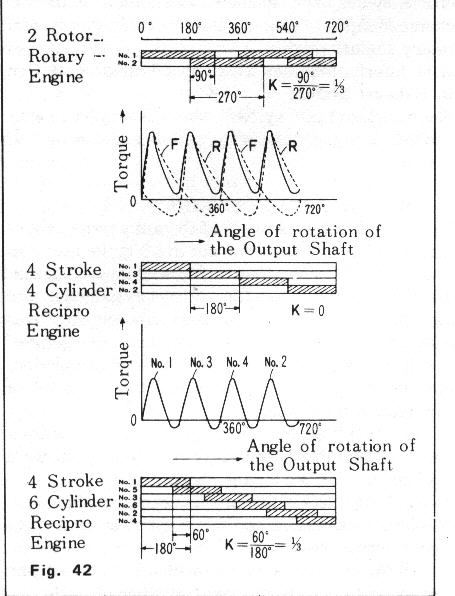
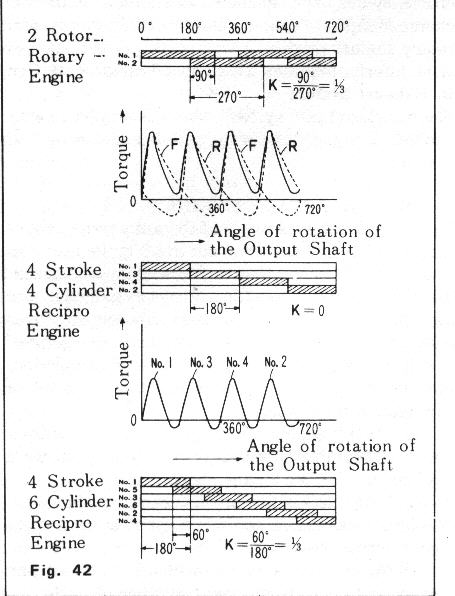
There is nothing in the physics books that say anything about that other
than impact theory. The shape of the torque pulse has little
to do with the HP out of the engine (consequently the weight of the flywheel)
as long as it does not go negative. Unlike a four cylinder four cycle engine
the torque pulse of a rotary never goes negative. All that matters is the area
under the torque pulse curve. Add that up and you get the mean torque (HP) out
of the engine.

In an aircraft engine, powered by a 2 rotor, four torque pulses per prop rev
are applied to the prop with a 2:1 gear box. Are you saying the prop RPM speeds
up and slows down four times per prop rev? Are you saying that the speed
up and slow down of the prop results in less mean thrust out of the prop?

Paul Lamar

The AirCraft Rotary Engine NewsLetter.  Powered by Linux.
ACRE NL web site. http://home.earthlink.net/~rotaryeng/
Copyright 1998-2003 All world wide rights reserved.