Fred Osborn wrote:
Lynn,
Love your rants, very educational.
Big Snip
"could we let go of the carburetor and try high pressure direct
injection?
Like every damn diesel in the world. If you can't design one
yourself,
steal one off of a VW."

I certainly know I can't design one. Do you have any
recommendation as
to
which VW system would be a good place to start stealing? I would
really
like to try this in a single rotor test bed.
Fred O.
Barnhart wrote:
Fred,
You may want to try to get a hold of Gary at TWM. He really knows his
stuff.
Bought a 3003 with single injectors for my 20bt.  It may not idle the
greatest, but really simplifies many other things.  They have LARGE,
EXPENSIVE  injectors that go up to about 125 per rotor if you want. The
output of the large injectors are definitely interesting.
http://www.twminduction.com/

Barny
MGDQ 20bt
Eric Ruttan wrote:
Very interesting thought.  A Rotary converted to a diesel.  Why not just
mill up a higher compression rotor, slap in two of the VW TDI injection
systems (get the third injector for in cylinder diagnostics), or better yet
the new High Tech VW PD TDI (2004 in the US, 2003 in Europe) systems and
save yourself the high pressure plumbing, and make a single rotor diesel
("Rational heat engine" is the name the designer gave it).  You could use
the TDI Brain.  There is about a dozen small company's hacking the TDI
Computer who could help you get it running.

A 75Hp single rotor diesel, made with off the shelf automotive parts, would
about put rotax out of business I would think.

Very cool
Eric
Not that easy.
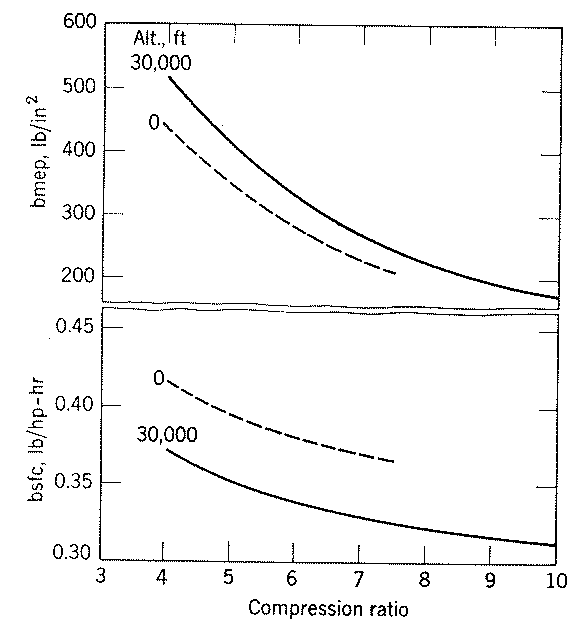
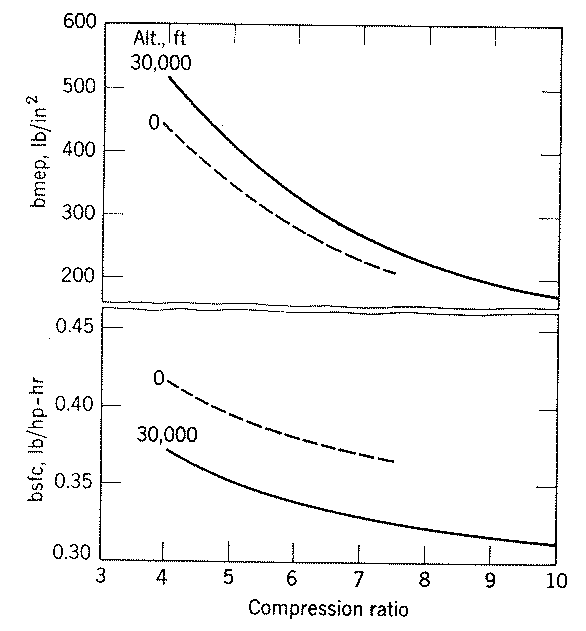
The problem is the higher the compression ratio the worse the shape of the
combustion chamber. Ten to one is about the practical limit. If you just
want to burn jet fuel no problem. Go for spark assisted direct injection
but don't expect diesel like BSFC's.

Paul Lamar
Erik Wahlstrom wrote:
How about designing the rotor for the optimum combustion chamber shape
and supercharge for the optimum compression ratio.

Erik
Makes more sense. For some strange reason that does not result in higher
BSFC. Probably because of heat (work) losses in the turbo and  intercooler.
In a diesel this heat (work energy) is retained by the combustion chamber.

Probably the most fruitful approach to improving the BSFC in the rotary
is to raise the working temperature of the rotor, rotor housing and end
housings to reduce the heat lost to the coolant. That would also result
in smaller radiators. Teflon encapsulated silicone  O-rings are a first
step.

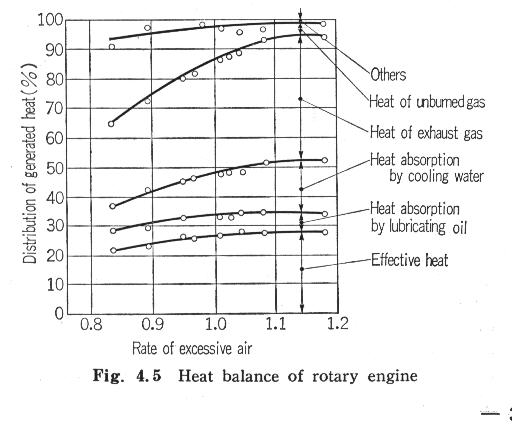
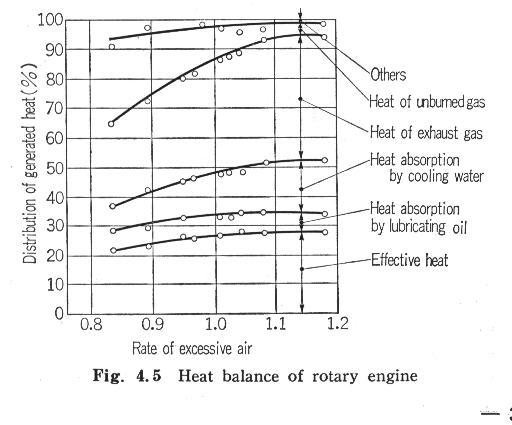
Looking at this heat balance chart the most potential for improving the
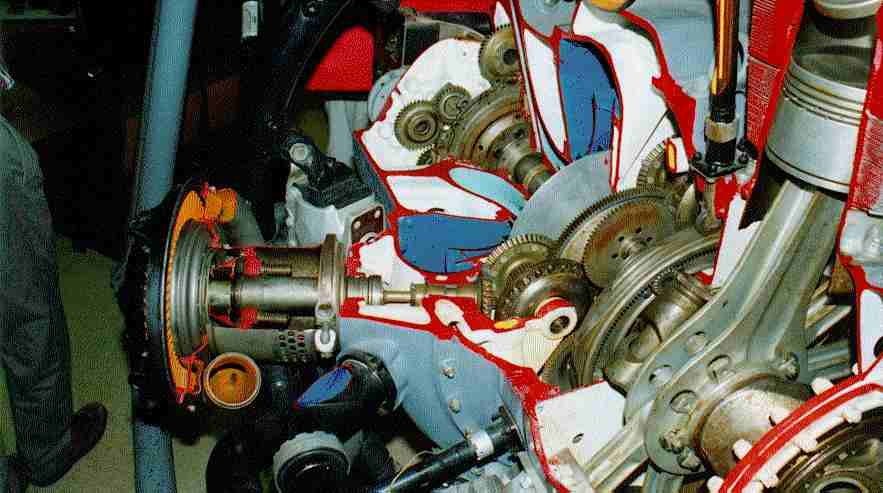
BSFC is to recover waste energy in the exhaust by turbo compounding.

Paul Lamar

The AirCraft Rotary Engine NewsLetter.  Powered by Linux.
ACRE NL web site. http://home.earthlink.net/~rotaryeng/
Copyright 1998-2003 All world wide rights reserved.