More info has come to light from the book Vee's for Victory
on Allison's version of the first turbo compound engine to be built.

The achilles heel of the turbo compound was damage to the turbines
when the exhaust valves broke up and the parts went out the exhaust
through the turbine. Never the less a Connie with CW R3350 turbo
compound engines could fly from San Francisco to London non stop
back in the early fifties. It was years before a jet was developed
that had that range.

What is it about the rotary that makes it ideal for turbo compounding?

Note that the Allison V12 was about where the rotary is now without
turbo compounding. turbo compounding is the closest thing to a free lunch.
You get 20% more power out of an engine with no increase in fuel
burn, heat load on the cooling system or stress on the mechanical parts.

Paul Lamar

*****************************************************************
Vee 's for Victory

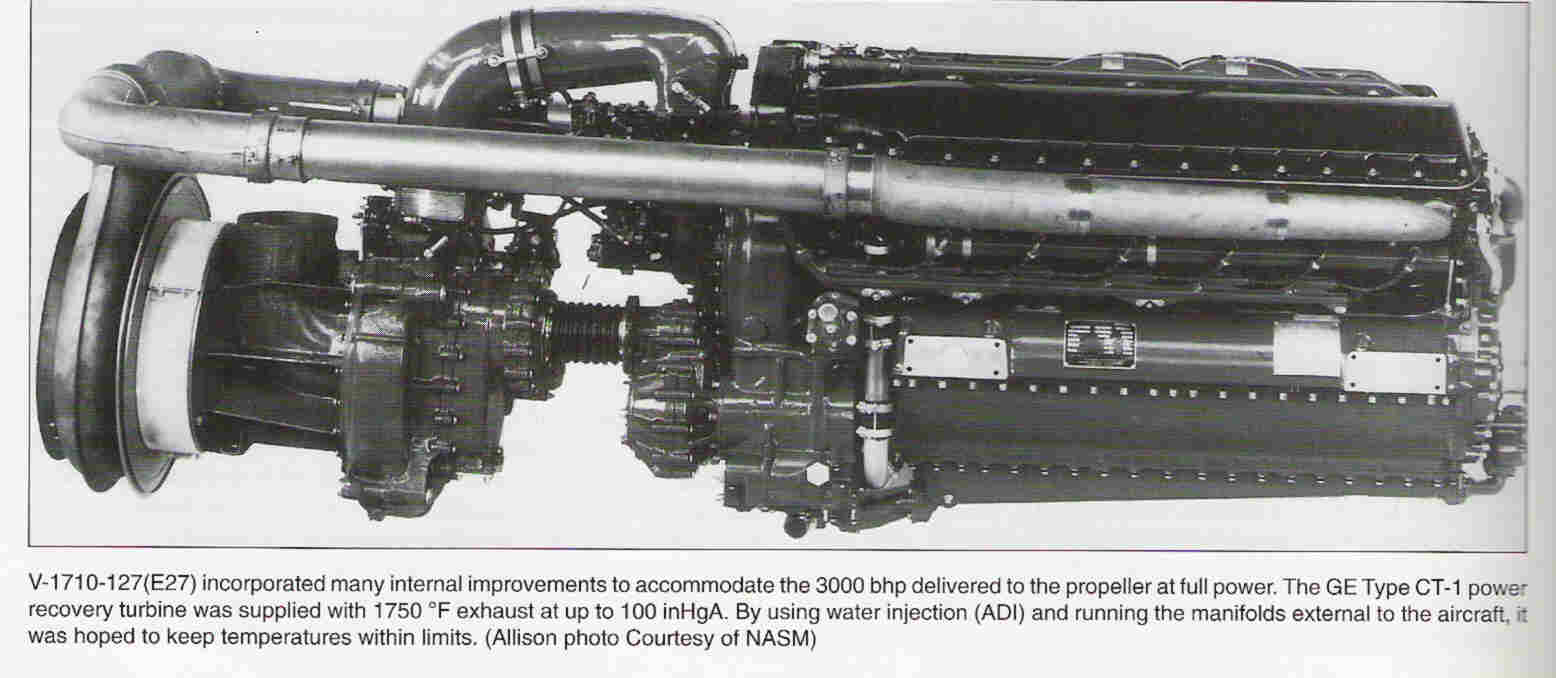
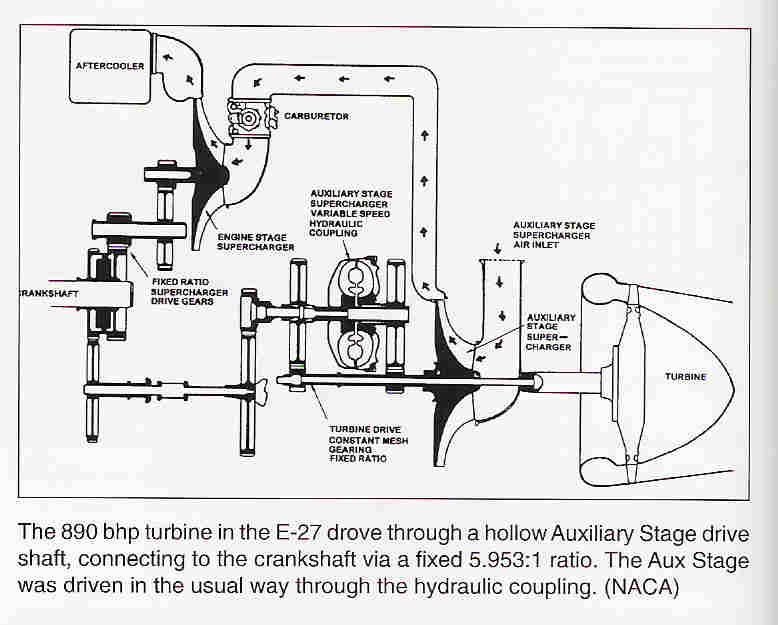
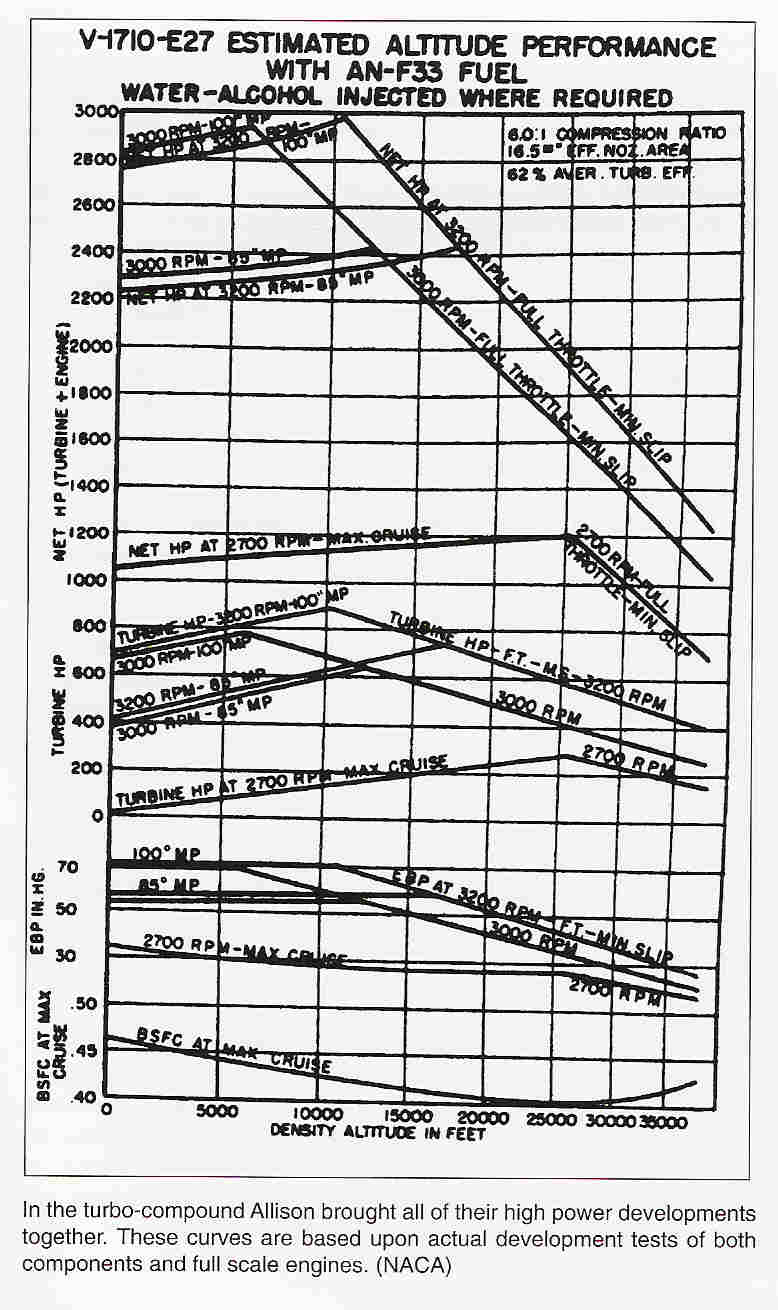
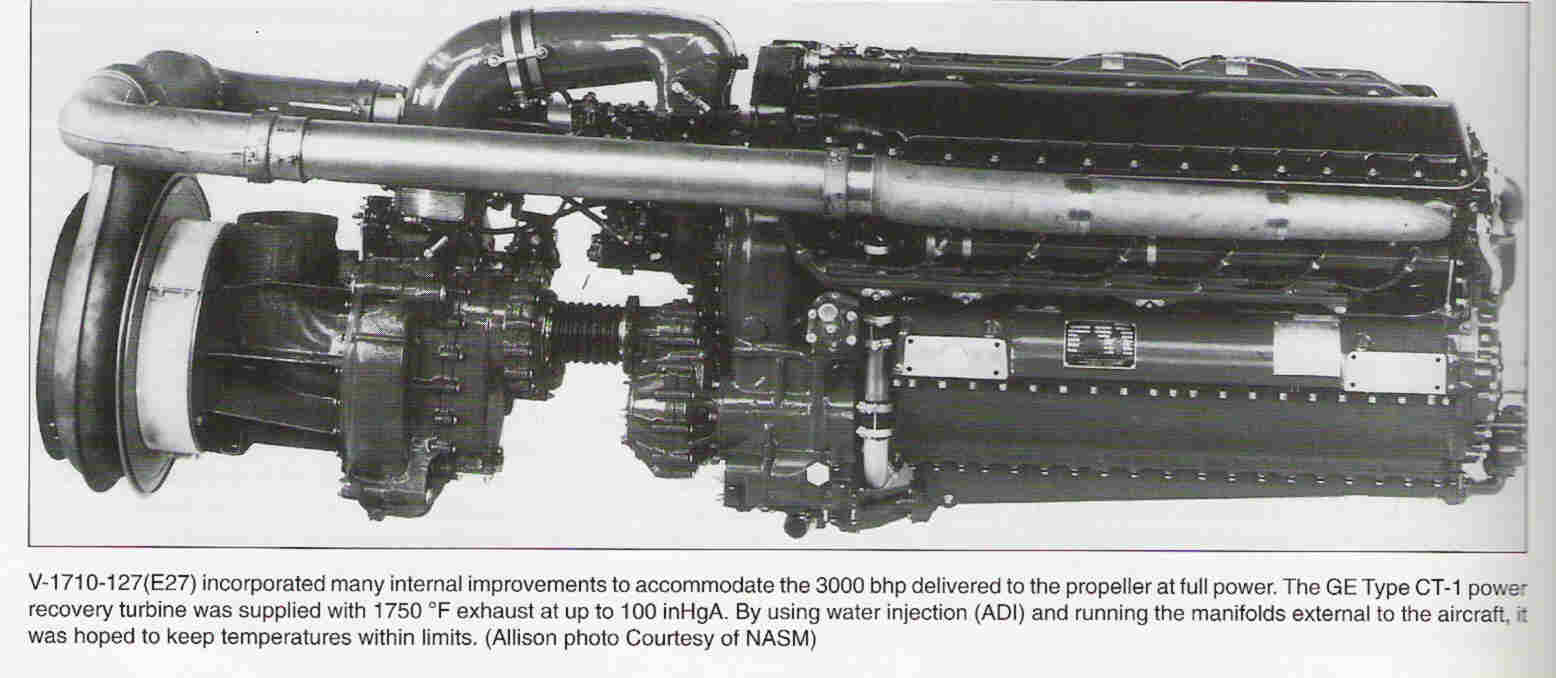
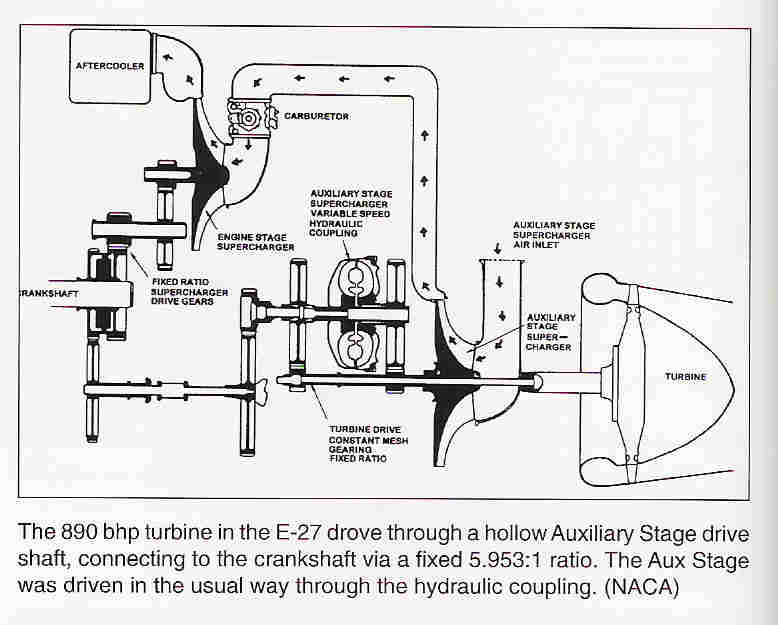
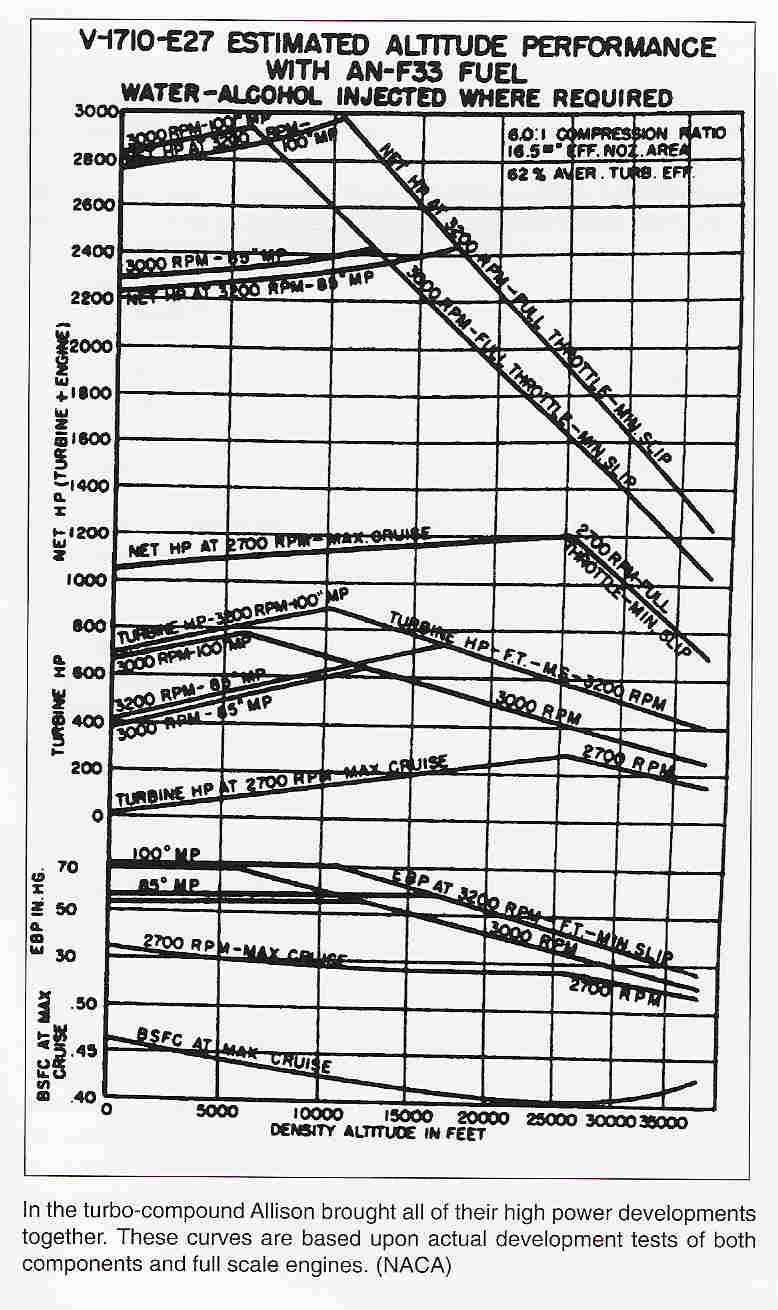
E-27: In many ways this was a very unique engine, and way ahead of its time. This was the first turbo-compound, or "power feedback" engine built by any manufacturer. Based on the E-22 power section with Auxiliary Stage Supercharger, it added a General Electric CT-l power turbine, driving the crankshaft through 5.953: 1 gears. Allison built a mockup of the configura-tion in September 1944, followed by a series of component tests, including a complete compound engine development series run in June 1945. The first complete engine was produced in September 1945.49 The turbine was adapted from the CH-5 turbosupercharger and driven by exhaust gasses collected by P-38 type collector manifolds. Compression ratio was reduced to 6.00:1 to accommodate very high manifold pressures up to 100 inHgA, consequently Grade 115/145 was specified. The 12-counterweight crank-shaft was used allowing ratings at up to 3200 rpm. The engine was in-tended for the Bell XP-63H, where it would have been able to deliver a WER rating of 2980 bhp at up to 11,000 feet from 100 inHgA, using ADI injection. Considerable running of related components and complete en-gines was accomplished during 1944/45. The engine was able to demon-strate a 19% improvement in cruise specific fuel consumption due to the

contribution of the power turbine. The aircraft never flew because the tur-bine was limited to inlet exhaust gas temperatures of 1725 of, and at ful: power this temperature could be easily exceeded. As a consequence, Alliso::: undertook a project of their own to design and develop a suitable powe, turbine with air-cooled blades, though that occurred only after the V-17 I 0-127(E27) project was canceled.

E-28: This was a proposed adaptation of the power feedback turbine to th~ E-23 engine proposed for use in a XB-42 type installation with paired Y-1710's. No military designation assigned.

*****************************************************************************


The AirCraft Rotary Engine NewsLetter.  Powered by Linux.
ACRE NL web site. http://home.earthlink.net/~rotaryeng/
Copyright 1998-2003 All world wide rights reserved.