Is your rotary cooling system boiling over Binky?
No problem. Just run pure ethylene glycol!!!

This blew me away when I saw this. I had no idea
pure ethylene glycol boiled at 380 F.

This does not work for a piston engine as it erodes the
aluminum surface of the combustion chamber. For that reason
Allison gave up on the idea running the cooling system at 300 F
and pure ethylene glycol. Ethylene glycol does not transfer heat
as well as a water ethylene glycol mix. In a PISTON ENGINE this
causes the combustion chamber to run too hot, erode and detonate

The Wankel rotary has the opposite problem. The combustion chamber
runs too cool and is lined with steel.

In theory one of the advantages is.. it is possible to use
a smaller rad due to the higher delta T. Another is.. less energy
loss to the cooling system and better BSFC. Less fuel burn
for a given HP.

Be careful doing this. There could be all sorts of unwanted
side effects.

Paul Lamar
"Schertz, William W." wrote:
Paul,

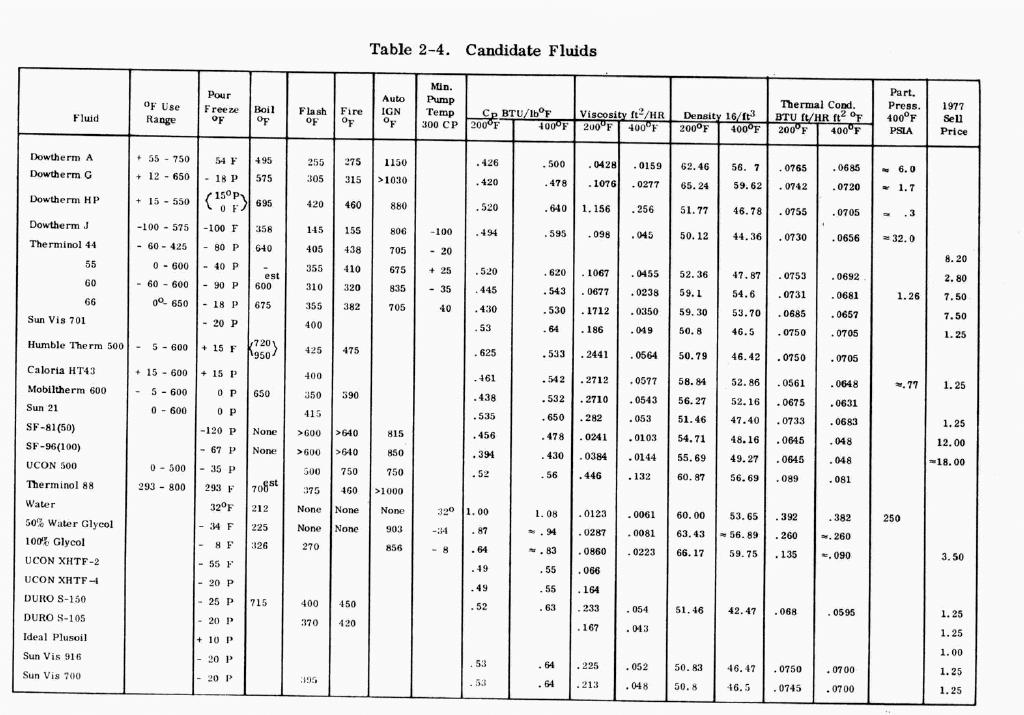
NOT a good idea. I have added another copy of the heat transfer
properties of different cooling fluids. Please note the difference
between pure ethylene glycol and a 50-50 mix.

Property        50-50           pure EG
Viscosity       .0287           .0862           (4x worse)
Heat cap        .87             .64
Thermal cond .26                .135

EG is harder to pump, you have to pump 1.35 times as much, the thermal
conductivity is ~1/2 as good (high is better), so the film coefficient
in the radiator and at the surface of the wall on the rotor will be
poorer. You will HAVE to run at a higher temperature to get the heat
out, and the rotary (as you have pointed out) doesn't tolerate higher
temperatures because of the o-ring seals.

Bill Schertz
KIS Cruiser #4045
Yes. I agree with all of this. I am not arguing these points but none of this is the same kind of show stopper that boiling your engine over is. I as I said, you don't have to run the engine continuously  at 250 F let alone 300 F to get the margin of safety that a 300 F boiling temperature provides. You will not get the relatively sudden catastrophic failure of the engine you will get if the engine boils over in the air.
Maybe the engine will be damaged if it runs at 250 F to 275 F but at least you can make it to the nearest airport and land safely.

Perhaps we can find a modern fluid that overcomes some of these problems. People have run pure 300 F boiling temp propylene glycol with no obvious disadvantages other than it becomes slush in cold weather. Thanks to Ken Welter that has tried it in a rotary. Evans has been selling it for use in race cars for years. If you recall Jeff Spitzer was dead
set against it use for the reasons you mentioned above.

Do you have similar data for propylene glycol?

Paul Lamar

The AirCraft Rotary Engine NewsLetter.  Powered by Linux.
ACRE NL web site. http://home.earthlink.net/~rotaryeng/
Copyright 1998-2003 All world wide rights reserved.