> Whoa!!!
     >
     > All engines are, as we know, a balance of engineering compromises. The compromises can be skewed one way or another depending on the application requirements.
     >
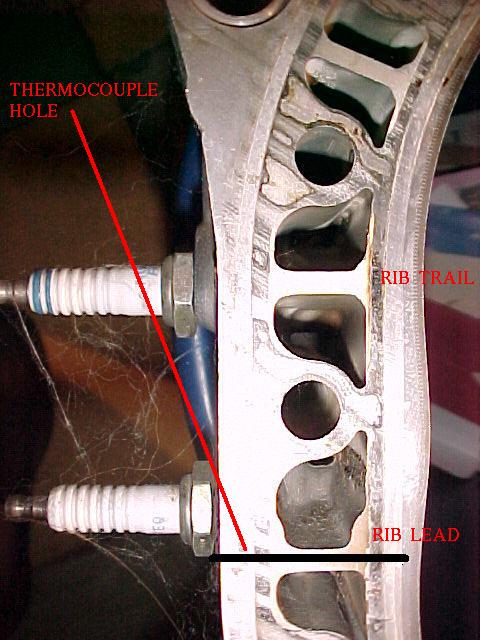
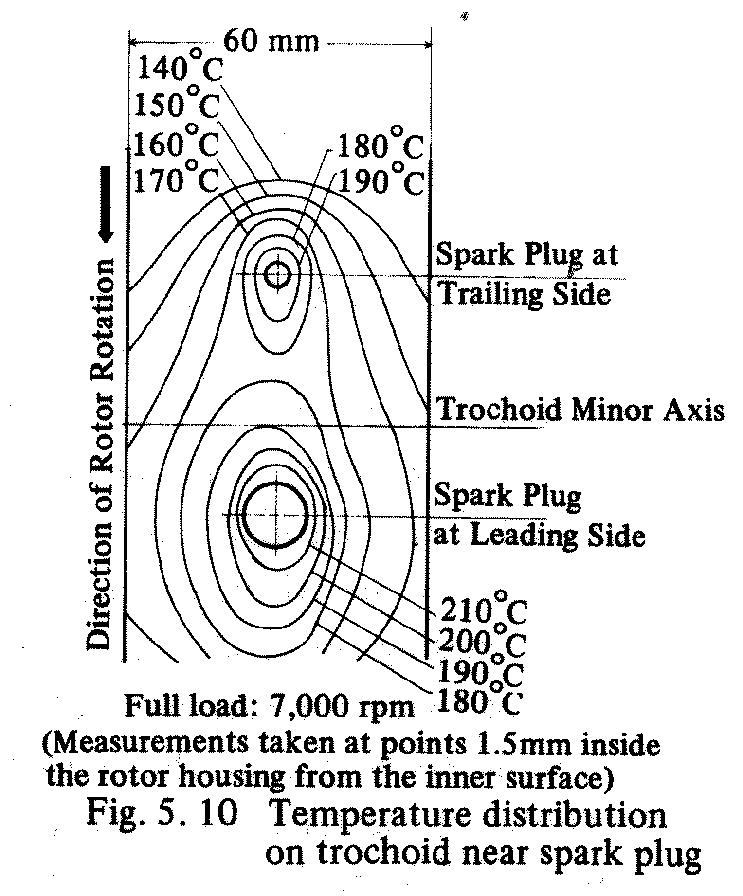
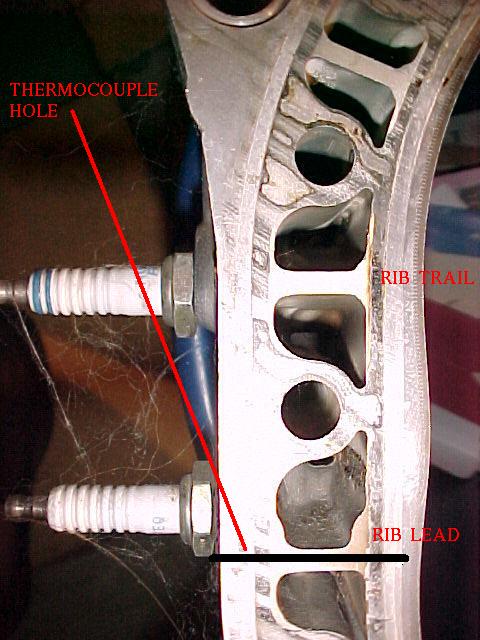
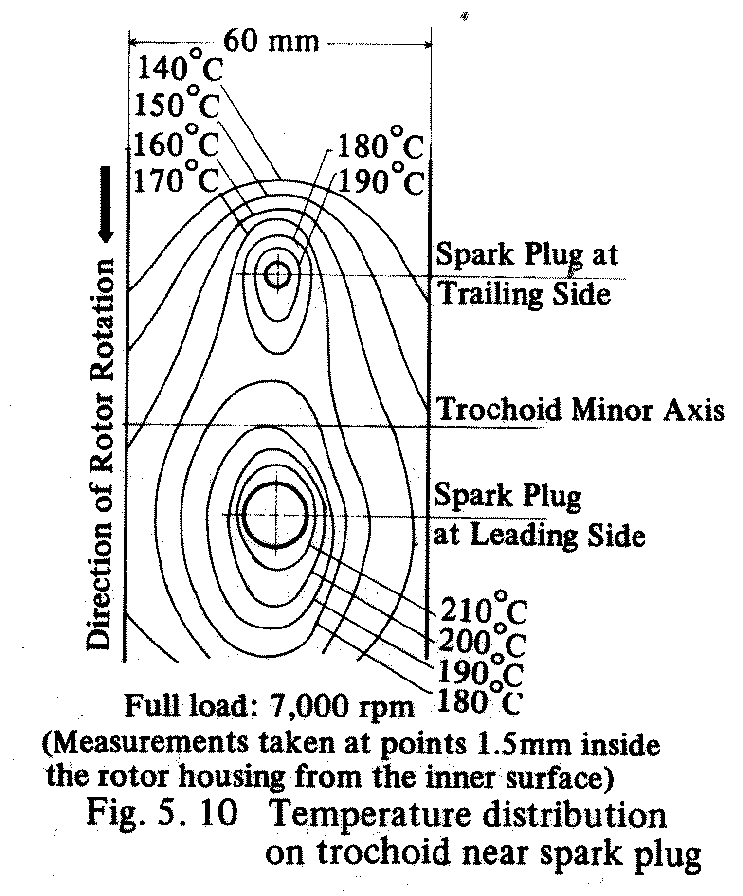
     > One of the compromises in rotary engine design is metal temperature of the rotor housing in a small region near top dead center (actually a little past top dead center). This is the region of the engine that has the highest heat flux from the combustion gas, through the metal, and into the coolant. For an aluminum rotor housing (steel liner or not) material properties quickly deteriorate above about 400 F. And that is for a rather exotic aluminum alloy. Mazda's die-cast alloy is probably not that good. Combine the reduced material properties with the thermal expansion, and you have a recipe for crushed rotor housings if the metal temperature is not carefully controlled. If you look in the Mazda service manual, the critical rotor housing measurements are all centralized in that high heat flux region.
     >
     > The localized rotor housing heat flux is higher than in a piston engine for a few reasons... one, that area is never cooled by in incoming intake charge like a piston engine (even a two stroke piston engine); two, the gas velocities past the rotor housing minor axis are much higher than the relatively quiescent gas velocities in a piston engine. As I recall, the only "common" mechanism with comparable heat flux to a rotary engine is a nuclear reactor.
     >
     > Anything that reduces the heat flux will raise the metal temperature. When operating at high power, the cooling mechanism in the high heat flux region is believed to be predominantly nucleate boiling. (Nucleate boiling has been discussed here before, I'm not going to go through the whole dissertation, but it is important to recognize that it is far different from film or bulk boiling. Nucleate boiling is an exceptionally efficient heat transfer regime, where film boiling and bulk boiling will DECREASE the heat flux and cause rapid engine failure.)
     >
     > Changing the coolant to a medium with a higher boiling point will lower the heat flux and consequently raise the metal temperature. The temperature rise will be approximately one degree for every degree of increase in the boiling point (assuming that the engine is being operated at high output). Then, once nucleate boiling begins, the boiling thermal properties of the fluid will become important... it is very, very likely that ethylene glycol's properties are inferior to water or a water - glycol mixture.
     >
     > Boiling (film or bulk) should NOT be a problem with a properly designed cooling system. Unless truly ridiculous power is attempted, the standard Mazda system works pretty well. There are certainly some "tweaks" that are pretty well known to give it a little additional margin.
     >
     > I agree that improved lubricants and elastomers will push the thermal limitations of the engine higher in some areas, but there is still the fundamental problem of aluminum's deteriorating properties at modestly elevated temperatures, and that is compounded by the basic design of the Mazda engine where the clamping forces will inhibit the expansion of the rotor housing until plastic deformation occurs -- and this happens at relatively low bulk coolant temperatures -- perhaps 285 F or so (a guess, only). Every rotary engine builder has a graveyard of crushed rotor housings.
     >
     > Finally, one more problem, less significant... Spark plug cooling. Rotary engine spark plugs have a tough life. Increasing the coolant temperature by an appreciable amount will have a detrimental effect on plug life. If the coolant temperature is raised enough, it may not even be possible to find a cold enough spark plug to avoid detonation caused by the temperature of the plug tip itself. It's also got to be a hot enough plug to start a cold engine and operate it at low power also. Detonation from a hot plus is a separate issue from intake charge temperature.
     >
     > Sorry to throw a damper on it, but I think water-glycol at 50-50 is about the best coolant we are likely to find for applications that require reliability and durability.
     >
     > Jon Lauter
     > Rotary Power Marine Corporation

     Very good article Jon. The fact is we don't know any of this for sure. The reason is
     the sustained temp in the engine is limited by the boiling phenomena. Sure the temp shoots up for a short period of time and then the engine is shut off. It most certainly will melt if the engine is continued to run with no coolant.

     The metal temp in the rotor housing may not be directly proportional to water temp in the range of 220 F to 250 F as Continental found out. Unless we instrument the rotor housing and raise the water temp we will never know for sure.

     In the past few years we have heard very little about rotor housing crushing. The crushed area was very localized. It appears that the crushing phenomenon had more to do with whether the O-rings slots were in the rotor housing or the end housing. Most crushed housings that I have seen or heard about have had the slots in the rotor housing. The aluminum rotor housing are lined with steel and this adds to the crushing strength. Then you have the drag racers that are getting up to 400 HP per rotor and not crushing the rotor housing. What I am apprehensive about is the RX8 engine has gone back to rotor housing O-ring slots.

     We can also control the diameter of the tension bolts. Higher strength, smaller diameter bolts with a lower tensile spring rate will reduce the compressive load on the rotor housing due to rotor housing expansion. As you may recall we contacted a bolt manufacturers for such bolts a few years ago. Nothing came of it as the shrunk rotor housing phenomena sort of disappeared.

     It was thought that grinding fins in the water jacket was also necessary to improve the heat transfer to the coolant. That too has not been done much lately and it appears that that is not necessary. I suspect the original incentive for this practice was the carbon deposits on the rotor housing walls just south of the hump. I also think that those carbon spots  had more to do with the break down temp of the oil being used to lube the apex seals. I suspect that has gone away with the use of 2 cycle oil mixed with the fuel and 500 F Mobil One synthetic oil in the sump.

     Paul Lamar

Couple of comments here... first, I think we DO know most of what I said with a high degree of certainty. Perhaps no one on the list has measured metal temperatures on a 13b, but I know (intimately well) that Curtiss Wright, John Deere, and RPI measured metal temperatures on a variety of engines over the years, and the correlation of rotor housing metal temperature with bulk coolant temperature was essentially 1:1 (within the ranges of interest... coolant temps between 180 and 250F).

Not sure what you mean by this: "the sustained temp in the engine is limited by the boiling phenomena."
I believe that with a water - glycol mix, and without slowing down the water pump too much, the engine is capable of pretty high sustained output without any major cooling system modifications. That is primarily because of nucleate boiling... in the nucleate boiling regime, huge amounts of heat can be transfered to the coolant with very small changes in metal temperature. In the convective heat transfer regime, metal temperature will rise much more for the same heat flux. Thus, if a higher boiling point fluid is used (or if the coolant is maintained at a much higher pressure -- effectively raising the boiling point) the metal temperatures will rise. These factors are further compounded by the fact that almost no fluid has better heat transfer characteristics than water -- most are FAR worse. I think Curtiss Wright and possibly Deere published some of the rotor housing cooling data in SAE papers.

Regarding rotor housing crush... I agree that it is less of a problem with the o-rings in the end housings. But the housings will still crush if the engine is overheated (either by the loss of coolant, or the loss of the water pump belt). I have not seen housings crush just from being run hard (but I don't see extreme output engines, either). The steel liner is not thick enough to appreciably increase the rotor housing axial strength. "Stretchier" bolts should in theory be a big improvement... I have never calculated the bolt stresses to see if the clamping force can be achieved with a much thinner bolt. I think that running a coolant like neat ethylene glycol would be the equivalent of running the engine in a continuously overheating condition (but not as bad as running it in a fully boiling condition).

Reasons that higher metal temperatures are tolerated in air cooled cylinder heads might include (speculation, here...): Heads are thicker than rotor housings, so the stresses are lower. Even if a sixteenth of an inch of the aluminum on the gas side has lost its material properties due to temperature, there is enough back-up structure to maintain the overall integrity. If the head gets REALLY hot, I don't know if there is anything that will cause it to plastically deform. And if it does, so what? Its not going to leak. Of course the valve seats, etc. are a different problem. Also, the head is not all-over a critical sealing surface, like a rotor housing. The rotor housing can't present too much of a distorted shape under normal operating temperatures or the combustion sealing (apex seals) will go to hell.

To me, the best solution is to use the best design and fabrication practices you can, and make damn sure you don't have leaks. Check the water pump belt frequently. Or, for real overkill, use a toothed belt drive. That ought to last about forever. Then there should be no problem, and it *might* even be possible to safely run the engine continuously at higher coolant temperatures -- maybe 220 as a guess. Unfortunately, there is no magic bullet for the radiator size. Paul, you've probably got as good a handle on that as anyone I've ever talked to. I just don't think it is feasible to run the engine VERY hot, or on non-aqueous coolants.

Someone brought up thermal barrier coatings... I think (not stating facts, here) that most experience with TBC's in piston and rotary engines has been that the overall heat rejection doesn't go down much, and in some cases actually goes UP. If you insulate the rotor surface, most of the heat that would have gone out to the oil is going to have to be handled by the coolant, some will go out the exhaust. TBC's on the rotor housing are a HUGE development problem, because you've got the tribology to contend with, too. There may be other benefits to using thermal barrier coatings, but I don't know that there is a lot of experience with them to gauge the value or risk. Interestingly, about 15 years ago, so-called "adiabatic" engines were all the rage within the advanced engine community. These engines featured thermal barrier coatings, monolithic ceramic piston crowns, super high temperature lubricants or no lubricants at all. All kinds of claims were being made... fabulous fuel economy, eliminate the cooling system.... None of it panned out. As far as I know, the cooling systems and materials of reciprocating engines has remained essentially unchanged over that time.

Jon