> I'm happy to announce that our Superflow SF-901 engine
     dynamometer
     > is (finally) operational. Our system is set up to make
     it easy to
     > install rotary engines (unlike most shops that are set
     up primarily
     > for V-8's). The dyno is equipped with computer throttle
     and load
     > servos as well as computerized data acquisition. This
     means that
     > specific test programs can be written and the
     dynamometer will
     > execute them automatically. Manual operation is of
     course still
     > possible, and is even desirable for certain types of
     testing.
     >
     > Engine dynamometers are invaluable tools for controlled
     testing and
     > tuning of almost all performance-related engine
     variables -- intake
     > manifolds, porting, fuel and ignition calibrations,
     exhaust systems,
     > etc. "First cut" transient tuning can also be performed,
     but
     > validation requires in-vehicle testing. Likewise,
     application
     > sensitive systems (such as radiators) cannot be
     reasonably tested on
     > the dynamometer. But for basic engine development and
     performance
     > mapping, an engine dyno can't be beat.
     >
     > Our normal rates for dyno time will be $90 per hour, not
     including
     > fuel and other incidentals. This includes my own time
     (as much as
     > necessary) and a technician for work that doesn't
     require my
     > expertise. I'd like to offer a special ACRE reader
     deal... $600
     > for the first 10 hours (minimum charge), additional time
     billed at
     > $70 per hour or part thereof.
     >
     > Because of the nature of our current set-up, full day
     dyno time is
     > best done on Saturdays and Sundays. Installation and
     programming can
     > be done any time.
     >
     > Anyone interested, please call me at 516-656-5685.
     Thanks, Jon
     > Lauter -- Rotary Power Marine Corporation

     Wonderful Jon. Thanks for the offer. I hope you will be
     able to
     provide non proprietary data on many aspects of rotary
     engines as they
     are tested on your dyno. Right now I am mostly interested
     in:

     The stock water pump flow rate as a function of engine
     RPM.

     The pressure drops throughout the cooling system such as
     at the output of the block, output of the water pump and
     the input
     to the water pump.

     Water temp at the input to the block and water temp out of
     the block.
     I assume you are using a tap city water supply to cool the
     engine.

     Cylinder head temp near the base of the leading spark plug
     hole
     as a function of RPM and throttle opening.

     HP curves for whatever manifolds are tested.

     HP curves for whatever exhaust systems that are tested.

     BTW I know these questions will come up;

     Where are you located? Address phone number and email
     address.

     Can you supply a test engine if somebody wanted to test an
     intake
     manifold or exhaust system?

     Paul Lamar

The stock water pump flow rate as a function of engine RPM.

++This is also a function of external restriction (radiator). A
family of curves can be generated... I haven't been that interested
in this for my applications so I don't have the data, but it could
be done relatively easily.

The pressure drops throughout the cooling system such as
at the output of the block, output of the water pump and the input
to the water pump.
++Also hasn't been of interest to me for my applications, but could
also be done relatively easily.

Water temp at the input to the block and water temp out of the
block.
I assume you are using a tap city water supply to cool the engine.

++We use a closed, pressurized system with 50-50 water/EG
antifreeze. The water pump circulates this through our marine heat
exchanger. We have been using city water to cool the heat exchangers
and to provide water for the dyno, but I'm getting ready to make it
a closed (or semi-closed) system with a large reservoir and a large
liquid to air heat exchanger. The data you are interested in is
essentially a family of heat rejection curves... can be relatively
easily done.

Cylinder head temp near the base of the leading spark plug hole
as a function of RPM and throttle opening.

++ Would need a specially instrumented engine. Otherwise, no
problem. I'm guessing you might also be interested in this
temperature as a function of coolant type and bulk coolant
temperature? ;)

HP curves for whatever manifolds are tested.
++ Up to whoever is paying for the test if they want to share the
data. I'll publish curves for the products we sell, some stuff I
might want to keep proprietary... If someone else pays for the
testing, its their data to do with what they wish. I think customers
would expect me to keep their tests confidential.


HP curves for whatever exhaust systems that are tested.
++Same as above. I don't forsee us doing too much exhaust testing
for marine app's.

BTW I know these questions will come up;

Where are you located? Address phone number and email address.
++Glen Cove, Long Island, NY. About one hour drive from Manhattan.
About 40 minutes from either LGA or JFK, about 40 minutes from
Republic (don't know the abbreviation -- they don't handle any
commercial traffic as far as I know, except maybe charters). A
little over an hour from ISP. Easy public transportation from NYC. A
few hotels to choose from in the area, including one that is
EXCELLENT and has some very attractive weekend rates.
Phone -- 516-656-5685
Email -- Use JMLBlues@aol.com

Can you supply a test engine if somebody wanted to test an intake
manifold or exhaust system?
++Yes, but the cost will depend on the type of engine of interest,
and on the type of testing to be done, and what we have in build at
the time. The cost will range from very little to quite a bit more
if we have to build something special... and then it will depend on
if that is a salable engine configuration.

The specific data that you requested above... we can generate much
of those when we run a marine engine, however there will be extra
instrumentation required, and some of the tests will be a little
time consuming to run. We'd need to be paid for the additional
effort. If you want to prioritize it, I can work up an estimate as
an add-on to something we would already be doing. But it might
actually be better to just set up a dedicated and fully instrumented
engine specifically for those tests.

Jon
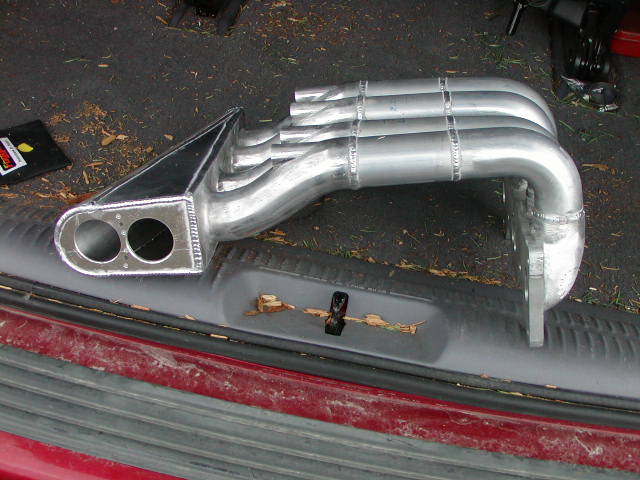
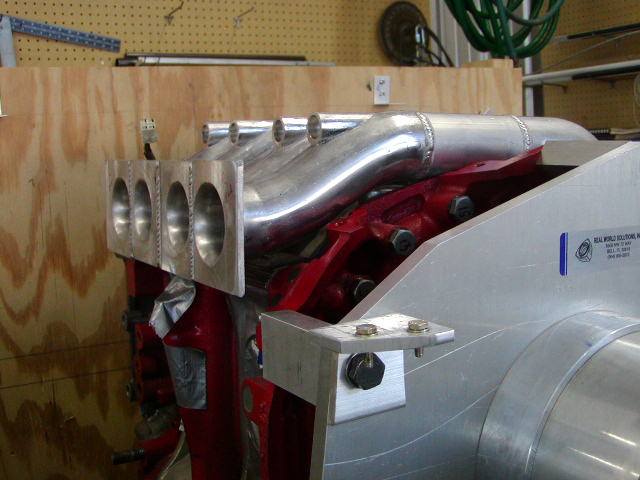
Well what I had in mind right at the moment is to test Bill Schertz
intake manifold with his permission which will be in common with
several hundred other such manifolds we have sold so far. Bill's
is done I suspect. Is anybody else further along than Bill?

As I understand it Jon your engines are four ports
correct? Ops... just thought of a gotcha? The intake man might
interfere
with the oil filter block. Darn. Means we will have to ship an engine.
Anybody have any idea what it cost to ship 250 pounds from chicago
to Long Island?

I will pay for part of this work. I can also loan one of Tracy's EFI
systems if Bill does not have one and a few spare injectors.
Bill would wind up with a tested engine and a viable EFI fuel map.

I would also be interested in the pressure and temp drop across
your heat exchanger Jon.

Paul Lamar

The AirCraft Rotary Engine NewsLetter.  Powered by Linux.
ACRE NL web site. http://home.earthlink.net/~rotaryeng/
Copyright 1998-2003 All world wide rights reserved.