Also I think Butch's scheme for mounting the lower starter won't
work. The starter pinion is about 5 mm too far out to mesh with the
ring gear. I would not start on the pattern until this is resolved.

Paul Lamar

******I've already identified and resolved this issue Paul.....George,
who has an Automatic/Turbo Starter (Sol. opposite Drive Gear) originally
informed me of this, the distance between the bottom of the Flange to the
Gear is 3mm greater than the Manual Starter...I tackled this by simply
adding 2mm of material to the inside surface of the Bellhousing (Bump out),
from just outboard of the 2 lower Fins making that whole wall section of
the Bellhousing 7mm thk. After the 2mm deep pocket/recess is milled on the
face side, the wall thickness is back to 5mm, then when the 5mm Starter
mounting plate is fitted in this pocket/recess, the top of the plate's
surface will be 3mm higher than the other 2 Starter surfaces.

Paul since you have one of these Starters, it would be a good idea to
carefully measure it, this way we can  double check ourselves on this before
we pour.

Butch

********************************************************************************

If it were me I would machine a lot of lightening holes as IMHO any
sand casting, due to the the thick walls, would be over designed strength wise.

Paul Lamar

******YES!!! Paul I agree with your above statement......But in reality it has
sort of been looked as which came first, "The Chicken or the Egg" Philosophy....
What is thick/strong enough??

Things in the sand casting industry haven't changed, and never will as a matter
of fact they are being phased out all-together by injection, billet,forging and
CNC machining....

The typical scenario goes something like this:

-The easiest part of the job is figuring out wherever and whatever Loads it must
withstand, then add a safety factor.....From this point on, the fun begins when
you ask, if it's "Strong enough"?.

-In the initial meeting, the casting house will either just tell you the thinnest
he will pour and/or informs you of his in-house "Rules of Thumbs" he has acquired
by experiences, this usually consists of previous experience in similar or
identical products to yours, followed with a, "Haven't heard of any breaking yet
and this company buys umtienth a year from us"...However if you're still
uncomfortable, just add a little more here and there, followed by "It will add
none or very little to the overall cost, comments....
NEVER, NEVER will you ever hear them suggest you take-off material, unless you
have way over-sized Bosses that are big enough to drill a 3/4" hole but your
intention is to drill a 1/4" hole.
To boot the Variables are uncanny from product to product, house to house,
especially in material density.
Don't get me wrong, I certainly don't blame them since they're driven by Liability
/Insurance issues, after all we've become a SUE Conscious Society..With Loopholes
steadily increasing to Cavern size....I just love Lawyers ;-)

So yes, in agreement with your statement Paul, people have a tendency to over
design things manufacturers add a little more just in case, ease of fabrication
and to cover thy precious ass, so as a result most Sand castings are on the Heavy
side.

So the question becomes, "What can we do that would be considered prudent in our
endeavor"???

>From a manufacturing point of view...NO Lightning holes should be INITIALLY provided
...Why commit everybody to an uncomfortable, delicate, personal and as yet unfounded
decision such as this?, since you can quite easily do this yourself down the line
with simple hand tools and some relaxing labor of love hours, as demonstrated by
most of Paul's manifolds which were turned into Light as a feather Jewels by ordinary builders....

None the less, thank God there are always pioneers the like Tracy, Paul, Ed, Chuck
and others in every scenario/product with their pecking order being be governed by
merely being ahead in their projects....They in turn happily, eagerly and earnestly
share their "Trials and Tribulations" with all of us.

I'm just happy as a "Pig in Shit", to be able to help by being involved, contribute,
solve and help make the bigger decisions now in whatever I can, perhaps afterwards
when I have nothing else to do and I'm bored to death, will probably delve into these
smaller potatoes :)

Butch
In my experience all the Mazda starter have the same distance from
mounting surface
to center of the pinion. As late as last Oct. when tracy and I were
getting
his test stand running again to test the VAM muffler I had to modify
the position of the mounting bolt holes. Everything else seemed to be
OK.

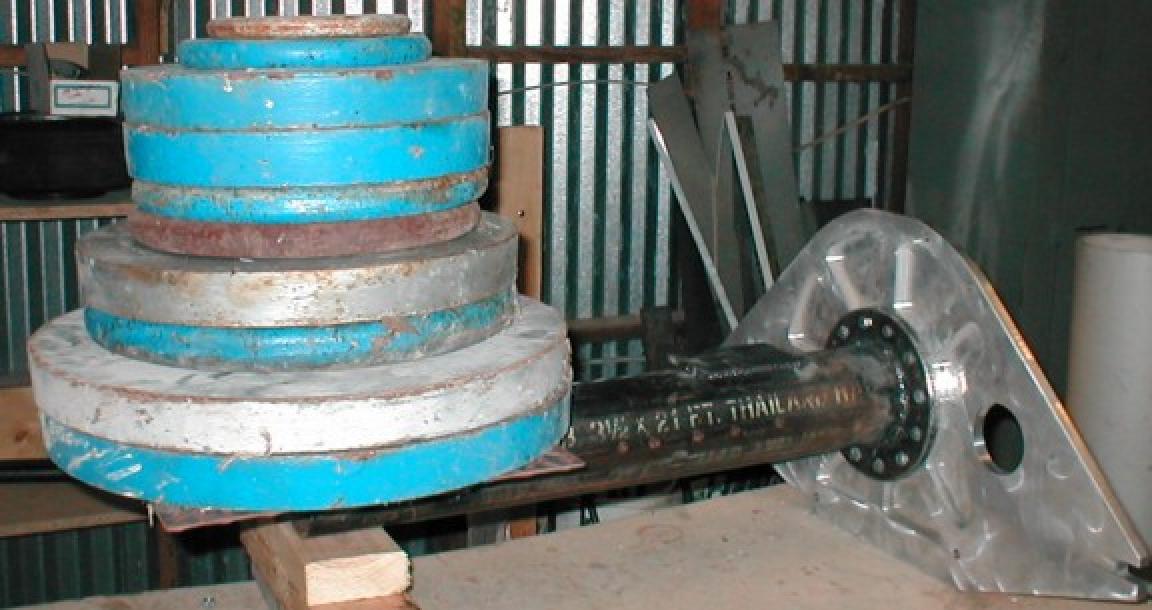
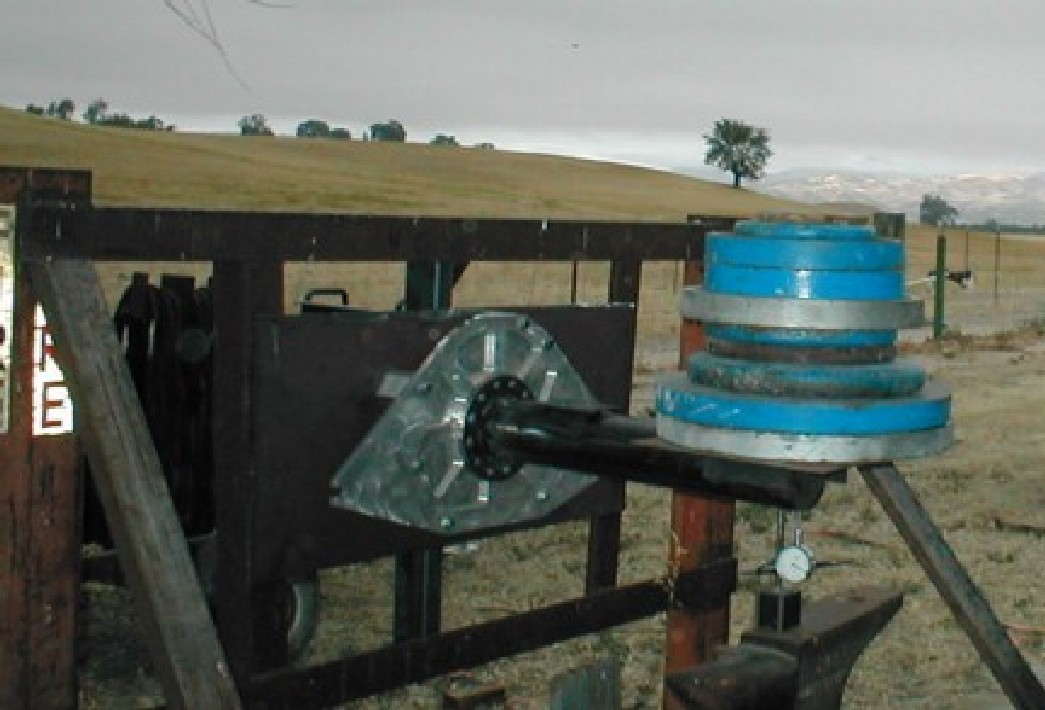
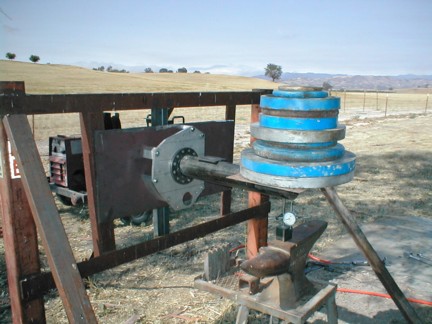
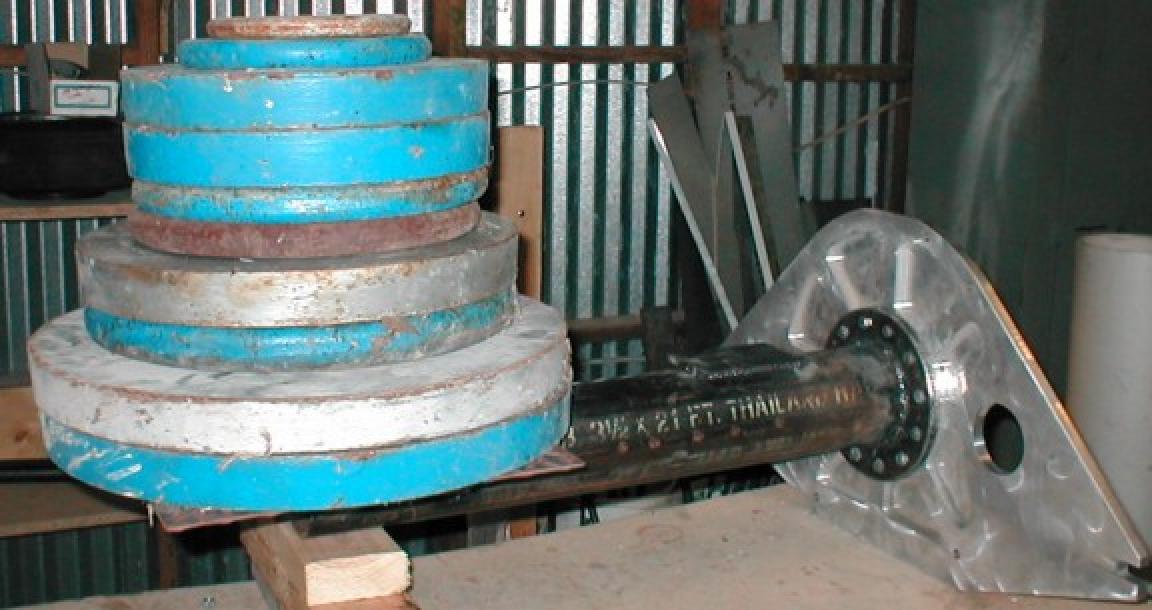
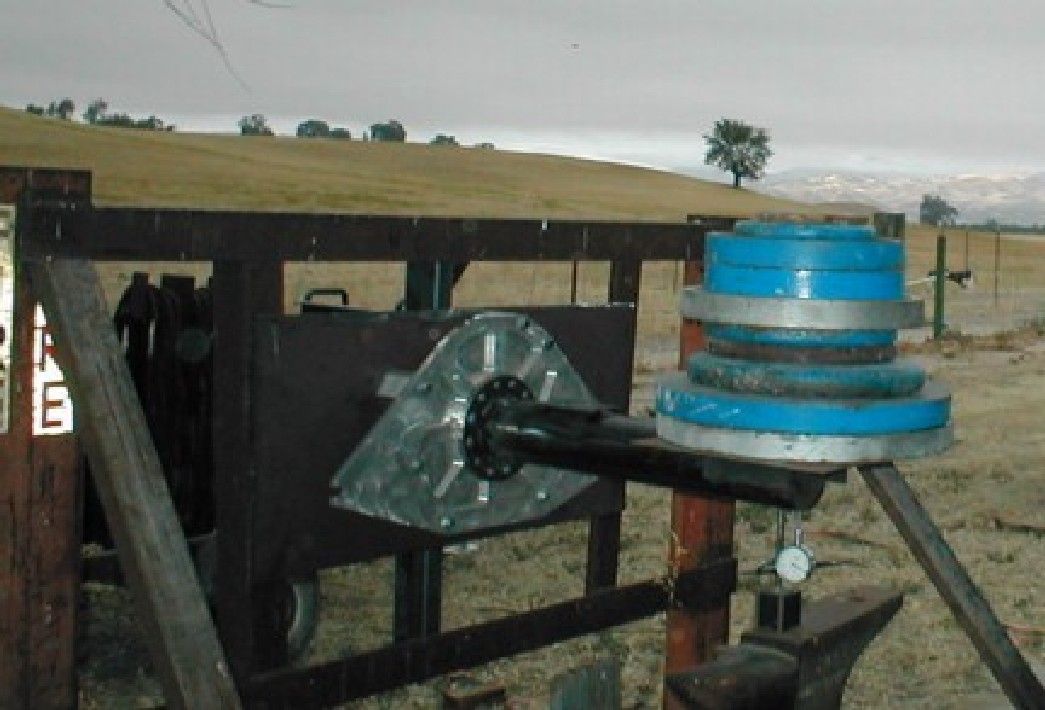
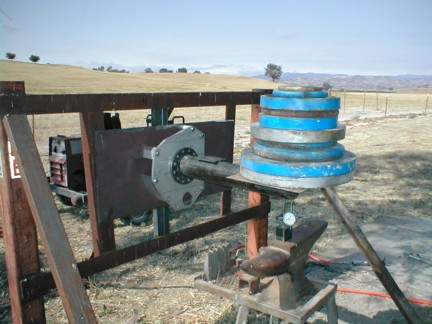
As far as bell housing strength is concerned we can perform a similar
deflection
test to that done by Jerry Hey on the machined motor plate.  Here are
a few photos.
The machined pockets had a minimal effect on the stiffness of the
motor plate.

Paul Lamar

The AirCraft Rotary Engine NewsLetter.  Powered by Linux.
ACRE NL web site. http://home.earthlink.net/~rotaryeng/
Copyright 1998-2003 All world wide rights reserved.