Michael wrote:

Description of Oil Flow Test
 by Marc Borom,

Dec. 15, 2003
Used oil was brushed on areas of the belly of the plane ahead of the
regions where air flow was to be monitored. The plane was then flown
normally for about 30 minutes. After landing, the oil flow patterns
were photographed. Tests were performed with and without an air
baffle installed. The air baffle used in the test was temporary. It
was constructed of a piece of cardboard and attached with duct tape.


A significant feature is noted in the area where the width of the
NACA scoop becomes nearly constant. Without the installation of the
corner baffle, the oil is blown away from the edge of the NACA
scoop, indicating that the air in the scoop is spilling out and
interfering with laminar flow along the belly. More significantly,
without the baffle, the air is not flowing into the cowl and cooling
effectiveness is being lost. In addition, drag is increased by the
resulting turbulent air.


Placement of a simple, triangular baffle prevents the air from
spilling out of the NACA scoop. An added and important benefit is
that cylinder head temperatures are lowered by about 30 degrees for
each cylinder.


The tests are preliminary, and the optimum size and shape of the
baffle has not been determined. Any suggestions as to size, shape
and placement would be appreciated.
The bottom line here is you can't tell beans by dirty oil flow.
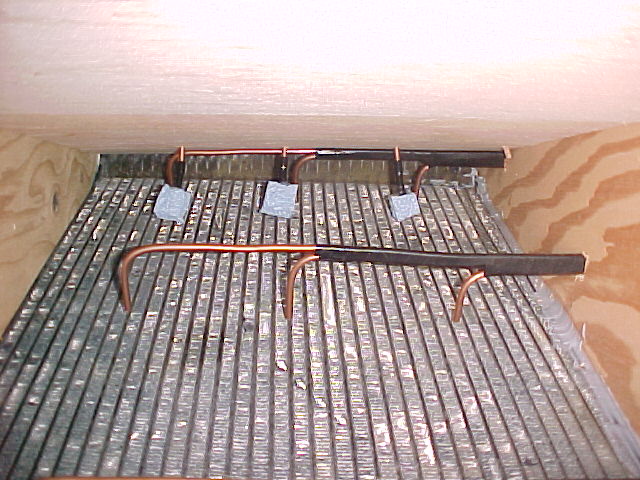
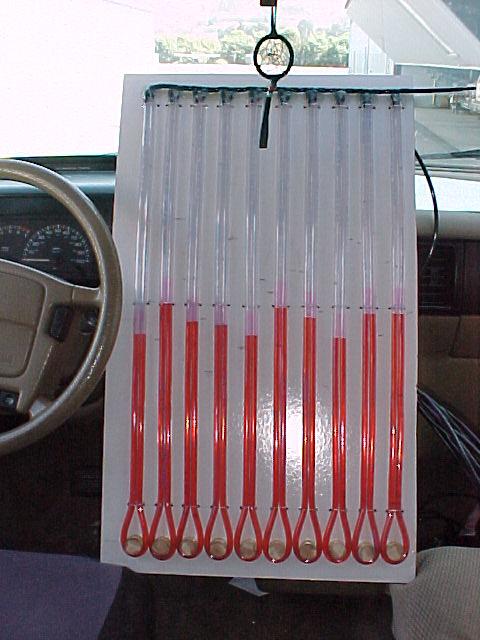
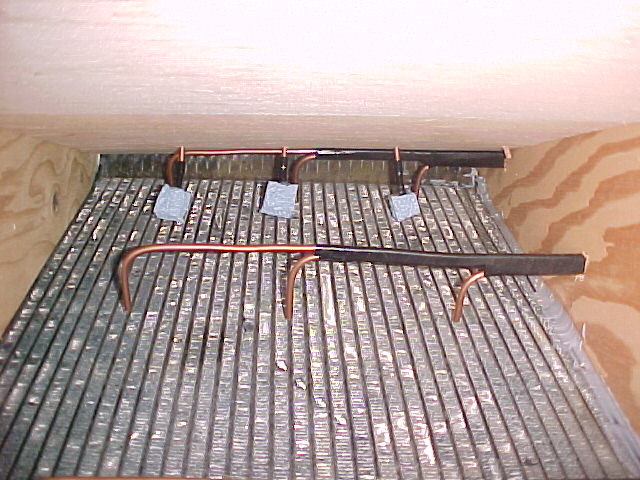
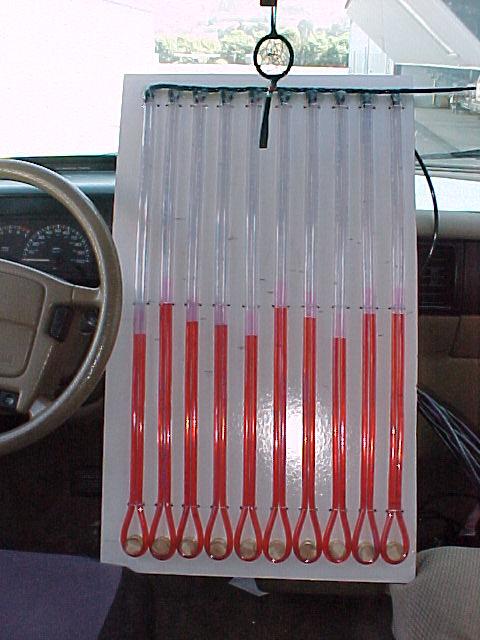
What you need to do is instrument the duct with a water manometer
and measure the pressure over the face of the rad, the back side of
the
rad and compare it with dynamic pressure. This will tell you
the flow through the rad. You can also measure the actual velocity of
the flow through the rad using the same tool.

Paul Lamar

The AirCraft Rotary Engine NewsLetter.  Powered by Linux.
ACRE NL web site. http://home.earthlink.net/~rotaryeng/
Copyright 1998-2003 All world wide rights reserved.