William wrote:
Paul, some comments on NACA's and the exiting of air on canard airplanes.

A builder friend of mine has an E-racer, with an IO-540 supercharged engine
in it that he has sorted out the cooling through the use of many pressure
measurements as he made various changes. It now works very well.

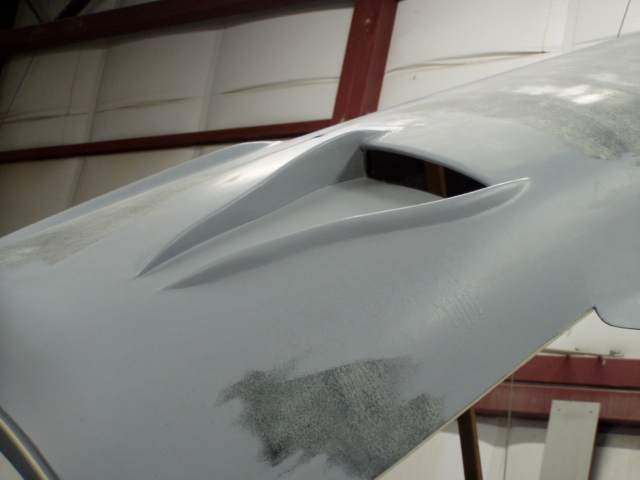
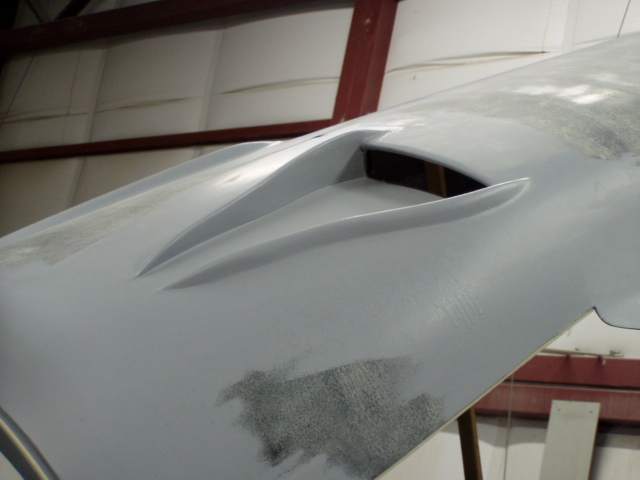
He is using 2 NACA scoops on the top of the fuselage, and has dams on the
edges.

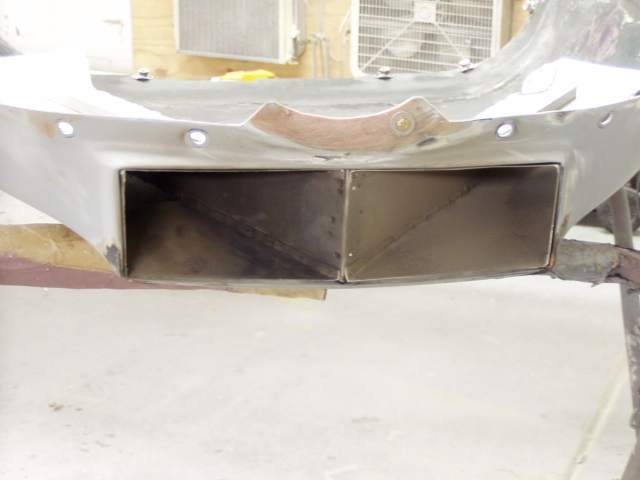
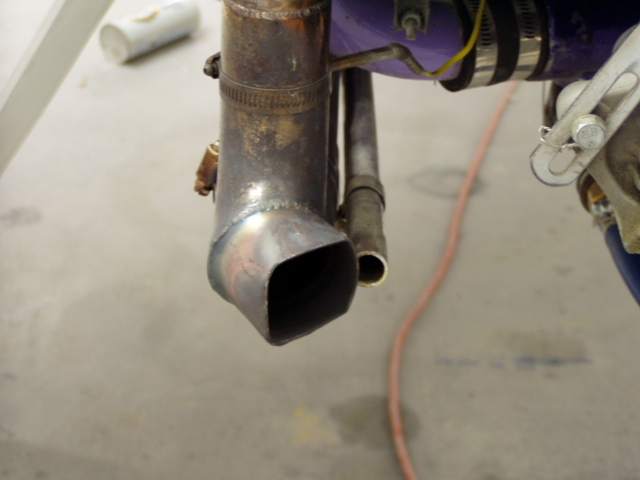
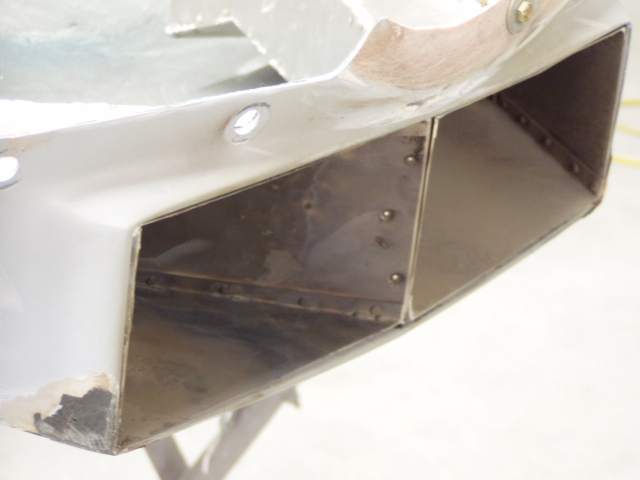
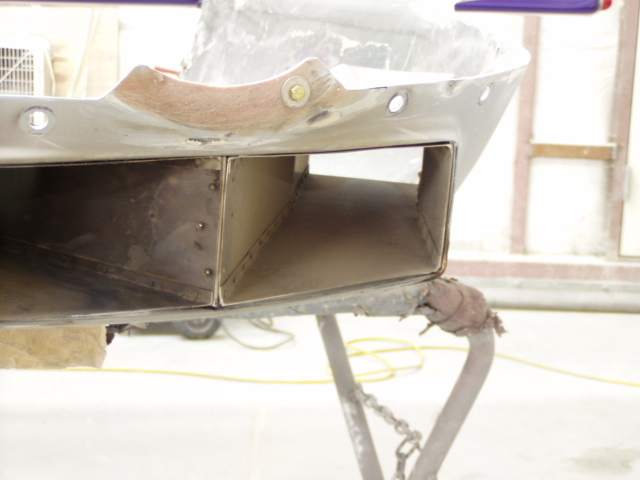
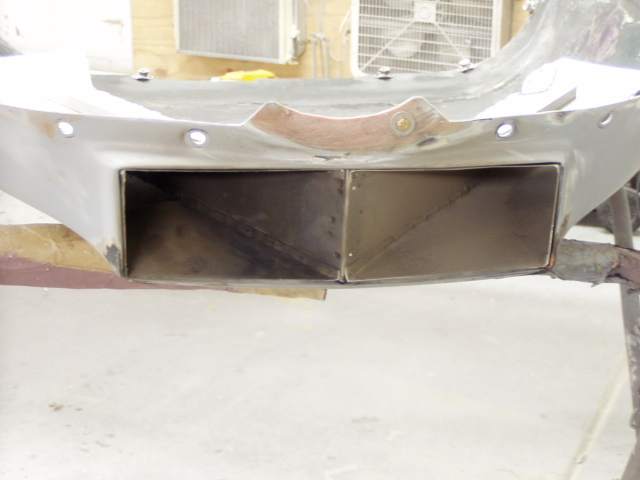
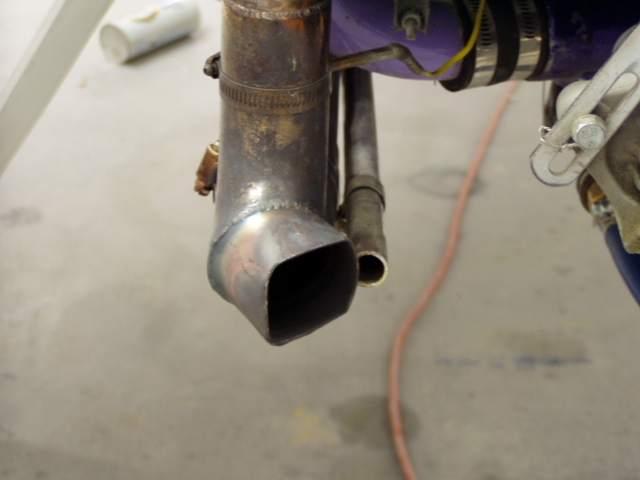
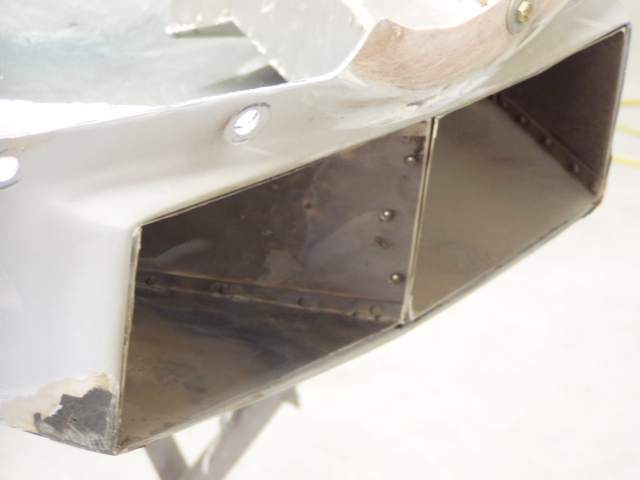
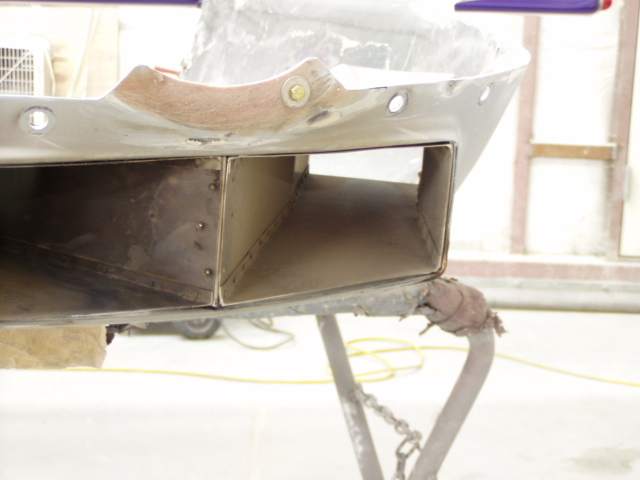
He has read many papers on exhaust augmentation, and has designed and tested
several versions. His current version (pictures attached) works very well.
In the course of testing before he had the exhaust augmentors, he would
often find that air was *going in* the exit holes on the back of the
cowling.

He can now taxi around all day, with the augmentors keeping enough air flow
to keep the engine cool, and when flying he gets between 7-8" of water
pressure differential across the engine (top deck to bottom deck).

Bill Schertz
KIS Cruiser # 4045
Would you ask him at what speed he measured that pressure drop?

BTW For further reading on NACA ducts the trick is to use the key word "submerged"
in the NASA search engine.

I did that and came up with a gold mine. I have edited out the transonic
and supersonic studies.

There are also many papers on  thrust augmentors but I have not come up
with the proper key words yet.

Paul Lamar

+++++++++++++++++++++++++++++++++++++++++++++++++++++

http://naca.larc.nasa.gov/

NTRS: NASA Technical Reports Server


searching for "submerged"


3. Wind tunnel tests of a ******submerged******-engine fuselage design /
Baals, Donald D
National Advisory Committee for Aeronautics (NACA)
NACA WR-L-485 , October 1940 /

4. An experimental investigation at large scale of several
configurations of an NACA ******submerged****** air intake /
Holzhauser, Curt A Martin, Norman J
National Advisory Committee for Aeronautics (NACA)
NACA RM-A8F21 , October 19, 1948 /

5. An Experimental Investigation of NACA ******Submerged******-Duct
Entrances/
Charles W. Frick; Wallace F. Davis; Lauros M. Randall; Emmet A. Mossman
National Advisory Committee for Aeronautics (NACA)
NACA ACR-5I20 , November, 1945/
The results of a preliminary investigation of ******submerged******-duct
entrances are presented. It is shown that an entrance of this type
posses desirable critical speed and pressure recovery characteristics
when used on a fuselage or nacelle in a region of low incremental
velocity and thin boundary layer. The data obtained indicate that
******submerged****** entrances are most suitable for use with
internal-flow system which diffuse the air only a small amount: for
example, those used with jet motors which have axial-flow compressors.
When complete diffusion of the air is required, fuselage-nose or wing
leading-edge inlets may prove to be superior. The results of the
investigation have been prepared in such a form as to permit their use
by a designer and the application of these data to a specified design is
discussed.

6. A preliminary experimental investigation of a ******submerged******
cascade inlet /
Christiani, R Duane Randall, Lauros M
National Advisory Committee for Aeronautics (NACA)
NACA RM-A9A24 , March 25, 1949 /


12. An experimental investigation of the design variables for NACA/
Emmet A. Mossman; Lauros M. Randall
National Advisory Committee for Aeronautics (NACA)
NACA RM-A7I30 , January, 1948/
******submerged****** duct entrances Information concerning the
parameters and design variables affecting an NACA ******submerged******
duct design is presented. The principal variables investigated include
entrance width-to-depth ratio, ramp-wall divergence, ramp angle, and
deflector size. Tests were also made to show the effect of variation of
boundary-layer thickness and ramp-floor contour. Pressure recovery at
the duct entrance and after slight diffusion, pressure distribution over
the lip and ramp, and drag are given as functions of the inlet velocity
ratio of the entrance. An evaluation of the NACA ******submerged******
entries indicates that satisfactory duct characteristics may be found
for a range of the test variables. It appears that an optimum NACA
******submerged****** inlet design should employ curved diverging ramp
walls, a 5 degree to 7 degree ramp angle, and a width-to-depth ratio of
from 3 to 5. The boundary-layer thickness of the surface into which the
inlet is placed was found to have a large effect on the pressure
recovery. Possible applications of this types of inlet and their
particular advantages are discussed.


19. Tests of ******submerged****** duct installation on a modified
airplane in the Ames 40- by 80-foot wind tunnel /
Martin, Norman J
National Advisory Committee for Aeronautics (NACA)
NACA RM-A7I29 , December 11, 1947 /

20. An experimental investigation of NACA ******submerged****** air
inlets on a 1/5-scale model of a fighter airplane /
Gault, Donald E
National Advisory Committee for Aeronautics (NACA)
NACA RM-A7I06 , December 05, 1947 /
No Abstract Available

22. Theoretical investigation of ******submerged****** inlets at low speeds/
Alvin H. Sacks; John R. Spreiter
National Advisory Committee for Aeronautics (NACA)
NACA TN-2323 , August, 1951/
The general characteristics of the flow field in a ******submerged******
air inlet are investigated by theoretical, wind-tunnel, and visual-flow
studies. Equations are developed for calculating the laminar and
turbulent boundary-layer growth along the ramp floor for parallel,
divergent, and convergent ramp walls, and a general equation is derived
relating the boundary-layer pressure losses to the boundary-layer
thickness. It is demonstrated that the growth of the boundary layer on
the floor of the divergent-ramp inlet is retarded and that a vortex pair
is generated in such an inlet. Functional relationships are established
between the pressure losses in the vortices and the geometry of the
inlet. A general discussions of the boundary layer and vortex formations
is included, in which variations of the various losses and of the
incremental external drag with mass-flow ratio are considered. Effects
of compressibility are also discussed.

23. An experimental investigation at large scale of an NACA
******submerged****** intake and deflector installation on the rearward
portion of a fuselage /
Holzhauser, Curt A
National Advisory Committee for Aeronautics (NACA)
NACA RM-A50F13 , August 30, 1950 /

24. An experimental investigation at large scale of single and twin NACA
******submerged****** side intakes at several angles of sideslip /
Martin, Norman J Holzhauser, Curt A
National Advisory Committee for Aeronautics (NACA)
NACA RM-A9F20 , August 1949 /
No Abstract Available

25. Preliminary investigation of a ******submerged****** air scoop
utilizing boundary-layer suction to obtain increased pressure recovery /
Nichols, Mark R Pierpont, Kenneth P
National Advisory Committee for Aeronautics (NACA)
NACA TN-3437 , April 1955 /

29. An investigation of ******submerged****** air inlets on a 1/4-scale
model of a typical fighter-type airplane /
Delany, Noel K.
National Advisory Committee for Aeronautics (NACA)
NACA Research Memorandum A8A20 , 1948/
Wind-tunnel tests were made of ******submerged****** air inlets on the
fuselage of a 1/4-scale model of a typical fighter-type airplane. The
results are presented for ramp plan forms with parallel and diverging
walls, and show the effects on the ram recovery ratio and predicted
critical Mach number of the duct entrance location (forward of the wing
and over the wing), internal ducting efficiency, angle of attack, and
the use of deflectors. Drag increments of the inlets are presented for
the forward location.


31. Development of NACA ******submerged****** inlets and a comparison
with wing leading-edge inlets for a 1/4-scale model of a fighter airplane/
Mossman, Emmet A.; Gault, Donald E.
National Advisory Committee for Aeronautics (NACA)
NACA Research Memorandum A7A31 , 1947/
Characteristics of NACA ******submerged****** duct entries and wing
leading-edge inlets designed for a 1/4 scale flow model of a
fighter-type airplane powered by a jet engine in the fuselage are
presented.

32. Tests of ******submerged****** duct installation on the Ryan FR-1
airplane in the Ames 40- by 80-foot wind tunnel /y Norman J. Martin/
Martin, Norman J.
National Advisory Committee for Aeronautics (NACA)
NACA Research Memorandum A7D14 , 1947/
An investigation of an NACA ******submerged****** intake installation on
the Ryan FR-1 was conducted to determine the full-scale aerodynamic
characteristics of this installation. In addition, tests were conducted
on the ******submerged****** inlet with revised entrance lips and
deflectors to determine the configuration which would result in the best
dynamic pressure recovery measured at the inlet for this installation
without a major rework of the entrance. Stalling of the air flow over
the inner lip surface created excessive dynamic pressure losses with the
original entrance. The revised entrance produced a 12-percent increase
in dynamic pressure recovery at the design high-speed inlet-velocity
ratio and resulted in an improvement of the critical-speed
characteristics of the entrance lip. A complete redesign of the entrance
including a decrease in ramp angle and adjustment of lip camber is
necessary to secure optimum results from this ******submerged****** duct
installation.


The AirCraft Rotary Engine NewsLetter.  Powered by Linux.
ACRE NL web site. http://home.earthlink.net/~rotaryeng/
Copyright 1998-2003 All world wide rights reserved.