I have a few questions for you Francois concerning your coolant flow
requirements.
At what HP level is the specified 53 gallons per minute required?
How was that determined?
I assume you are using a stock Mazda water pump?
If so do you have flow rate data as a function of water pump RPM?
Were any test run on the effect on the coolant flow using less
than dash 16 diameter hose?

Paul Lamar
Hello Paul,

You put your finger on a sore spot:  there is indeed a gross mistake
in
our data sheet: we need a 50kw (170,000 BTU/h) oil cooler, the oil
flow
to the cooler should be 66 l/mn (17.5 gal/mn), and we now use dash 12
hoses for oil.  The mistake came from measurements done at our partner
Fribourg University of Applied Sciences before I spun off the project
and took over the management of MRE, so I don't know the reasons of
the
screw-up.  We also had to redesign the oil collector to reduce head
loss, but the problem is now solved.

The water pump is our own design, not Mazda's.  It pumps 200 l/mn (53
gal/mn) at full continuous power (200 hp and 5650 engine RPM).  We
have
a flow rate chart for our design but, as far as I know not for
Mazda's.
We are using hoses of 21.33 mm inner diameter in the aircraft (it's
been
purchased in the US by ERAU, I don't know what the standard is).
Simple
head loss calculations show that dash 16 (19.5mm inner diameter) hoses
would be ok, but not much below.  We have not experimented further
because water cooling was never a problem as we have ample flow and
had
a big 86 kW heat exchanger on the bench.  We'll see how it goes in the
plane as our partner for heat exchangers has been less liberal with
his
design.

Best regards,

Francois Badoux
Bill Schertz and I did some work with the stock pump and found that 53
gallons
was generally a very good output with the stock pump. Vance built a pump
dyno
and we found that about 2 HP was required to drive the stock pump. The
valve
simulates the pressure drop through a heat exchanger. I am still working
on
measuring the actual pressure drops throughout a real system. Your data
and
our data is tracking pretty good so far.

Paul Lamar
Not really surprising Paul as we are both working on the same basic
engine!  I have proposed to Geneva's University of Applied Sciences (one
of our academic partners) to sponsor what we call here a practical
"diploma work" by one of their students to thoroughly measure and study
our engine's various heat rejections as well as flows and pressure drops
throughout the various systems, as my guys have no time to do it.  The
data we have from previous work seems to be ok (except the screwed-up
data for the oil cooler) but incomplete.  I am ready to share with you
the results, but it will be done only next falls as it is not at all
time critical for us.  We also will have similar data done at
Embry-Riddle from flight testing our Arrow (including air flows and
pressures through our cowl's air ducts).  But, for the time being, we
consider this data proprietary as it will be the basis for a future
PA-28 STC, sorry.

Basically, as I said in previous emails, we never had the slightest
problem with water cooling.  We did have one with oil cooling that was
due to too small diameter bores in our oil collector and to small hoses.
That, I believe is solved.  Excessive heat rejection in the exhaust is
inherent to the engine, I fear... unless you have some suggestions?!
How do you people insulate the exhaust and muffler system?  Simple heat
shields or double-walled exhaust?  Do you ventilate the turbo to avoid
excessive heat under the cowl?  If yes, no problem of turbo cracking due
to uneven cooling?  These are issues we still have to solve for the
Arrow installation

Francois Badoux
Currently we are seeing numbers like 1750 F at full power and 1550 F leaned
out at altitude and cruise power settings. No rigorous testing has been done
on exhaust system cooling schemes. We have done some preliminary work
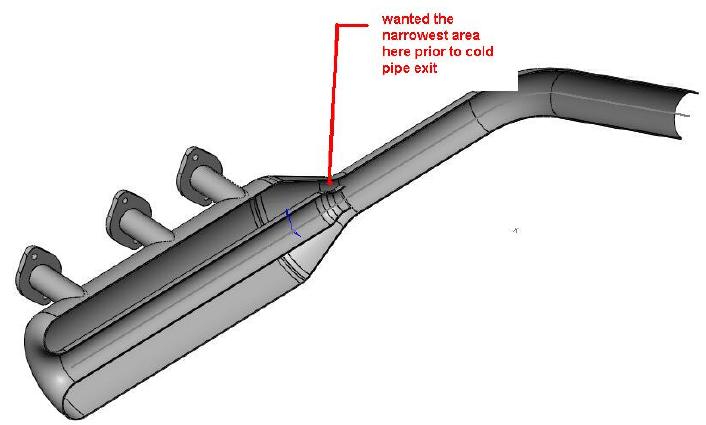
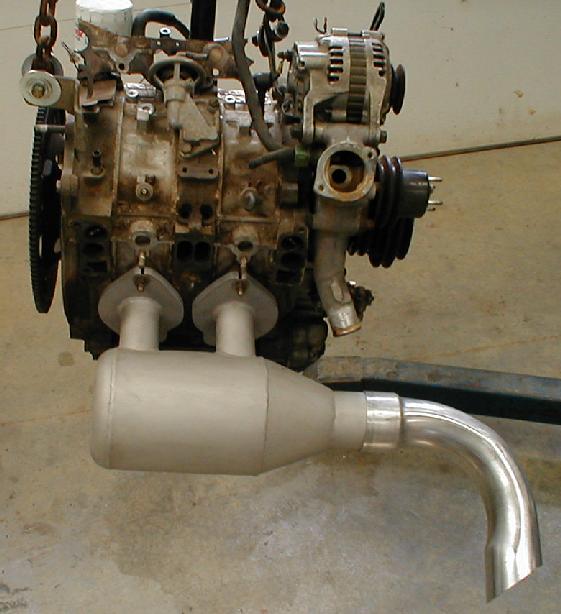
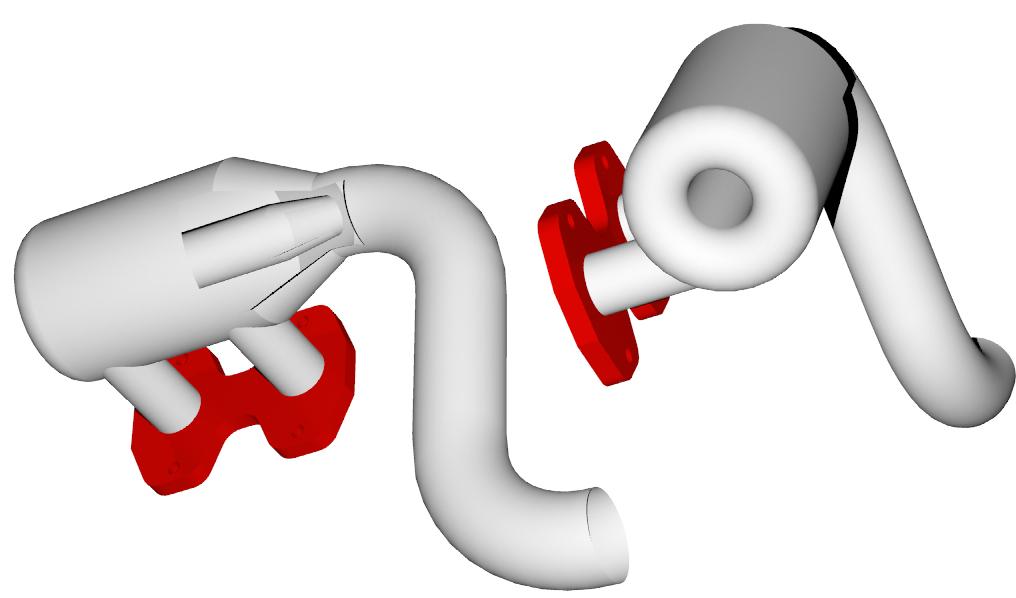
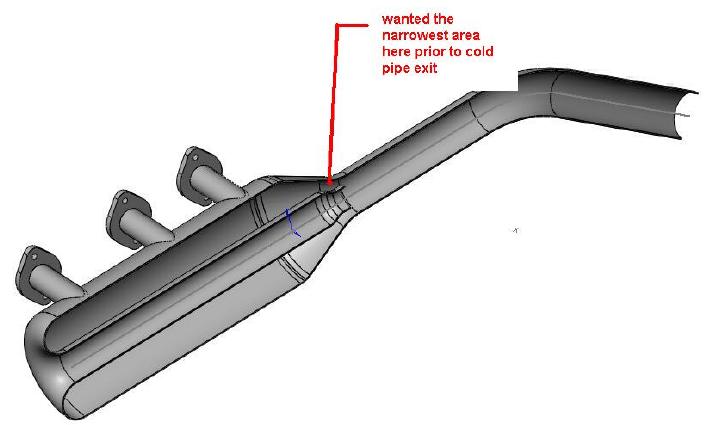
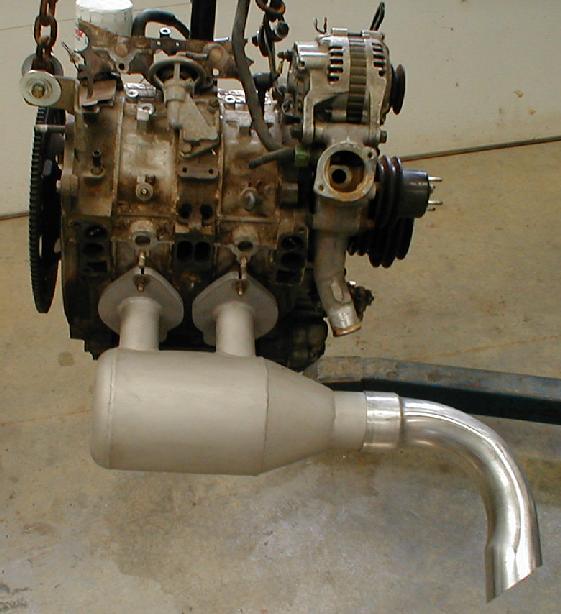
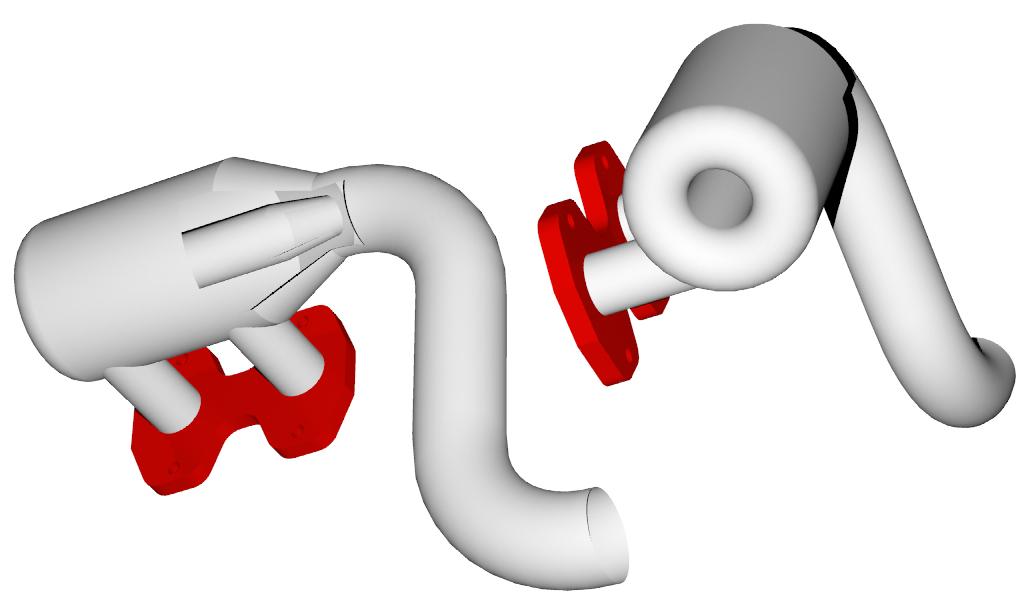
with this muffler design intended to cool the exhaust for pusher use.

Rumor has it the RX8 engine side exhaust port engines have about 200 degrees
F cooler exhaust.

Paul Lamar

The AirCraft Rotary Engine NewsLetter.  Powered by Linux.
ACRE NL web site. http://home.earthlink.net/~rotaryeng/
Copyright 1998-2003 All world wide rights reserved.