Phil Flaugher wrote:
I agree with you........however, years of referencing ICE's as
motors has dulled the correct application of the words.
"Certificated" bugs me......."Certified" carries all the necessary
description.......
Our language evolves......I'm just very happy a group of technically
capable/qualified folks are investing in rotary technology with the
potential for bringing "mainstream" acceptance. I'm still angry our
government gave away so much to other technologies for GA and
ignored the rotary. I'm not opposed to diesels but the products
being brought to market are certainly not cost breakthroughs or even
large advances in efficiency. I am not as concerned with MecanAir's
new name as I am in their success. If successful, they should
validate an awful lot of what Paul and you other guys have done and
are doing and maybe provide a new source of affordable, proven parts
for the budget builders working out of their garage. Every Mazda
application would not have to be a major engineering or trial and
error undertaking (plugs up, exhaust configuration, porting, correct
injectors, pulley sizes, oil distribution, fittings, etc.). I'm
really pulling for them and hope they see a market for those who
wish to source components as opposed to firewall forward.

Phil
Phil, thank you very much indeed for your good wishes and moral support.

For the record:

Some years ago, what became MRE started as a joint project between
Fribourg University of Applied Sciences and Mecanair SA, a
long-established aircraft maintenance and engine overhaul company in
Switzerland to develop a JET-FUELED GA engine... with a gasoline engine
being the short-term and indispensable stepping stone.  Starting from a
blank sheet of paper, all possible technologies where reviewed.  Rotary
came out ahead of turbo-diesel technology on all accounts minus one.
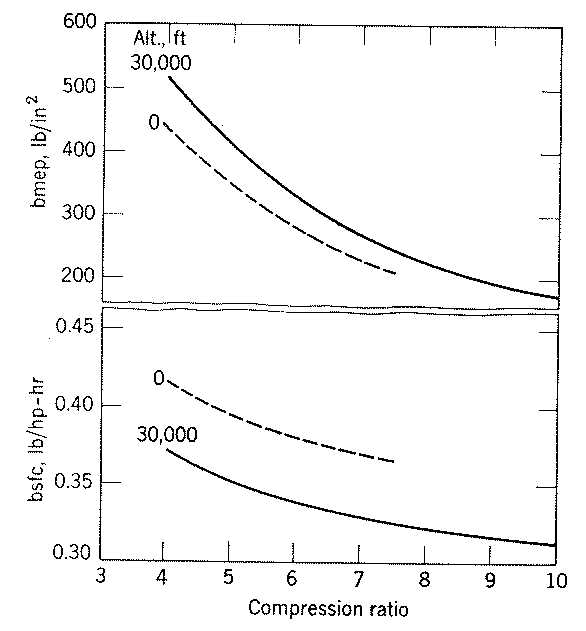
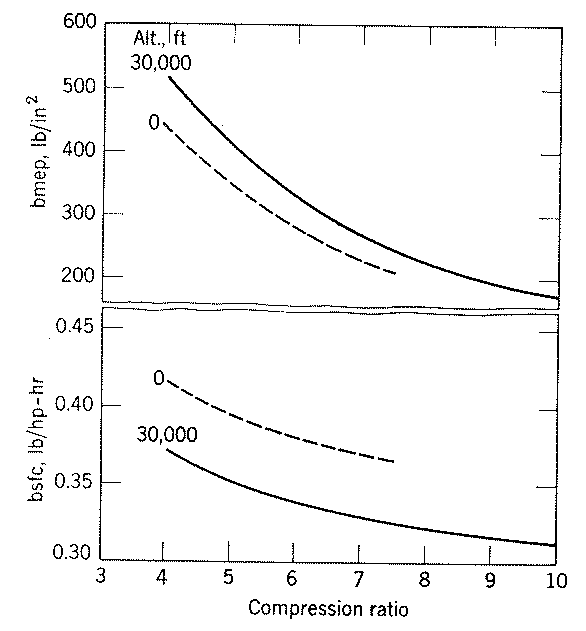
The only advantage of turbo-diesel is BSFC, which cannot be beaten.
Otherwise it makes for heavy and bulky engines, hard torsional
vibrations that break reducing gears as well as props (ask SMA!
Although this problem is reduced with smaller-bore cylinder engines such
as the TAE 135 hp), high manufacturing costs and problems with the
variability of Jet-A's ketane rating from country to country (that's a
not so trivial but little-known problem facing turbo-diesel
manufacturers in South America, Africa and South-East Asia). The only
down side of the rotary engine is it's less than perfect BSFC, but I am
sure that all of you guys have your little idea(s) on how to improve on
that.  Well that's how MRE got it's "R".

Best regards,

Francois Badoux
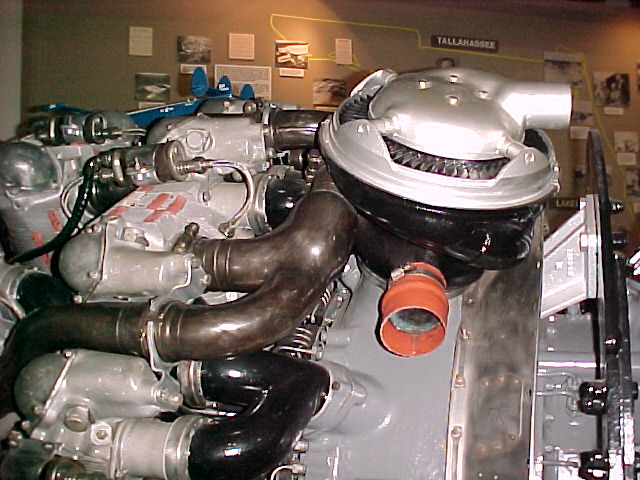
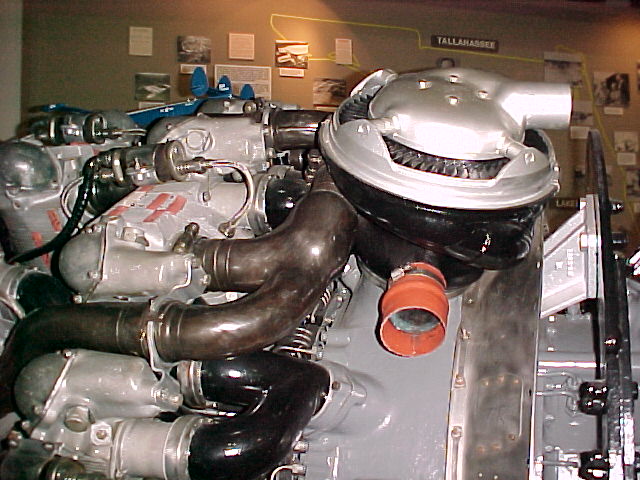
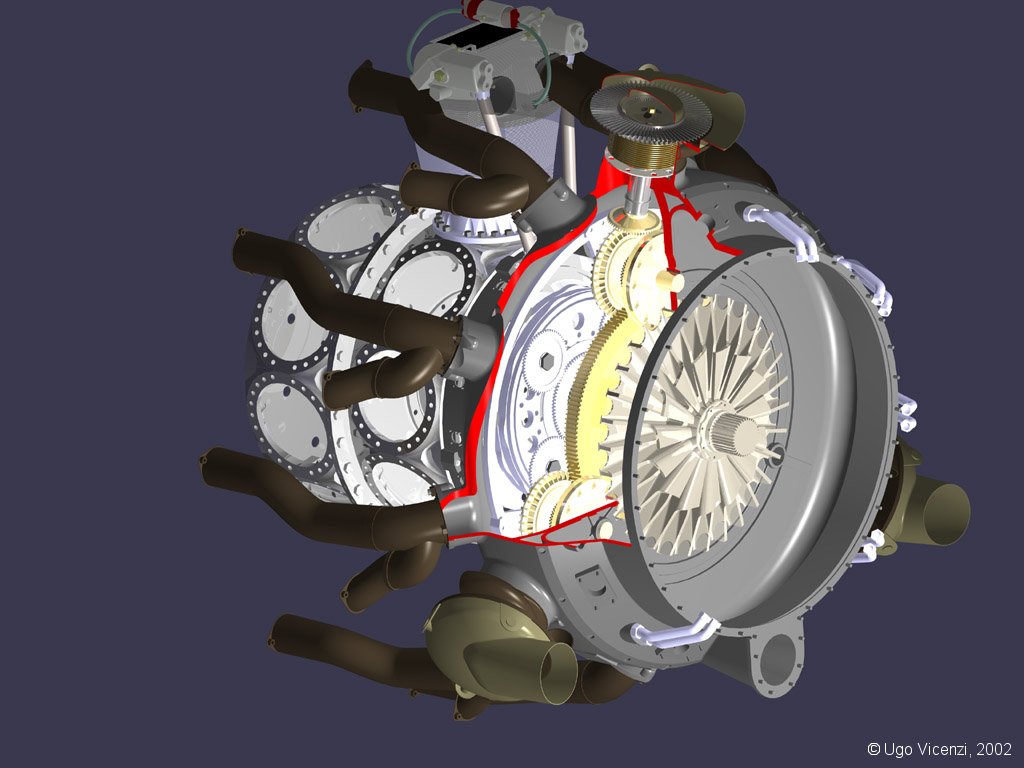
Turbo compound Francois is the answer. Sixty year old technology tried and true.
CW R3350TC Turbo compound engines held all world unrefueled distance records until
the Rutan Voyager went around the world. A Lockheed twin CW R3350TC P2V flew from Australia
to Ohio and held the record for years. Lockheed Connies routinely flew from San
Francisco nonstop to London in the late 50's. It was years before the 747 could
equal that.

The Achilles heel of the piston turbo compound was the exhaust valve. If it broke
up it would take out the turbine on the way out. The RX8 engine with
the side exhaust ports reportedly has a cooler exhaust gas.

The trick is to open the waste gate controlled by the exhaust gas temp
to prevent damage to the turbine at full power. At altitude leaned cruise
where the exhaust temp is lower the BSFC will be optimized and improved
by 20%.

Here is an excerpt from the book Vee 's for Victory
***************************************************************************
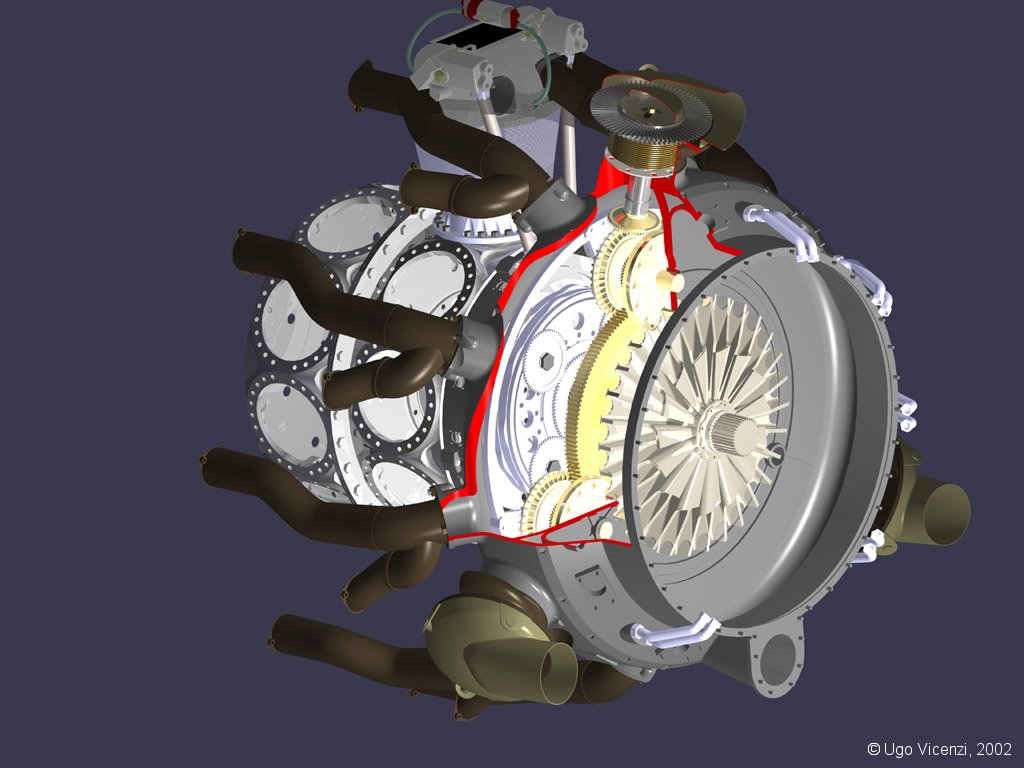
E-27: In many ways this was a very unique engine, and way ahead of its time.
This was the first turbo-compound, or "power feedback" engine built by any
manufacturer. Based on the E-22 power section with Auxiliary Stage
Supercharger, it added a General Electric CT-l power turbine, driving the
crankshaft through 5.953: 1 gears. Allison built a mockup of the
configura-tion in September 1944, followed by a series of component tests,
including a complete compound engine development series run in June 1945.
The first complete engine was produced in September 1945.49 The turbine was
adapted from the CH-5 turbosupercharger and driven by exhaust gasses
collected by P-38 type collector manifolds. Compression ratio was reduced to
6.00:1 to accommodate very high manifold pressures up to 100 inHgA,
consequently Grade 115/145 was specified. The 12-counterweight crank-shaft
was used allowing ratings at up to 3200 rpm. The engine was in-tended for
the Bell XP-63H, where it would have been able to deliver a WER rating of
2980 bhp at up to 11,000 feet from 100 inHgA, using ADI injection.
Considerable running of related components and complete en-gines was
accomplished during 1944/45. The engine was able to demon-strate a 19%
improvement in cruise specific fuel consumption due to the contribution of
the power turbine. The aircraft never flew because the tur-bine was limited
to inlet exhaust gas temperatures of 1725 of, and at ful: power this
temperature could be easily exceeded. As a consequence, Allison undertook
a project of their own to design and develop a suitable power turbine with
air-cooled blades, though that occurred only after the V-17 I 0-127(E27)
project was canceled.

Paul Lamar

The AirCraft Rotary Engine NewsLetter.  Powered by Linux.
ACRE NL web site. http://home.earthlink.net/~rotaryeng/
Copyright 1998-2003 All world wide rights reserved.