Mark Supinski wrote:

Hi Paul-

We recently acquired a Mazda Turbo II engine to rebuild for use
in
our
Mustang II kit plane.
The engine we have was imported directly from Japan -- not as
part
of
car, but as a used engine pulled from a vehicle
in Japan. We are unsure of what year it truly is -- ie, is it
really a
turbo-II (since the date ranges for US
turbo-IIs might be different than the ranges in Japan). Can you
identify it from the pictures? Is there someplace on
the engine we can find serial numbers? All we can find is 13B
on
the
rotor housings.
FYI, we'll be fully rebuilding based on the Bruce Turrentine
video
we
got a few weeks back.
Regards,

Mark Supinski & Mark Precious
It is definitely a 2nd gen Turbo II but I cannot say whether it is
an
88
or a 90
with the turbo heat shield on there. There is a critical
difference
as the 87's 88's cracked with regularity while the 89's 90's 91's
were
more robust.
BIG difference in used prices.

If you take the heat shield off and take a close up picture of the
turbo
I can tell you which it is.

Paul Lamar
"Brian D. Cain" wrote:
It's a series 4 (1987 and 1988 year model).  It has 10.5lb, 8.5:1
compression ratio rotors and slightly smaller
intake port runners over the Series 5 (1989 to 1991) models.  It
also
has a
27lb flywheel and the same Hitachi
HT18 turbo the latter model uses except the turbine housing is
slightly
smaller with some 'twin scroll'
contraption.

B
__________________
Brian D. Cain -/- Grand Prairie, TX -/- bdc196@killspam.comcast.net
bdc@killspam.teamfc3s.org
BDC Motorsports - Performance Rx-7 13B Rebuilds, EFI tuning, etc.
MSN bdc196@killspam.hotmail.com, Yahoo! bdc196, AOL Symajhi, ICQ#
1733105
Unfortunately the turbo that cracks.

The good news is the 89-90 turbo and manifold will bolt right on.

Paul Lamar
We have removed the heat shield and cover to the turbo on our 13b. Based
on
the photos which had been posted by someone earlier, I now conclude this
is
a 89 -91 turbo -- it exactly matches the photo labelled as such.

"Phew, thank goodness", right??

(Please find attached a 675K image of the turbo unit for good zoom in
purposes.)

My only remaining  concern in opening up the cover is what
appears to be a bunch of slag metal that is clearly visible in the center
of
the unit. It can't be, but the closest thing it looks like to me is a
practice weld by a beginner welder on his very first practice piece of
metal. Could this hide a post operation hairline fracture or is this
just
the internal unfinished work by the manufacturer..... Zoom in and let me
know what you think.

Mark & Mark
That looks just like casting imperfections in the sand mold. They usually
don't crack
there. You did luck out. It is the right year.
Congratulations. You got a good one. BTW the turbine looks OK.
Wiggle the shaft and see if it turns smoothly.

Paul Lamar

Mark and Mark,

Do you have your engine mount for the Mustang yet?  If so, can you tell me
who did it for you? Which PSRU are you planning to use?
Bob Lemings
Bob, Don Dunbar is quite far along with his Mustang. Here are some pictures.

Paul Lamar
Conversion Concepts sells rotary mounts for a variety of platforms, including
the Mustang II.  We're getting ready to put in an order for one ourselves --
roughly $1k.  I've attached a few jpg examples below -- this is of a rv6a
mount; they haven't posted pics of the MII mount.

Anyone (Paul) have any comments on the mount design?  Granted this isn't the MII
mount I need, but it looks more complex & thus if they get this right...

Regards,

Mark & Mark
This mount is vastly improved over their earlier mounts as far
as the tubing space frame part of the design is concerned. You may still
run into turbo charger or muffler interference with the down tubes.

The remaining problem is the sandwich plate. Too heavy and too expensive.
Also twice the opportunity for oil leaks.

A simple beam under the rear end housing below the oil pan like Don Dunbar used is
all that is needed. This position carries 90% of the load. The aft mounts in this
design are way overkill and unnecessary. Consequently they add to the cost
and weight. Another reason it is expensive is the cost of the huge chunk
of aluminum they start with and the cost of machining it down with an NC mill.

Perhaps you can buy the just tubing part and forget the sandwich plate.

Jerry Hey was building motor mounts but I have not heard from him lately.
He has a universal welding jig that can adapt to almost any design.

A good motor mount should cost less than $500.

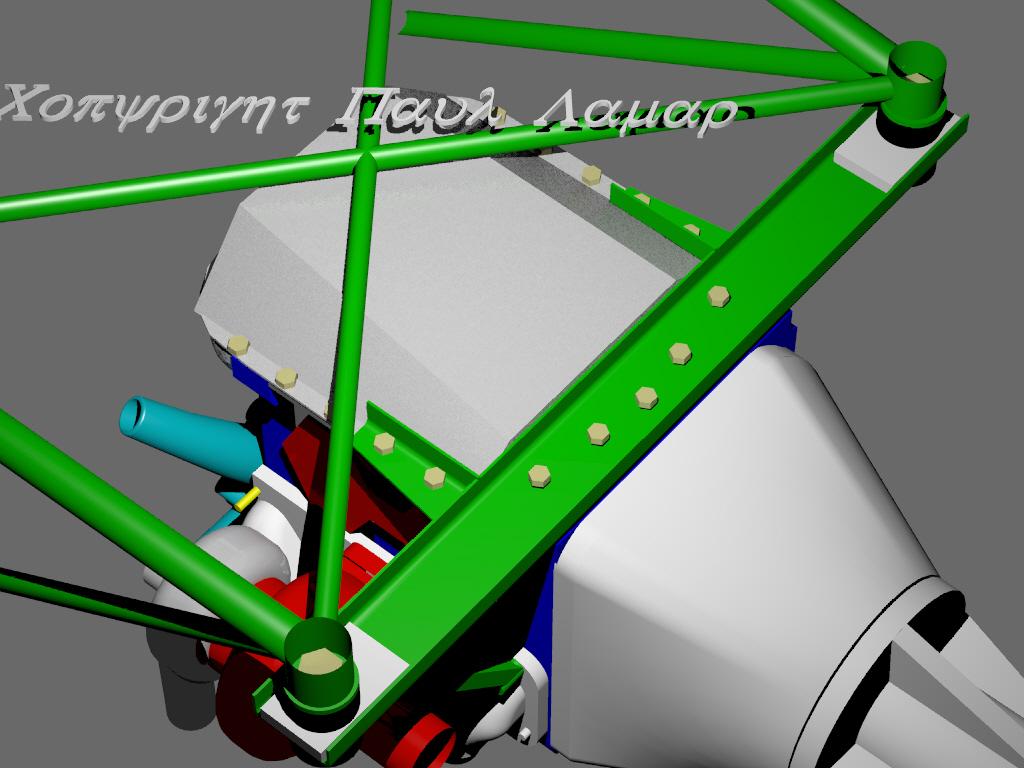
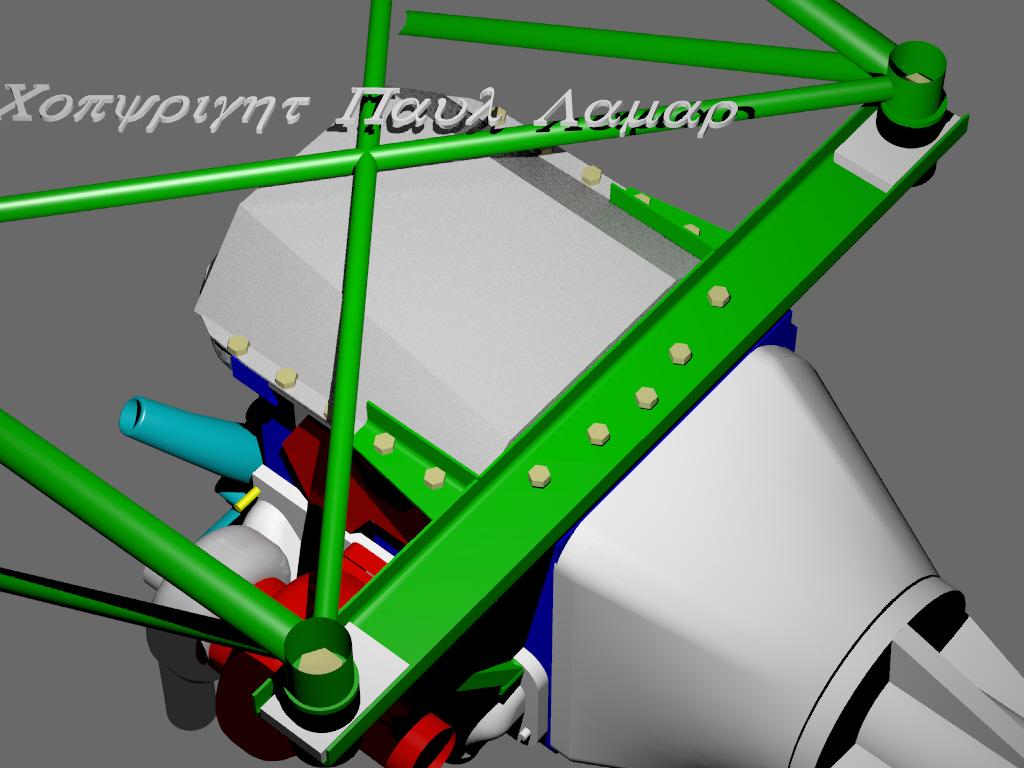
Here is a better lower cost way of doing it that gives more clearance for a turbo charger
or a muffler. It is similar to a P51 type mount. The four tubes that make up
each beam and their support tubes must lie in a flat plane.

What ever you do... make a 1/4 scale balsa model of the mount first. You can learn volumes
about space frames by making models.

Paul Lamar
Paul,

I have had email discussions with Jerry Hey about mounts for the MII recently and you are correct- his mounts are reasonably priced.  He also made a mount recently for a guy in Florida for an MII using a rotary, but did not have photos.

Bob Lemings
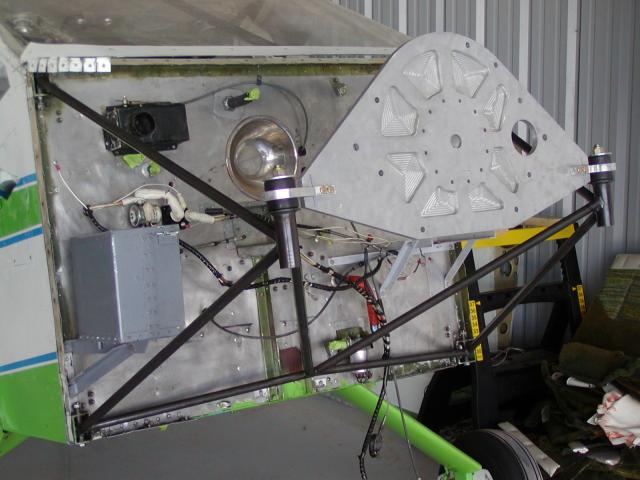
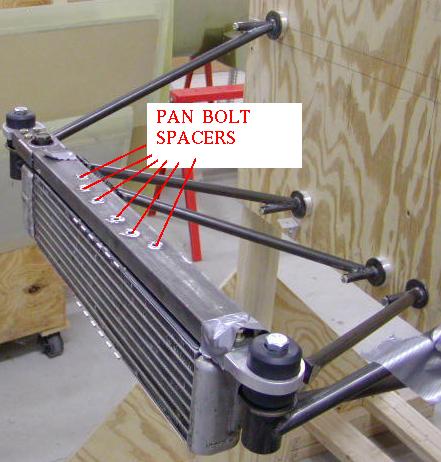
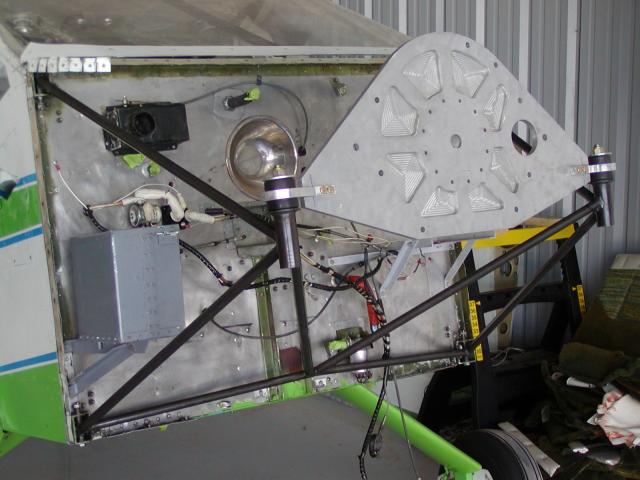
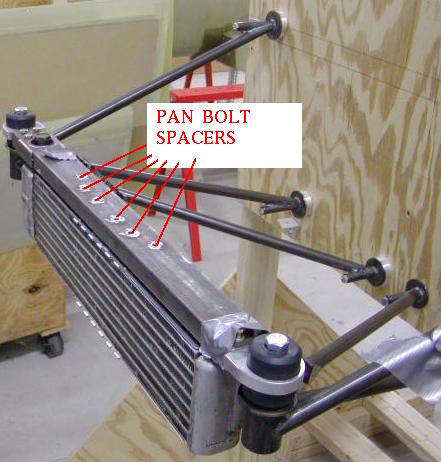
Here is one of Jerry's mounts for Bob Whites BD4. You don't have to use
the motor plate. The one shown is rather expensive. You could use a Schertz
beam instead. Here too is a similar mount built by Bill Schertz. Also a minor
improvement to the Schertz Beam by me. Bill did some extensive stress analysis
on his beam.

Paul Lamar

The AirCraft Rotary Engine NewsLetter.  Powered by Linux.
ACRE NL web site. http://home.earthlink.net/~rotaryeng/
Copyright 1998-2003 All world wide rights reserved.