We were not allowed to take pictures of the automated parts of the machining
lines. Each major casting of the engine such as rotor, rotor housing, end housings
and front cover go down automated 300 foot long  machining lines designed and built in
1969. One line for each unique casting. The spindle motors that machine the parts
on these lines are typically about 18 inches in diameter and two feet long.
My guess is they are about 25 HP each. Usually there are two motors per stop.
Each stop does only one or two machining operations. Then the casting automatically
moves to the next stop. A pallet of raw castings is positioned at the start of the line.
The raw castings  are loaded into the lines by robots one by one.

We did not get a tour through the casting foundry.

There are very few workers on this part of the operation. My guess is only
two or three. Computers are not used to control these operations. Relays,
ladder logic and hydraulics are used. There is an exception and that is
a conventional NC mills are now used to port the side exhaust ports on the RX8
engine at one or two stops. They are automatically loaded and and unloaded.
That of course was made necessary by the change in porting from peripheral to
side. Rotor slots are induction hardened as are end housing wear surfaces.
This is easily incorporated into automated machining lines. Several stops
on each line are used to measure the machined parts to ensure they
meet tolerances.

The factory manager said it would cost over one billion US dollars
to duplicate this part of the operation if it were built today. I have no doubt
that that number is correct.

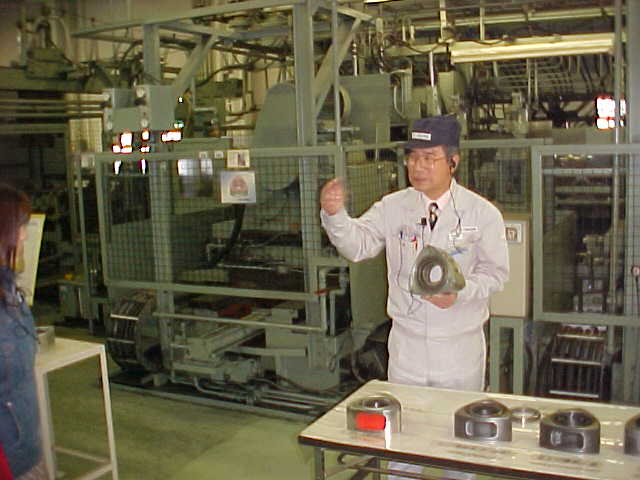
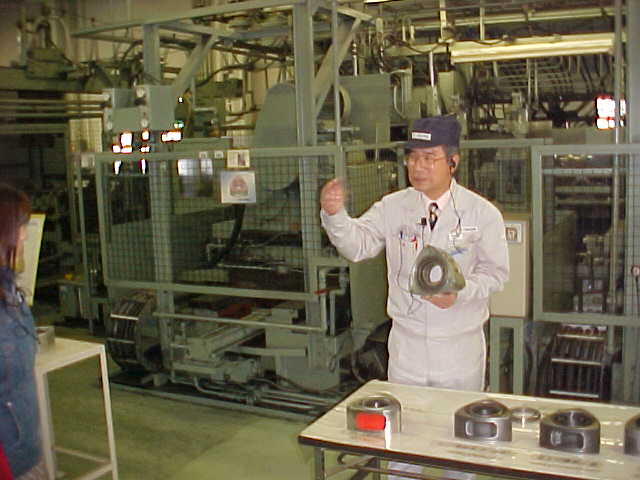
You can see parts of the green colored lines in the background in these pictures.

More later on final assemble and testing.

Paul Lamar

The AirCraft Rotary Engine NewsLetter.  Powered by Linux.
ACRE NL web site. http://home.earthlink.net/~rotaryeng/
Copyright 1998-2003 All world wide rights reserved.