Jerry Hey wrote:
Paul,  I have turned over the P Port throttle body to a machinist
who I
believe will do good  job.   I expect to have the prototype in my
hands
by the end of next week.  I will post photos for review by the
members
of this list.  I am pleased with the price which is less than
$200.00
per copy.  If this becomes popular,  the price will come down.  BTW
there is no expensive CNC programming involved.  Also, there will
be no
problem boring the  housings.  The only fixture required for that
process is a large angle plate.

   In the meantime,  what, if any, modifications are recommended
for the
exhaust port?   Remember that I am  starting out MILD.  My first
goal
is to spin a big three blade that was too much for an 0-360 Lyc.
claimed to produce 200 hp.   Also,  I am  rpm limited because I have
the 2:17 .  If this turns out well,  we can change drives and
increase
the size of the ports.   Jim Mederer told me to keep the ports
small,
if running around 6000
rpm.  I put enough meat into the insert that  radical size and
timing
can be achieved with a die grinder.  The material is there to copy
the
LeMans  ports.... if someone is so bold.  How much power would a
big p
port turning 8000 rpm develop?

  Still  to be  figured out is  how to plug four injectors  into the
runners.  A year or so ago, you posted a Rhino drawing showing how
it
would look using a casting you would produce.  I hope it is still a
possibility.

  I am so pleased to be rolling on this after being stalled for so
long.
For those new to the list,  I started working on this nearly two
years
ago but got derailed by a move  and the need to build a new shop.
The
P port  is a weight and space  saver, and it delivers turbo  power
without  the fuss.   There is nothing to break.

On  another subject,  I think the Shertz Beam engine mount has the
potential to cut the price by 50 per cent over the motor mount plate
and other systems now being used.   That should have got my
attention.
    I was so focused on what I was doing at the time,  I hardly
noticed
it when Bill built the original.  My wife claims my tunnel vision
is,
at times,  damn near blindness.    Jerry
Richard wrote:
Hi Jerry,

I am glad to see someone doing a p-port installation. A p-port engine
would
be the first to benefit from the work I am doing on the one-rotor. I
am
talking about the light weight side housings. Without having to worry
about
sealing side ports. With the design I am using now, a 13B engine
would be
about 45-50lb lighter.
With Paul's help in getting castings going, my final prototypes could
run on
the test stand in a few month. From there on it should be possible to
have
the first intermediate housing in another six month.
I certainly would like to look at you or a possible guinea pig, but
not
before I fly the one-rotor in my airplane.
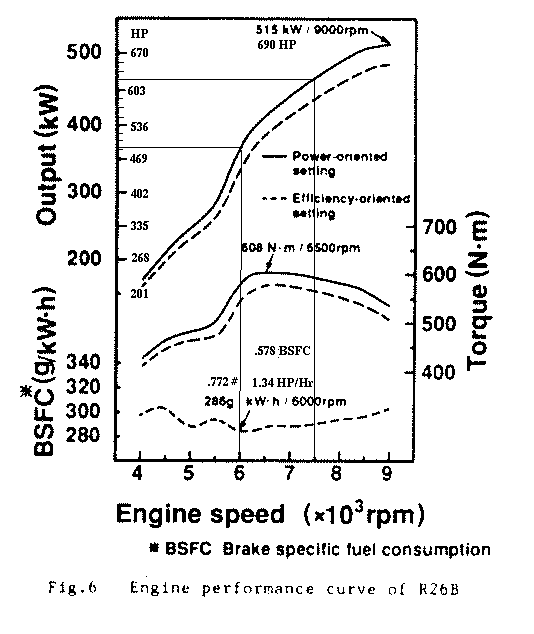
On your power estimate, if you look at the MAZDA LeMans curve and
extrapolate you will be looking at 150hp per rotor at 7500RPM. This is
certainly another vote for the 2.85 gear ratio. And this would give
you
shorter intake runners too. This is off curse N-A.

Richard Sohn
N-2071U
unicorn@gdsys.net
www.gdsys.net/WWWmembers/unicorn/
At this rate it might be a year before I get my NC mill going.

Paul Lamar
Richard,    Being able to easily  use  the aluminum side housings is a
huge benefit that I had not thought about.  Thus, the  p port rotary
will have the potential to deliver more than one hp per pound of
firewall forward weight.  WOW!!!!   Jerry

P.S.:  Why does the LeMans engine have shorter intake runners?
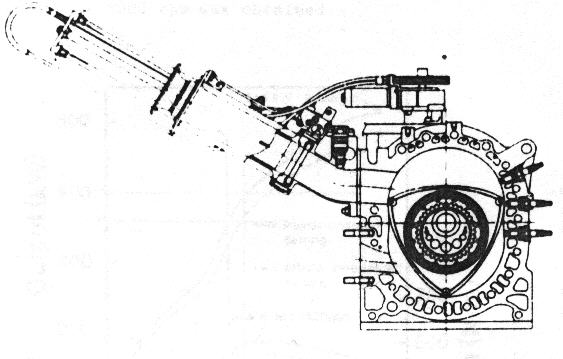
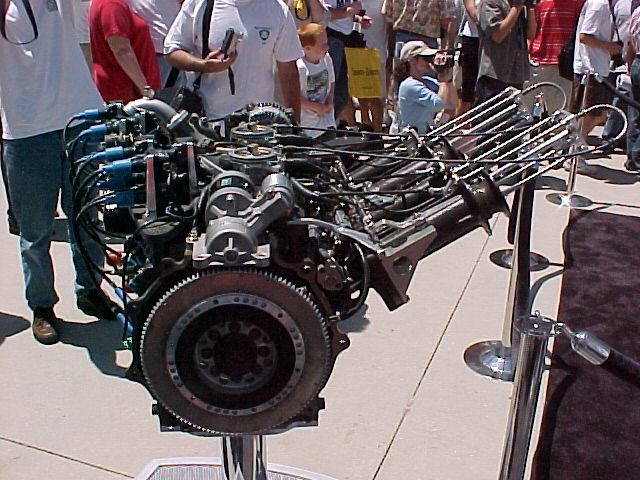
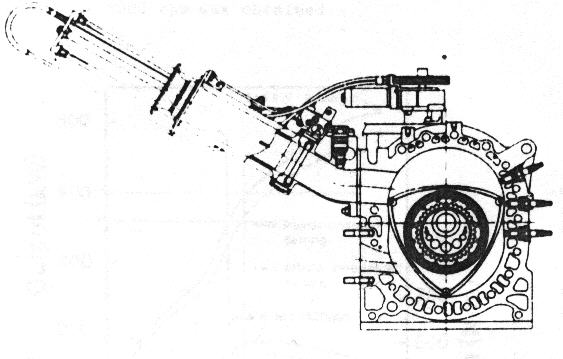
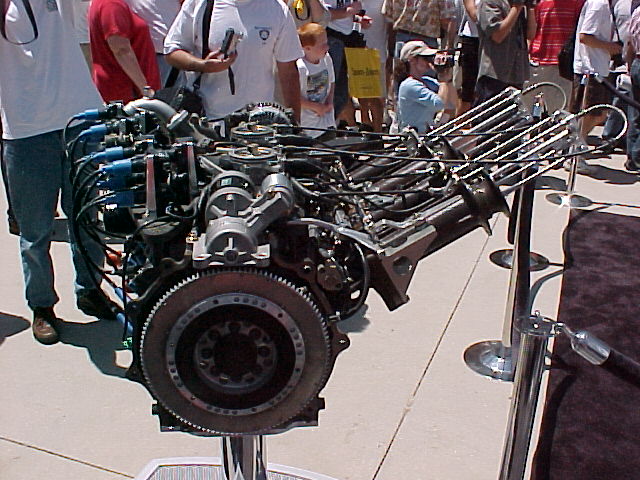
They are variable length Jerry. When they are long for 6000 RPM they
are about 20 inches long. They vary over about a seven inch increase
and decrease in overall lenght. Wnen they are short for 9000 RPM they
are about 13 inches long.

Paul Lamar

The AirCraft Rotary Engine NewsLetter.  Powered by Linux.
ACRE NL web site. http://home.earthlink.net/~rotaryeng/
Copyright 1998-2003 All world wide rights reserved.