François Badoux wrote:
Well, you'd better believe it cavitates, and in a spectacular way!
BTW, the reduction ratio between the e-shaft and the pump is 1.5:1,
NOT 3:1. Up to approximately 4,000 shaft RPM, the pump pushes a flow
of oil increasing linearly with RPM (16 gal/min at 4,000 RPM) while
humming gently. Oil is also being squirted out of the pin hole on the
back of the pump body to lubricate the drive gear and chain.
Then, quite suddenly, the sound the pump makes changes and it starts
howling. The flow of oil remains at 16 gal/min for a while and then
slightly goes down with increased RPM. No oil is being squirted
through the pin hole anymore but, on the contrary, air is being sucked
in, turning the oil downstream of the pump into froth.
The experience is perfectly repeatable. If these are not symptoms of
cavitation, then I'd be very curious to know what it is.
But we have some good news: We took a '93 13B dual-turbo model pump
(Mazda had modified the pump with a passageway to feed oil through the
rear rotor) and fed it from the side of the pump with a second pick-up
tube. It worked beautifully: NO noise anymore, no air being sucked
in either, and 20-21 gal/min of oil flow at 5,400 shaft RPM
Francois Badoux
I highly doubt this Francois. Hundreds of race cars have used this pump

for 30 years and they rarely get BELOW 6000 RPM. Many in 24 hour road

races. If what you say is true the rotor bearings would be failing long

before 10,000 or 11,000 RPM. The typical redline for a race engine. I

think you need to look elsewhere. Perhaps the viscosity

or type of oil you are using. Even that is rather unlikely. Try

some automobile oil and see if you can repeat these results. Send

me a picture of your test rig. Who is doing this test?
Paul Lamar
Paul,
Even when it cavitates, the pump gives plenty enough flow and pressure to lubricate the engine.  At 6,000 RPM, 85 psi and with stock nozzles on the e-shaft,
we reckon that flow to be approx. 4 gal/mn  and the cavitating pump gives 16 gal/mn when new (on our rig) and 9.5 gal/mn when probably damaged by over 50
hours of operations on the Arrow.  Even at racing RPM, the pump is most probably perfectly OK.  We increased back pressure to over 10o psi and found out it
had only a second order influence on the flow.  The problem is therefore (by a safe multiple) NOT insufficient flow endangering the rotor bearings but
insufficient flow to the Arrow's oil cooler, given its design.  One solution would obviously be to change the oil cooler's design, but we want to keep the
installation as compact as possible.  Anyway, we cannot accept a cavitating pump.
Gordon, whom you know, designed and built the rig (I'll send you a picture tomorrow).  It is built around a brand new side-housing and oil pump bought
recently from Mazda, nothing in the rig can possibly influence the result of the test except for one thing:  we are using 40 weight oil, recommended by Mazda,
but we don't heat it more than what the pumping action heats it (approximately 2 kW).  The tests were done with oil at 40-50°C (104-122°F).  So the oil had a
higher viscosity that in a running engine, but that cuts both ways:  the higher viscosity will increase head loss on the suction side and facilitate
cavitation, but if we get 16 gal/mn even in this relatively unfavorable situation, then the cavitation should happen later and the flow be even bigger at high
temperatures.
You know Mazda's philosophy better than I do, they would not invest a penny at changing something that works.  So how do you explain the fact that they
introduced in '93 a new pump body design whose changes precisely fix the cavitation problem as we have been able to demonstrate?
I am the first one puzzled by this situation.  Our company has been working for years assuming, and been reassured when I asked, that the oil pump was just
fine and didn't need to be redesigned for an aircraft application, as we had to do for the water pump.  It is only with the first flights on the Arrow that we
encountered the problem.  I see it like this:  1). we are probably among the very first ones, if not THE first ones, to fly that particular engine.  So, there
is precious little if any experience of it in airplane application.  2).  Few people in racing use this engine also (it is the automatic transmission model).
 3). Even if some do, this engine's pump can MOST PROBABLY give fine service in a car for 24 hours at racing RPM, without anyone noticing anything foul.  Most
engines are probably overhauled to some degree after a 24-hour race and, anyway, it would probably take MANY 24-hour races before the pump degrades itself
enough for the problem to be noticed.  It was not noticed after more than 180 hours of continuous 6000+ RPM operations on our test bench (we have oil/water
heat exchangers, so there is no problem cooling the oil on the bench).  BTW, we'll get this early prototype engine back from Florida on Monday and will do a
"post mortem" on that pump, which shows a very degraded flow compared to the new one (but still plenty enough to lubricate and cool the engine).
Next Tuesday, we'll be getting a flowmeter compatible with hot oil and the kind of flows we are talking about.  We'll be able to plot the pump's flow vs RPM
in a real engine run.  I'll keep you posted.
Best regards,
Francois
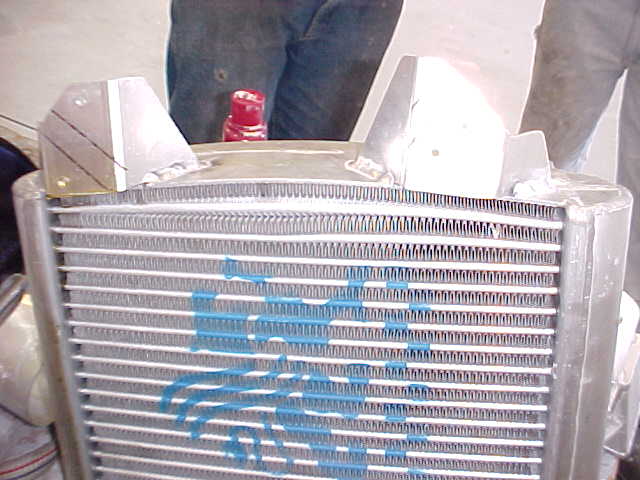
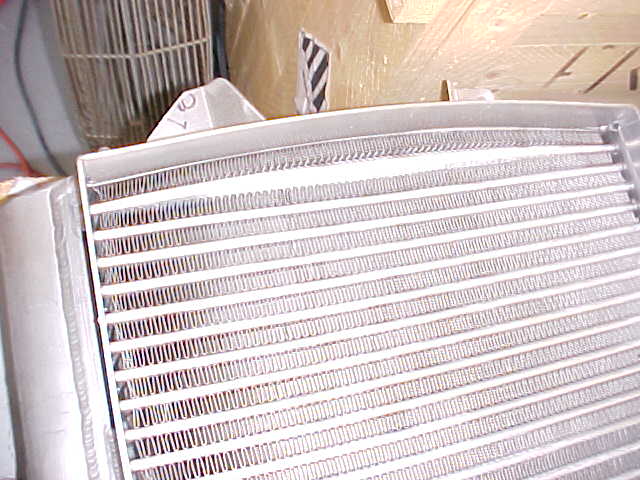
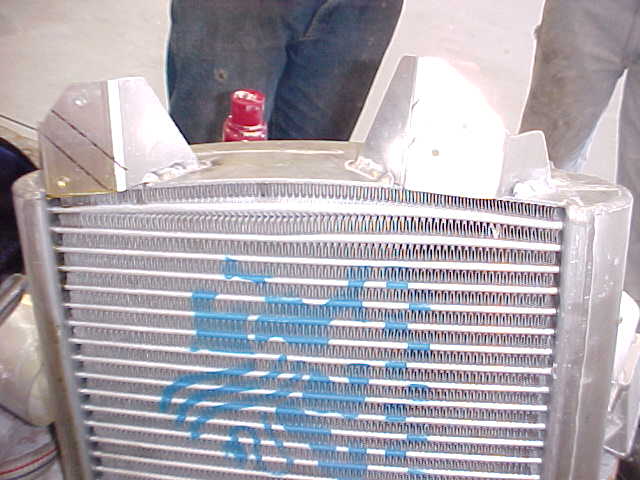
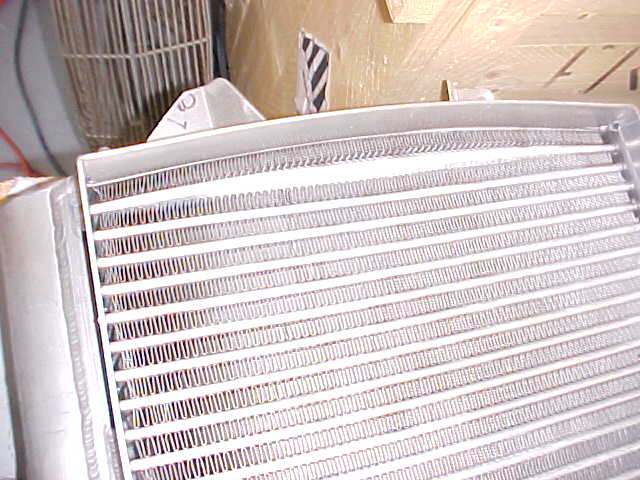
Here is a bit more evidence that you don't have this problem. This is a picture
of the Griffin oil cooler originally installed on your rotary powered Piper Arrow taken at
Embry Riddle. Note the outer tube blown up by the high engine oil pressure. We constantly
have problems with after market oil coolers as not being up to handling the
high oil pressure of the Mazda rotary engine. We have had two in-flight fires
and one fatality due to failed after market oil coolers. That to me indicates
there is nothing wrong with the stock oil pump in YOUR engine. BTW we have no
problems with the stock Mazda oil coolers.

As I recall your oil pan is deeper than the stock Mazda pan. Perhaps you now have a
slight leak on the intake side of the pump causing it to lose suction.

Paul Lamar

The AirCraft Rotary Engine NewsLetter.  Powered by Linux.
ACRE NL web site. http://home.earthlink.net/~rotaryeng/
Copyright 1998-2003 All world wide rights reserved.