Paul wrote:
With aggressive leaning at altitude (200 degrees F lean of peak) Tracy Crook
is currently seeing .47 BSFC at moderate powers. That means if your airplane's
drag bucket is 120 MPH then it will fly at that speed  at some very low power
setting.

Let us say that number is 40% of 200 HP or 80 HP.
You will burn 37.6 pounds per hours at a BSFC of .47 or about 6.3 gallons an
hour.
Your endurance  with 100 gallons of fuel will then be VERY roughly about 16
hours.
Multiply that by 120 MPH gives VERY roughly about 1900 miles.

The drag bucket MPH point is determined by max climb speed which changes
with gross weight. It is also the sink rate at zero power at a given gross
weight.
You can determine this by flight test ahead of time and keep a chart of max
climb
rate as a function of gross weight as your fuel burns off. Then you can slow
down
a bit as the flight progresses and extend the range slightly.

Do you know the best climb speed for the Sea Wind? You can also plot the drag
curve by recording the speed as a function of the power setting.

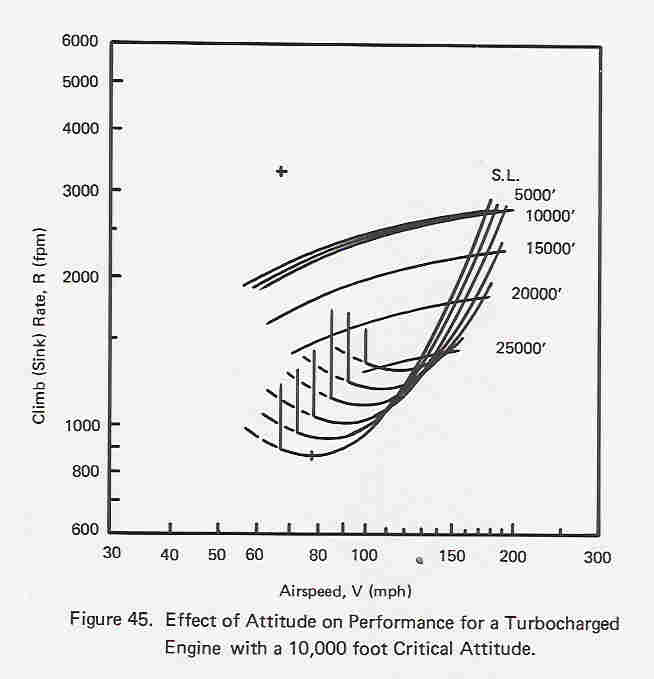
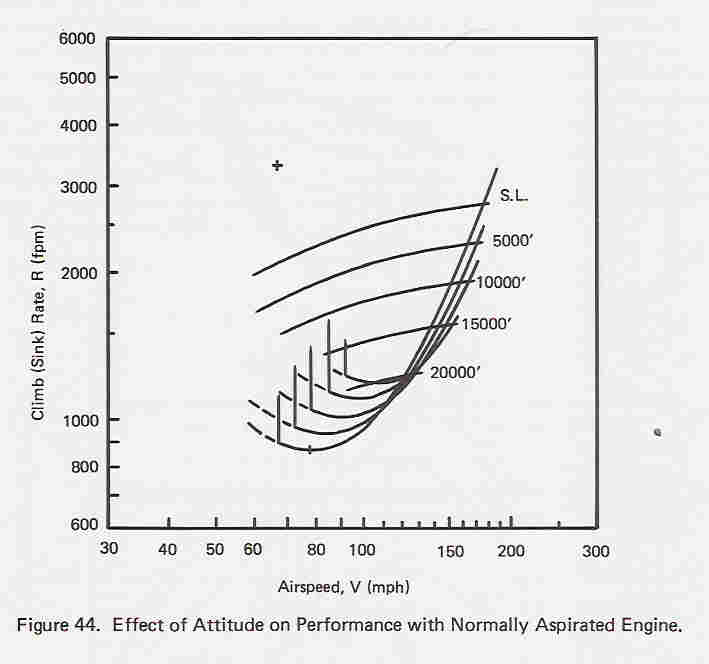
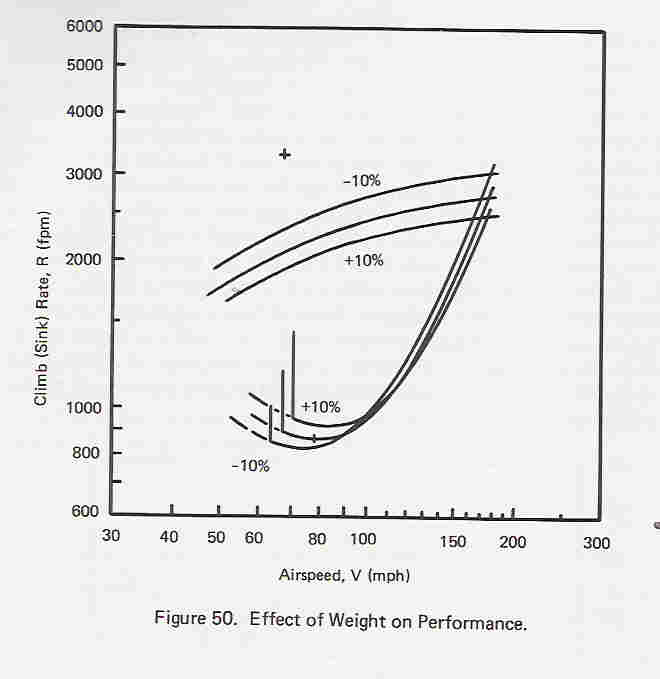
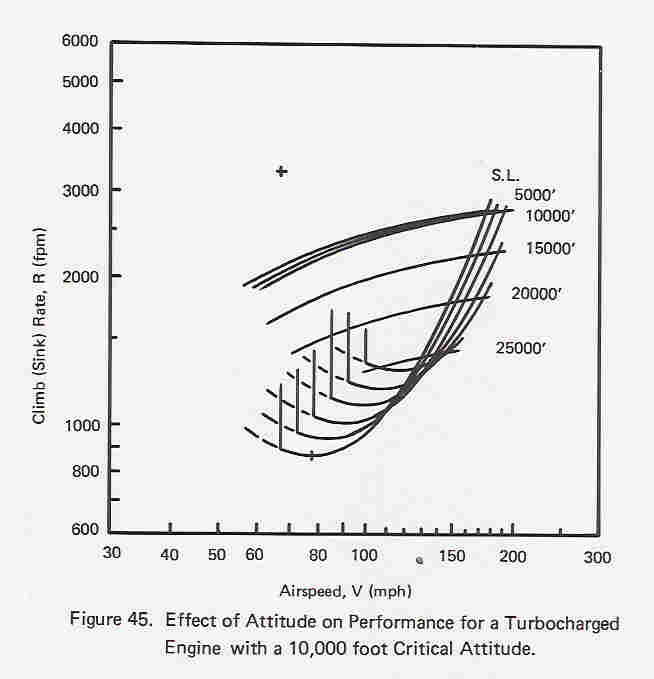
Here is a chart from Donald R. Crawford's book A Practical Guide to Airplane
Performance
and Design. Lots of other stuff in there useful for calculating range.

I suspect a turbo 3 rotor will be slightly worse than .47 BSFC. My guess would
be around
.5 BSFC. This too could be determined by flight test before hand.

Paul Lamar
Thanks Paul,

Seawind claims: Best climb rate at  99 MPH. and  1250 FPM.
A cruise speed at  (8,000') and 169MPH + and 55% power has a fuel burn of
12.5 gal./hr with the Lycoming IO 540 K1H5.  With 3400 lb. gross and 110
gals SeaWind claims a  maximum range of 1460 miles.

Using 55% of 300HP that means the Lycoming is running on 165hp.
At 12.5 gal./hr. this equates to 75 lbs. of fuel/hour @ BSFC of .454.
Possible if the engine is running very lean.

However:
If we calculate best range using their best climb rate data of lets say 100
mph and 40% of total power, then we have 120 hp. to work with.  At
54.5lbs/hour at the same BSFC of .454 we are using  9.08 gals hour.
Realistic??  At 100 mph. and a total of 110 gals that means less than 12
hours of flying time or 1200 miles. Hmmm.  Time to get real. We can run
figures about what should be all day but perhaps it would be better  if I
can get some flight data from SeaWinds now flying at gross.

My plane will have another 50 gal. removable tank at the CG. for longer
flights in which my 120 lb. co-pilot wife will be going on the commercial
flight.

If I understand the advantages of a turbo in extending range, it allows an
airplane to fly at high altitudes where parasitic drags decreases and the
plane can pick up a speed advantage without losing to much lift.  Finding a
sweet spot so to speak.  At higher altitude usually (not always) beneficial
tail winds may be found. I understand  HP equates to fuel consumption but at
higher altitudes the  efficiently of of the locomotion improves.

What hp are we seeing for the normally aspirated 20B at the moment?

Love the drawings you did of the SeaWind motor mount. The turbo behind the
fire wall is interesting.  Guess I will have to find another location for my
lunch box though:)

Doug
A 20B will in general develop 50% more power than a 13B so depending
on the porting 250 to 360 HP. I would however tune the intake manifold
for cruise RPM to optimize the BSFC for long range. Then the peak HP would
be whatever. Make the manifold adjustable.

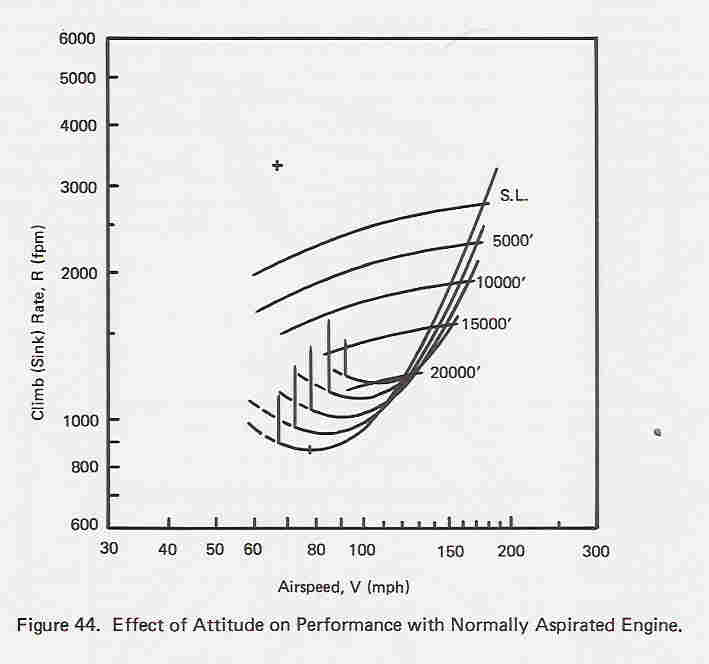
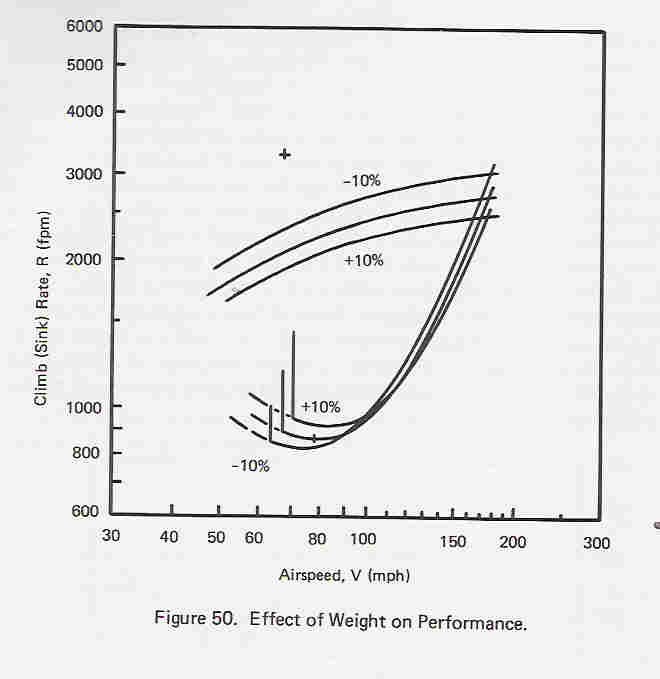
Here is how the drag bucket varies with various factors  from Crawford.

The altitude plots also plot the reduction in HP.

The effect of weight also varies the HP =/- 10%.

There is no replacement for some good flight test data.

Paul Lamar

The AirCraft Rotary Engine NewsLetter.  Powered by Linux.
ACRE NL web site. http://home.earthlink.net/~rotaryeng/
Copyright 1998-2003 All world wide rights reserved.