> > > > > >Ken Welter wrote:
 >>  >>  >>
 >>  >>  >>    Here is the final report on the seizure I had when I
 >>blew a oil line.
 >>  >>  >>
 >>  >>  >>     As I predicted there is no damage to the e-shaft or
 >>bearings and in
 >>  >>  >>  fact I will use the main bearings over again but the
side housings
 >>  >>  >>  and rotors are trashed do to the expansion of the
rotors do to loss
 >>  >>  >>  of cooling to the rotors.
 >>  >>  >>
 >>  >>  >>    Also the corner seals, apex seals and rotor housings
are in good
 >>  >>  >>  shape but the side seals and the oil rings are also trashed.
 >>  >>  >>
 >>  >>  >>    Ken
 >>  >
 >>  >
 >>  >>  >This is a new one on me. One would think if you did not have enough
 >>  >>  >oil to cool the rotors you would not have enough oil for
the bearings
 >>  >>  >either. How much rotor clearance did you start with Ken?
 >>  >>  >
 >>  >>  >Paul Lamar
 >>  >>
 >>  >>     I taper clearance the rotors by cutting off .015 at the
tip of the
 >>  >>  rotors and zero out the cut just before the oil seal, you can see it
 >>  >>  on the earlier photo you have that you have with the bluing on it.
 >>  >>
 >>  >>    Besides the engine that seized because of the ross gearbox
 >>  >>  hamburgering itself and plugging the oil intake the other two that I
 >>  >>  lost the thrust bearings due to the ross gearbox had the
same outcome
 >>  >>  as the oil pressure dropped when the thrust bearing went out and the
 >>  >>  rotors seized.
 >>  >>
 >>  >>    Also note that on closer examination I found that the
front rotor is
 >>  >>  salvageable and the rear one is toast which was consistent with the
 >>  >>  first two that I lost due to thrust bearings but the one with the
 >>  >>  plugged oil intake toasted both but the rear was the worst off.
 >>  >>
 >>  >>    This may support the theory that 6000 rpm is the sweet
spot for very
 >>  >>  little bearing loading on the rotary.
 >>  >>
 >>  >>     Ken
 >
 >
 >>  >Only the rotor bearing load is low at 6000 RPM. The main bearing load
 >>  >only depends on the torque being generated.
 >>  >
 >>  >Looking up the rate of thermal expansion on cast iron gives:
 >>  >.059 inches x 10 -4 per degree F
 >>  >or .0000059 inches per degree by moving the decimal to the left by
 >>  >four places.
 >>  >
 >>  >If we start with room temp 72 F and go up to 500 F that is 430
 >>degree F change
 >>  >in temp. So the rotor should be only about .0025 wider if my numbers
 >>  >are correct.
 >>  >Somebody please check these numbers for us.
 >>  >That is NOT taking into account the much higher expansion of the
 >>  >rotor housing.
 >>  >The same coef. of thermal expansion for aluminum is 50% greater or
 >>  >.094 x 10 -4.
 >
 >
 >>  >I think there may be something else going on here. Could be
the lack of oil
 >>  >is overheating just the area around the center of the end housing
 >>  >causing some high
 >>  >local heating which results in some local spin welding. Could be
 >>tapering the
 >>  >face of the rotor is hurting in this situation rather than
helping as it
 >>  >concentrates the rubbing in a much smaller surface area. Do
you see signs
 >>  >of metal pitting and galling in this area? I think the spin welding
 >>  >theory is much more likely in this situation.
 >>  >
 >>  >Do you see any signs of heat discoloration around the center of
 >>  >the end housing and on the center face of the rotor? At 500 F you
 >>  >should also see
 >>  >some signs of oil coking as well. What kind of oil are you using?
 >>  >Mobil One still works at 500 F. If the whole rotor was 500 F the
 >>  >rotor bearings
 >>  >would definitely show some signs of distress. Lead in rotor
bearings starts
 >>  >to melt at less than 500 F. Aluminum bearings lose half their
 >>  >strength at 500 F.
 >>  >
 >>  >Paul Lamar
 >
 >>     Yes I think you are right as the center of the housing is where the
> >> real damage is may be do to the lack of lube rather expansion that is
 >>  causing the seizure and this simply seizes before the bearings, just
 >>  got to keep the life blood in there and wont have this problem.
 >>
 >>    Using Kendall 20-50 oil, I don't see any signs of coking.
 >>
 >>     Ken
 >
 >Try some Mobil One in the "crankcase" typically. It does not break down
 >until about 500 F while regular oil starts breaking down at about
 >250 F. I have been using Mobil One in all my engines for 10 years and the
 >Dodge Caravan engine has 200,000 miles while still passing smog tests.
 >Everything else in the transmission, drive line and chassis has failed at
 >least once and sometimes more than once.
 >
 >Paul Lamar
    No way I have been using Kendall in all my race cars for years and
 am sold on it, if it work I don't fix it.

   Ken
Ken put a teaspoon full of it in a steel cat food can and bake it in
the oven at
500 F for 1/2 hour and tell us what it looks like.

Paul Lamar
  If my engine ever gets to 500 degrees I think I will have bigger problems.
  Sorry cant change my mind.

  I will note that a couple times in the winter when I was flying in
sub zero temps that I changed over to Castrol 5-50 synthetic as its
about as thin as water.

   Ken
There are spots in the engine subject to wear where the local temp can get to
500 F and that is where Mobil One pays off. Probably mostly on start up
when bearing surfaces are nearly dry of oil. No doubt about it... there
are fewer such spots in a rotary.

Mobile One makes 15-50 and that is what I use.
Paul Lamar
Time for a chemist to chime in here.

If you like a product, stick with it.  Personal experience is an important factor in making these types of choices.  However, that being said, synthetic oils offer large improvements in three areas over standard mineral based oils that are of interest to operation of internal combustion engines.  Heat resistance is the first.  They have it all over standard mineral based oils and is why they are used in turbine applications.  I've seen this graphically demonstrated in the lab where I work.  Standard oils turn into asphalt quickly compared to synthetics.  My recollection is that with standard oil testing at 150°C, [302 F] you have to change the oil every week to keep it flowing (literally).  At the same temperature, synthetic will last over 1000 hours.

The second is lower pour point, a very important quality if you care to start you engine in winter.  I believe the pour point for Mobil 1 5W30 is about -45°C .

The third is lubricity.  Synthetics are more slippery than standard mineral based oils.  This is another important quality while you are waiting for your oil pressure to build.  This also gives lower losses due to internal friction providing higher power output.  In a car that ususally translates to a couple MPG's.  I suspect, but don't know for sure, synthetics may have higher film strength.

By the way, the ash content in Mobile 1 is about 1.2%.  And my experience with it (I use it in all my vehicles changing at 10,000 mile intervals) is the same as others here.  High miles with little or no consumption.

Charlie Smith
KIS Cruiser 4021
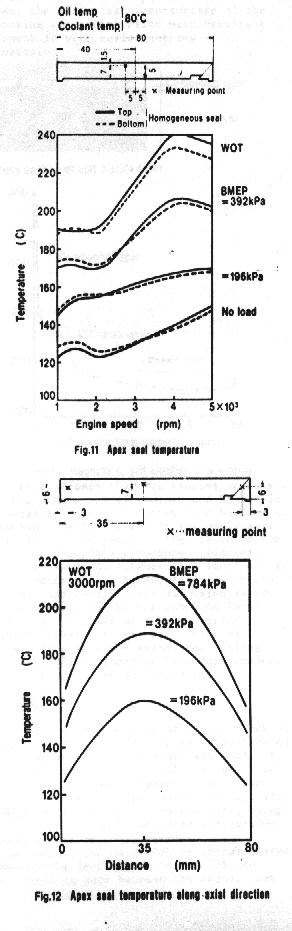
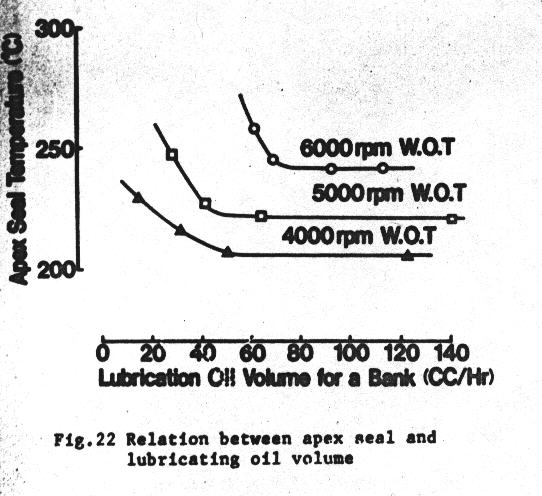
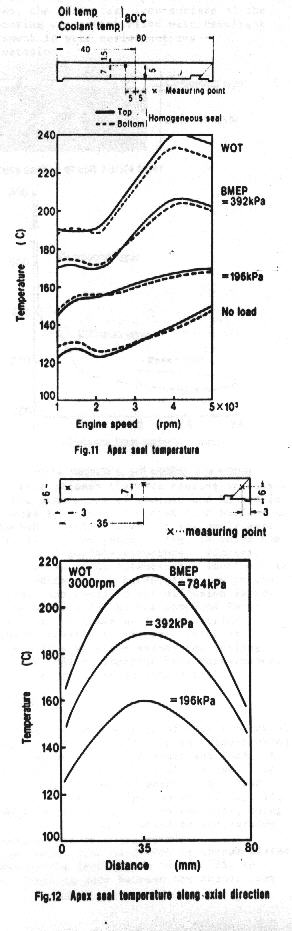
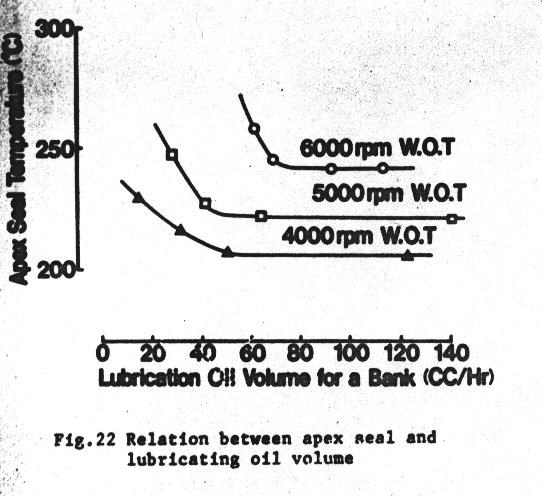
BTW I can think of one place in the rotary engine that normally runs at 500 F and that is
the center of the apex seal. If you are not mixing two cycle oil with the fuel
I suspect that running a full synthetic like Mobile One will extend the life
of the apex seals and the apex seal slots in the rotor. This may not be true
for the RX8 engine as the seals are not subjected to a sudden blast of hot
exhaust gases when the current peripheral exhaust port opens.

Paul Lamar

The AirCraft Rotary Engine NewsLetter.  Powered by Linux.
ACRE NL web site. http://home.earthlink.net/~rotaryeng/
Copyright 1998-2003 All world wide rights reserved.