Perry Mick wrote:
It takes 2200 RPM to taxi with the duct on, 2800 with duct off.
With the duct on and a 10 knot headwind, it took 1000' to reach 70 knots
airspeed, was airborne at 1500'. It usually takes me 1800' with no headwind.
Without the duct, acceleration was sooooo sluggish, I thought I must
have been running on one rotor. Even with the headwind it took 2000' to
reach 70 knots and it didn't seem to be accelerating. I would guess that
it may have taken 4000' to break ground, and then I doubt it would have
climbed. I probably would have ended up in the trees at the end of the
runway in ground effect.
Just from the feel of it, I would guess the duct MORE THAN DOUBLES the
thrust for static, takeoff and climb.
So I broke off the unducted takeoff 2000' down the runway and taxied
back to the hangar. The engine was almost overheated. Immediately
de-cowled, put the duct back on and went flying! (that's when I got the
ducted data above for comparison).

So sorry guys. I guess you just don't understand what that duct is doing
for me. As far as I can tell there is just no way a 38" fan turning 5000
RPM will ever get off the ground in a reasonable manner unless you have
about 400 HP available and maybe a variable pitch mechanism. I think
it's a combination of capturing the tip losses and the venturi duct
shape that makes it a success at more than doubling the thrust of
stand-alone fan.

I was hopeful it would work and I could shed 30 to 40 lbs. but I'm
afraid I will have to leave the unducted fan experiments for the 400 HP
racing crowd.

Perry
http://www.ductedfan.com
There is one other question in my mind. Are the fan tips approaching super
sonic velocities and absorbing all the HP or are the fan blades wide enough
to generate as much thrust as possible? In other words, where is the HP going?
Perhaps Vance can answer this question.

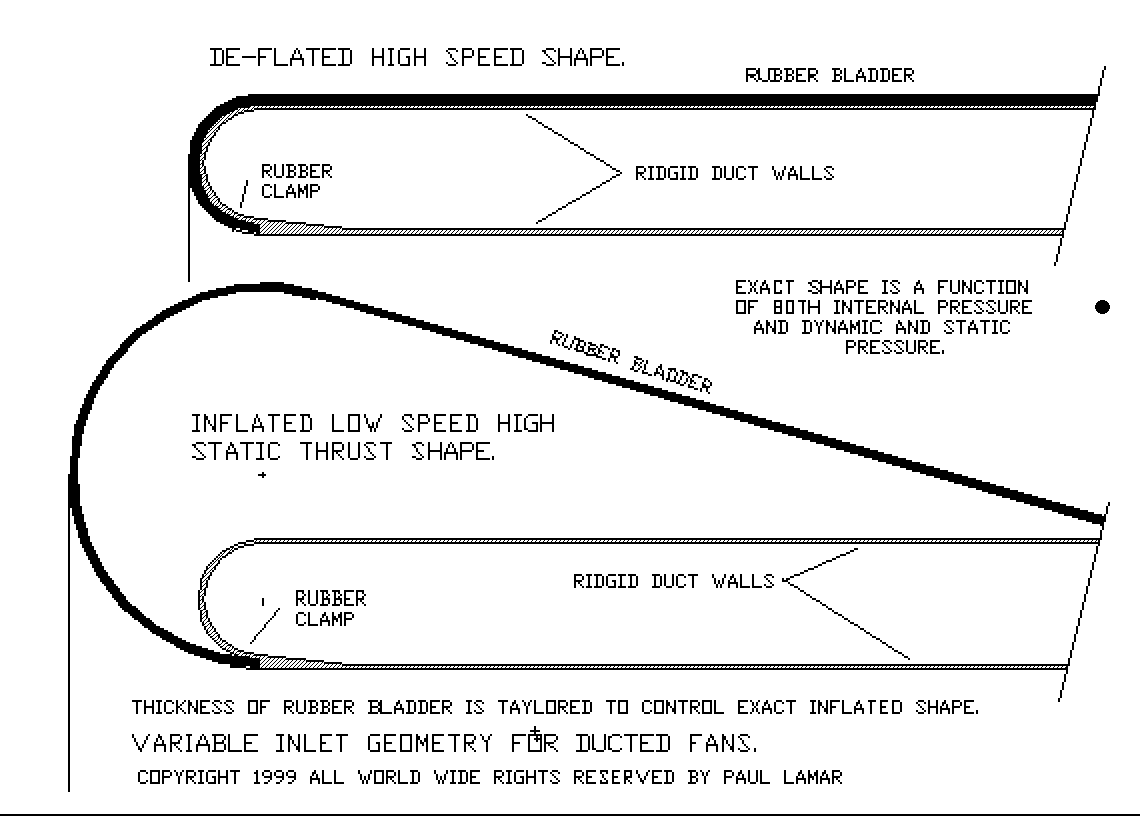
I still think you need to broad band that duct. Make a more streamlined
lower drag duct such as found on turbo fan jets with a smaller diameter opening
and use the variable geometry opening. I still think it can be done with
an inflatable rubber lip.

Marc de since you are on here now perhaps you can help Perry extend the speed
range of his ducted fan. In other words reduce the high speed drag from the duct
with out losing too much low speed thrust.

Paul Lamar

The AirCraft Rotary Engine NewsLetter.  Powered by Linux.
ACRE NL web site. http://home.earthlink.net/~rotaryeng/
Copyright 1998-2003 All world wide rights reserved.