Mike wrote:
What is considered to be the max continuous rpm for a mildly ported, turbo
13b direct drive at 250 h.p
Would 7000 or even 7500 start to cause accesory failures? Alternatores,
water pumps etc...
Would the fuel consumption begin to skyrocket?

If even 6500 is advisable for a reg asp engine, could Perry 'simply' put a
smaller pitch fan and/or port the engine for more oomph.

Thanks, Mike Arndt
7500 should be no problem at all as long as it had recent light weight rotors.
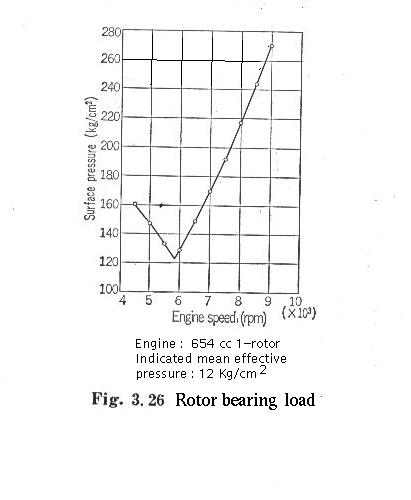
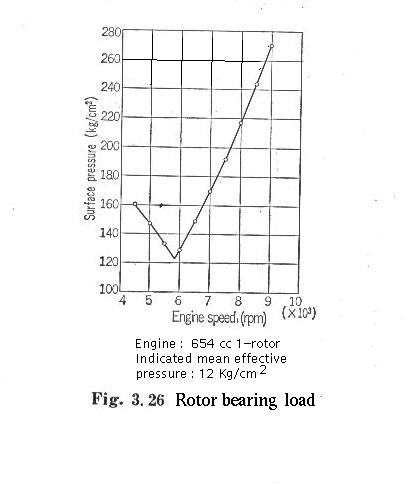
The limit here is pressure in the rotor bearings. Make sure you have a
third gen oil pump or better. BTW you don't need 7500 to get 250 HP
with a turbo. Just up the boost a bit and you can get that at 6500
or 7000.

I would not call it skyrocket but a BSFC of around .5 to .55 is possible.

At .5 BSFC that would be 125 pounds of fuel per hour or 21 gallons an hour.
At .55 BSFC that would be 138 pounds or 23 gallons per hour.
A large aircraft engine such as a IO550 might show .47 BSFC or 117 pounds per
hour or 19.5 gallons an hour. At full power some turbo aircraft
piston engines run .65 BSFC for cooling reasons.

The RX8 engine might do a bit better.

But then again nobody cruises at that power level.

At 250 HP NA cruise you should be looking at a three rotor.

At 7500 RPM it is advisable to  increase the size of the e-shaft pulley
to reduce the speed of the water pump and the alternator.

The problem with reducing the size of the fan (increase in disk loading)
is a reduction in efficiency. That we know. You might lose enough efficiency
to make up for the increase in HP. We don't know yet whether that is true or not.

Paul Lamar

The Rotary Engine NewsLetter.  Powered by Linux.
ACRE NL web site. http://home.earthlink.net/~rotaryeng/
Copyright 1998-2004 All world wide rights reserved.