>      > > > > If so! my suggestion would be to step the Throttle Body OD to allow
     >      > for 2
     >      > > > > >O-rings and use two studs to hold the TB in and to keep pressure on
     >      > the
     >      > > > > >O-rings. Perhaps one could use the current stud  and another at the
     >      > top.
     >      > > > > >
     >      > > > > >>From pictures of Richard Sohn's project it would appear  he is using
     >      > studs
     >      > > > > >to retain the TB.
     >      > > > > >
     >      > > > > >I think I will do it that way if I can.
     >      > > > > >George (down under)
     >      > >
     >      > > > George,
     >      > > > Using the stepped setup with o-rings is fine. The o-rings do get brittle
     >      > with age use the teflon encapsulated ones. I meant a press fit with no
     >      > o-rings but
     >      > > > water tight to be sure!
     >      > > > Bill Jepson
     >       Richard wrote:
     >      >
     >      > George,
     >      >
     >      > yes I am using studs, but the PP insert is all JB Weld fit. This is an easy
     >      > way to get the test engine going and not neccesarily the best solution for
     >      > the flight configuration. Also, if it turns out that my IO, which is the
     >      > same as the LeMans engine had, is too early I will loose the hard point for
     >      > the upper stud. Future testing will tell.
     >      > BTW, I just finished my test TB.
     >      >
     >      > Richard Sohn
     >      > N-2071U
     >      > unicorn@gdsys.net
     >      > www.gdsys.net/WWWmembers/unicorn/
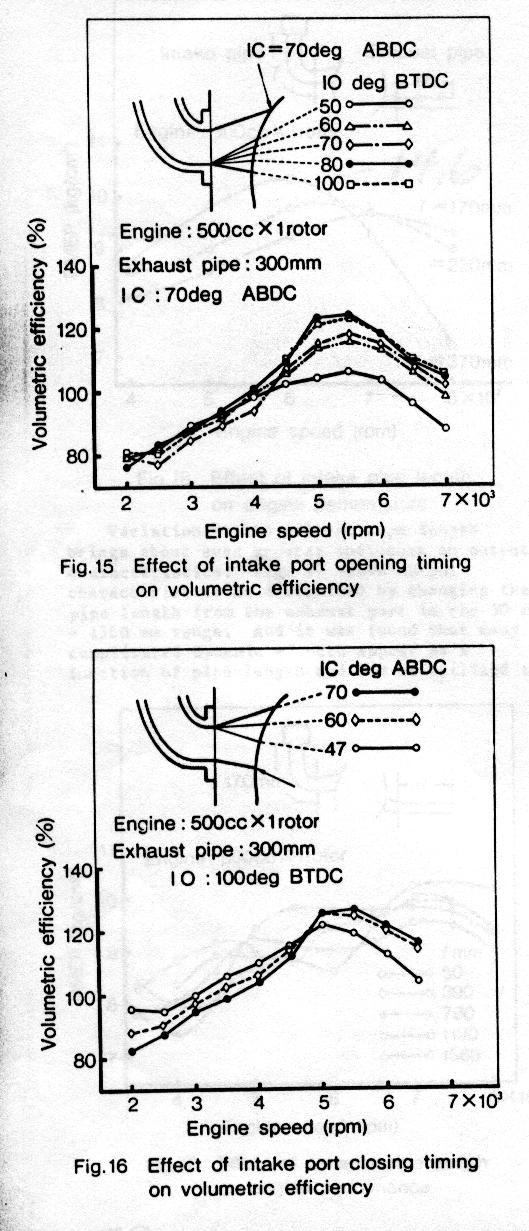
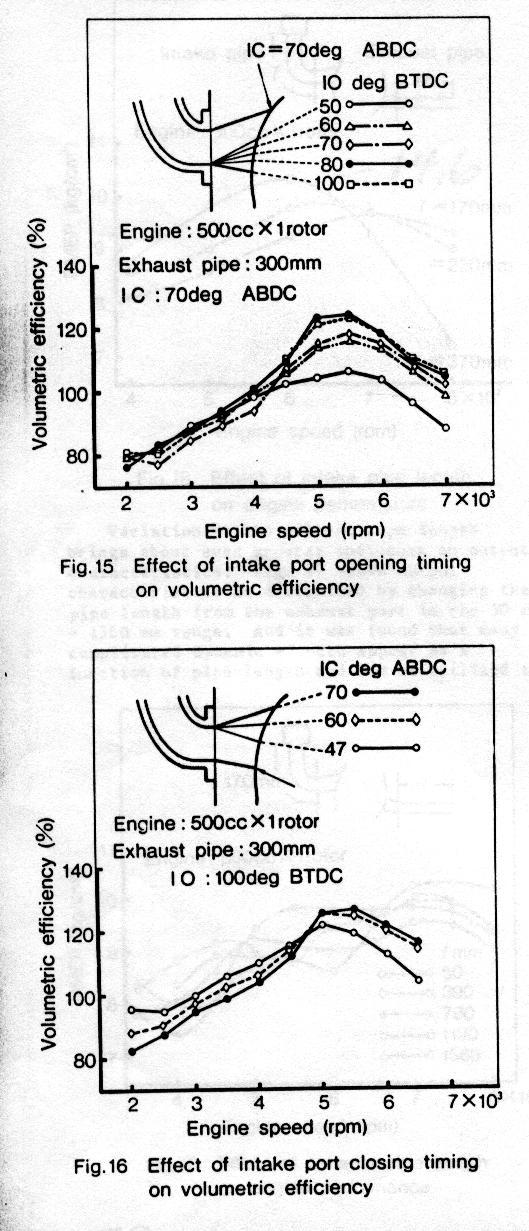
     >      Hi Guys (and Girls),  Take a look at the attached graph.  Why wouldn't we want to identify our cruise RPM and then select the the port timing
     that
     >      corresponds?  This is for a 12A, but should be close.  Also, why do we care about the PP being water tight - the rotor housing around the PP
     insert
     >      is completely enclosed with epoxy or JBWeld.
     >
     >      Ken Powell
The Rotary Engine NewsLetter.  Powered by Linux.
ACRE NL web site. http://home.earthlink.net/~rotaryeng/
Copyright 1998-2004 All world wide rights reserved.