DaveLeonard wrote:
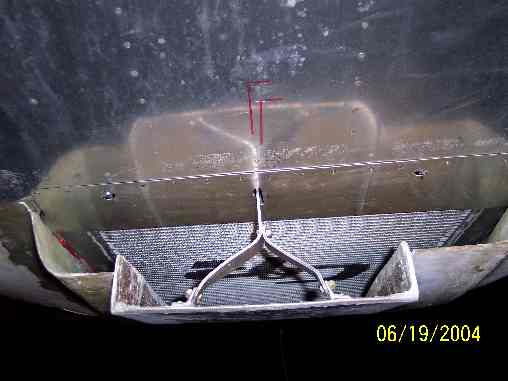
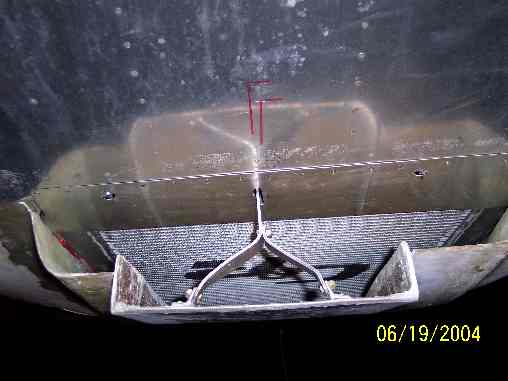
Here is a pic of the oil cooler.  No wonder it works so well.  Down below
the engine you can see the rad.  36 more flight hours and I'll come show
it
off in Camarillo :-)

I know that I am going to have to trade some of that oil cooling in for
some
water cooling. I have an unusual cooling design. The air comes in the
two
front inlets, then through the oil cooler on the right and the intercooler
on the left.  Then it pressurizes the cowl and flows down thought the
radiator on the way out.

I was expecting water to be the problem child all along.  I knew it would
be
important to 1) seal the cowl well so the air had to flow down and out, 2)
minimize heating of the air from the exhaust and turbo, 3) use a good exit
duct to help suck the air out.

I have a few ideas for improvement on each of those fronts, as well as
possibly ducting some cool air directly to the rad.

Dave Leonard
Thanks for the picture Dave. Wow! Nice big oil cooler! Real thin.
Should work just great at climb speeds (low dynamic pressure). I thought
that was the water rad when I first saw a picture.

What does the rad air scoop look like?

Paul Lamar
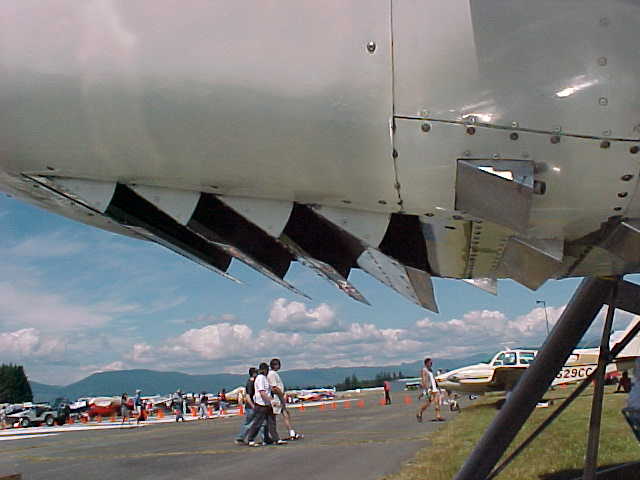
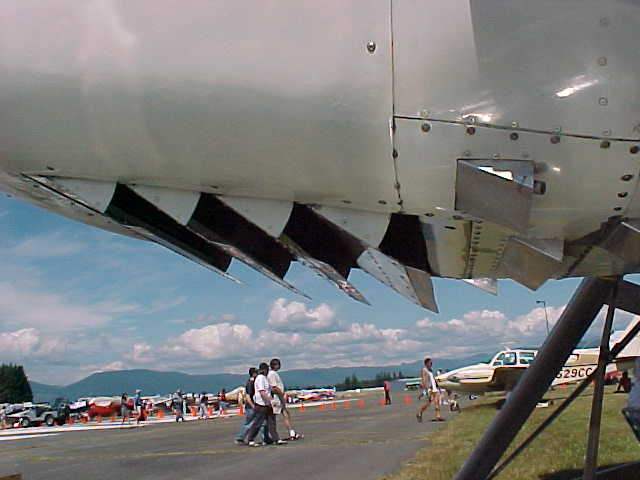
Paul, that is the point I am trying to make.  There IS NO air scoop for the
Rad.  AFTER the air goes through the oil cooler (or the intercooler on the
other side) it goes DOWN through the Rad and out the back.  I sent some pics
of the exit a few weeks ago, here they are again.

You're right, the oil cooler works well. Max oil temp I have seen is 73c
(163F).

Dave Leonard
Paul Lamar
I just noticed something in this picture. The bottom of the rad is too
close to the bottom of the cowl. Try taking the cowl flap off before
you doing anything else. The air velocity through the rad  is up to 40%
of forward velocity of the airplane so it may be building dynamic pressure
under the rad and cutting the rad flow. Removing the cowl flap should show that
right away. If that works remove what you added and put some venetian blind
flaps under there.

BTW some people claim that is a high pressure area under there but compared
to 40% forward aircraft velocity that small pressure increase  pales into
insignificance.

Paul Lamar

The Rotary Engine NewsLetter.  Powered by Linux.
ACRE NL web site. http://home.earthlink.net/~rotaryeng/
Copyright 1998-2004 All world wide rights reserved.