Richard Konnen wrote:
Paul,
  If understood correctly. With avariable length intake, as you get shorter
to keep torque up at higher RPM, you loose volume efficiency. Is there a
happy medium to this or is there a particular combination that would be
needed.
Richard Konnen
Not necessarily. Depends also on pipe diameter. Shorter pipes less skin
friction drag. Higher RPM, more air, higher velocity in the intake... more
pipe skin friction drag. Drag is velocity squared. Bigger pipes less skin friction
drag for a given amount of air. The amount of air actually getting in the
engine with a tuned intake system is also affected by the velocity in the pipes
so at low RPM you want smaller pipes to keep the velocity up. That is mainly
applicable to cars that need high HP throughout the RPM range.

Don't forget HP is torque times RPM so you are not necessarily losing
HP. The PP rotary breaths so well however HP is a straight line more or less up to
the limit of the rotor bearings or somewhere around 10,000 RPM. Assuming of course
you change pipe length and diameter :) That is what the RX8 intake system
does in incremental steps.

Airplanes fly on HP and not torque. The reason this is true is HP is also drag
times velocity. Prop torque is whatever the gear box ratio is.

For a simplified pseudo math equations:

Engine RPM times engine torque = prop RPM times Prop torque = HP

Prop RPM X Prop Torque = Drag X Velocity = HP

There are a few constants here and there missing :)

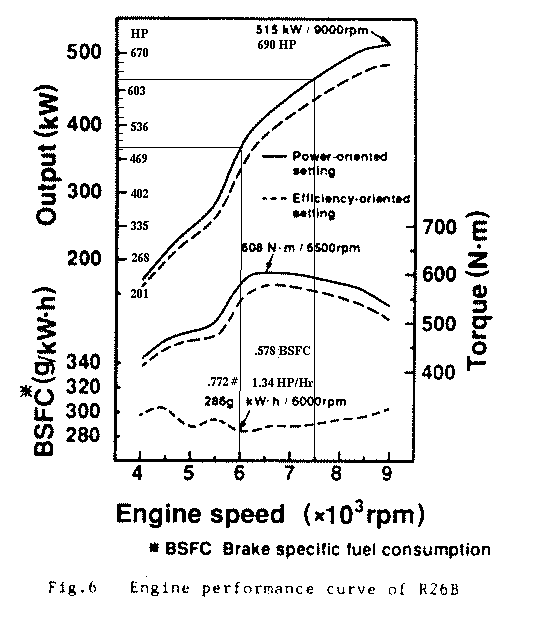
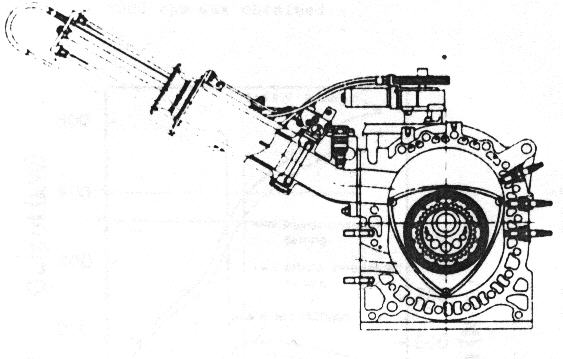
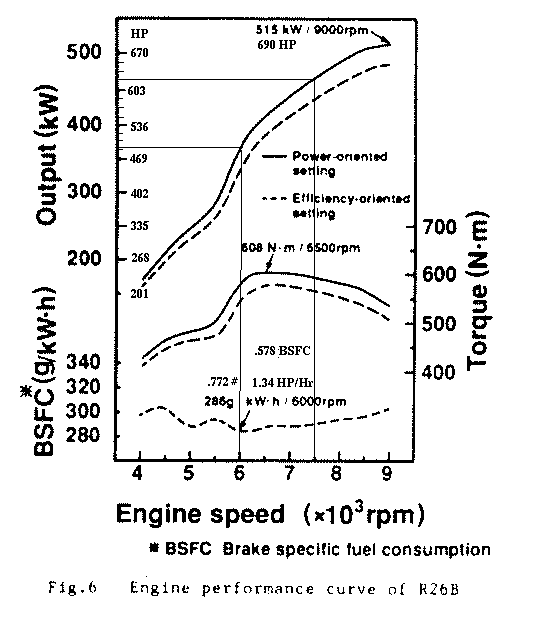
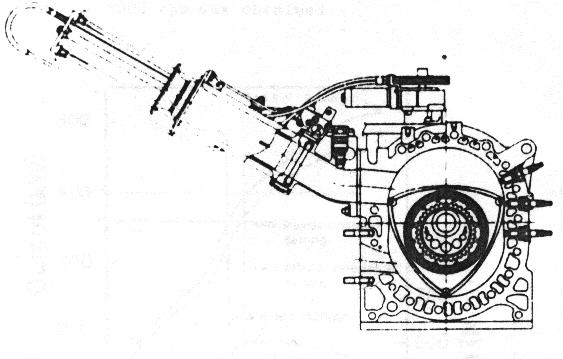
The Le Mans engine had about two inch diameter pipes which are as about
as large as practical given the rotor width. With the right
length pipe it had a record amount of HP at 6000 RPM. Namely
240 HP for a two rotor version.

Paul Lamar

The Rotary Engine NewsLetter.  Powered by Linux.
ACRE NL web site. http://home.earthlink.net/~rotaryeng/
Copyright 1998-2004 All world wide rights reserved.