snips.
 Thanks for the report Dave. BTW do you have a knock sensor?
 Here is a real simple one to make. It uses a cheap Radio Shack single
 chip audio amp and a plug in ear piece. Or you could feed the audio
 into your intercom. I know you have seen this before but here it is
 again for the new people.

 I have some more info on BSFC verses leaning so it would be nice if we
 can figure out how to lean the turbo to the EGT 200 degree F lean
 of peak range. Will upload that shortly. You want to sneak up on
 this at low boost settings.

 BTW Brian, have you done any work on leaning the turbo engine
fuel injection
 map at low boost settings? Say for cruising down the highway?

 Paul Lamar
Here is what I am babbling about. The BSFC curve at the bottom of the
chart is the same as the MPG curve because speed is proportional to HP.
Yes of course you can always improve the MPG by slowing down to
the aircraft
drag bucket speed. The bottom line is a  series of curves for
each different
type of airplane showing MPG as a function of speed. The higher
the MPG for
a given speed the more efficient the engine and the airplane. If we
can figure out how to run the turbo engine 200 degrees F on the lean side
of peak the TIT will drop (of course) making the turbo last longer and the
overall MPG of the airplane better as a function of speed.

The prop efficiency also enters in to these calculations and that is why
Tom Parkes needs cuffs on his IVO prop. My 182 gets 12 MPG at 150 MPH
and Tom's much slicker 3 rotor turbo Lancair ES in theory should be much
better than 12 MPG at 200 MPH. Both airplanes BTW have about the
same payload.

Paul Lamar
DaveLeonard wrote:
Paul,

Great chart, very informative.  I am surprised that the bottom curve dips
down at the end at all, as I would have thought that the leaner you can make
it the more efficient you will be, clearly that is not the case.  There are
no values on that chart, but it still tells volumes.

Funny you should mention running lean with a turbo, as I have just spent the
last weekend exploring that realm.  My experience was very favorable.

As I am mostly just trying to put on hours now so I can get back to my
workshop and start using my plane, so I decided to slow down a little and
not push the turbo too hard.  I went up to 12,500 and started to lean
aggressively.  As Tracy Crook has previously reported the rotary runs pretty
well lean, and fuel burn is markedly improved.  I flew for 5.5 hrs on 33 gal
of gas(6gal/hr) and was making about 133 KTAS during most of that cruise.
MAP was about 21", half throttle, EGT about 1560 which is about 150 lean of
peak for that throttle setting.  The mixture monitor was just off the scale
to the lean side.

Coolant and oil temps were also slightly cooler than where I had been
previously running, about 200 rich of peak.  I also went up as high as about
27" MAP, still lean, which gave me a little over 170 KTAS (150 KIAS) and
(best I can tell) about 10+ gal/hr. fuel burn.  Temps still in the green
including EGT which was about 1620.  I was limited from going any faster by
prop RPM and my fear of detonation in that lean boosted zone.

No doubt that I need a knock sensor.  Not just for mixture, but also to
adjust my timing.

Any significant power changes or increase the RPM by diving a little and the
engine would sputter and need to have a mixture adjustment.

I did some cloud surfing.  That sure is fun when you have all the power you
need.

I am starting the see the real beauty of the turbo - power at any altitude.
I had previously been thinking that with the turbo I would be flying around
everywhere with 230 h.p.  But so far I am afraid and don't have a need for
that.  Maybe I'll work up to that.  But in the mean time the power
availability at altitude, and the 38" MAP take offs which get me to 1200' by
the end of the runway sure seem to make the stock turbo installation worth
while.

The down side of the turbo is that with a n/a setup you could run just
slightly lean of peak without having to worry about hurting the turbo.  An
n/a setup would be lighter and mostly be able to do the things I did this
weekend.  But I think there will be more to come from my turbo, especially
if someone can convince me that it is safe to run my prop a little faster.

Here is a pic from 9500'.

Dave Leonard
Dave

>From the Kitplanes article that Thomas J mentioned,  it seems that the turbo turbine needs to be oversized by a factor of 2 to allow for the fact that the
airplane installation has a steady state throttle.   In a car application the throttle is never held open long enough to allow the TIT to build up to a hotter
equalibrium value.  Therfore the "average" TIT in a car is a lot lower than in the steady state airplane application.
Paul mentioned that another way to make the turbine appear bigger is to drill a hole allowing exhaust gasses to bypass the turbine, thereby increasing flow
rate and lowering turbine inlet pressure and temperature.
If the wastegate currently seems to have no effect on boost then maybe you could try removing the wastegate flap all together.
The flap is most likely blocking the flow even when it is open.

Regards, Erik
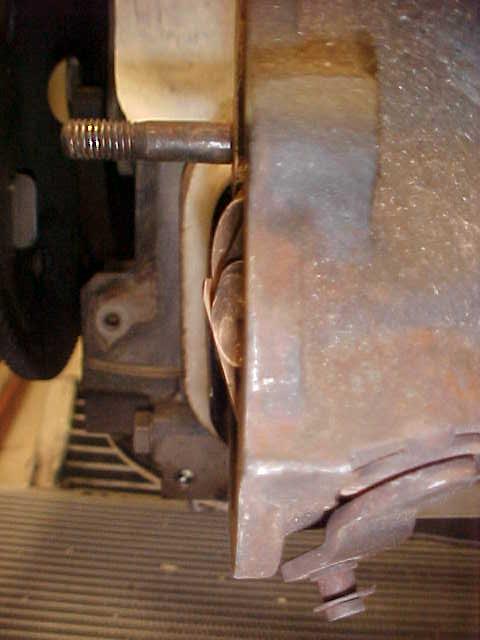
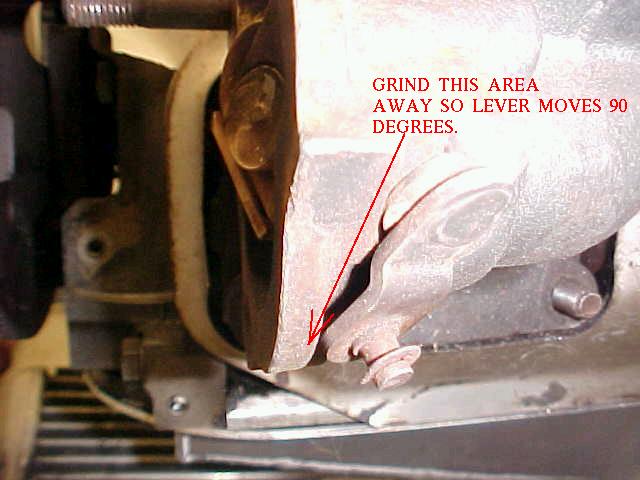
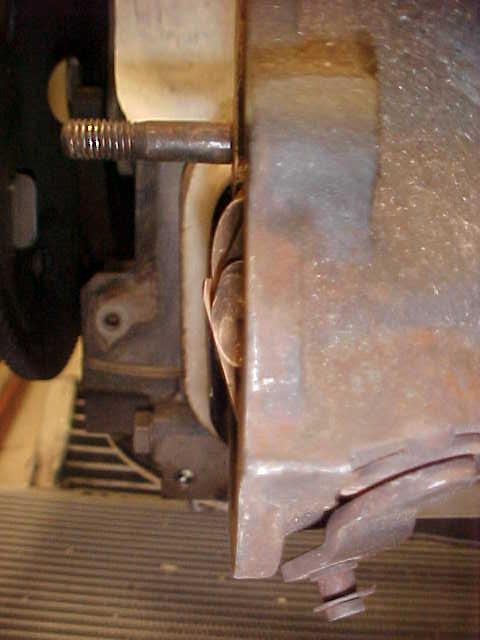
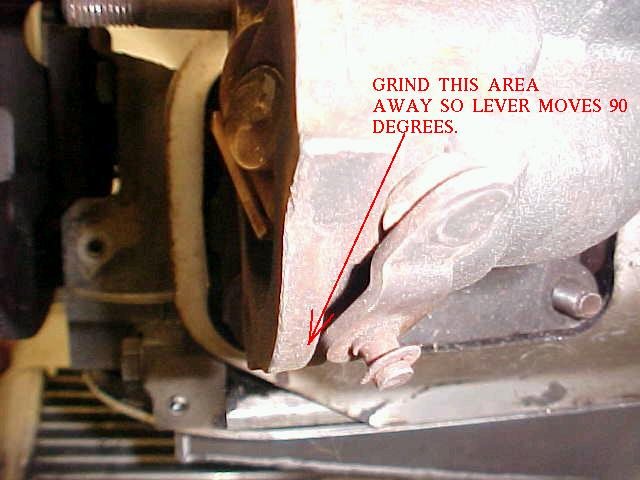
That is a pretty good idea. Unfortunately the assembly is welded together
so it might not be possible to restore it. I think modifying
the back cover of the waste gate to allow the flap to open 90 degrees
might be a better approach. At least a first thing to try.

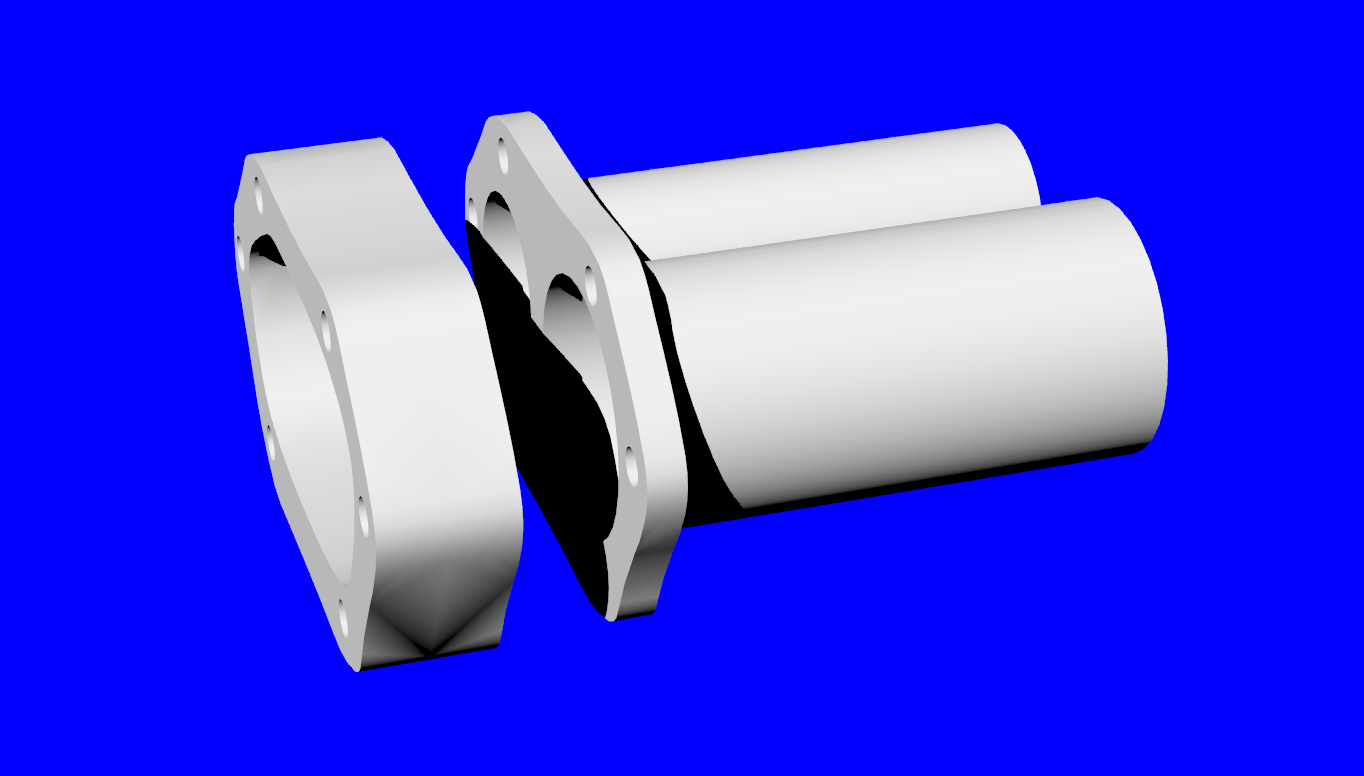
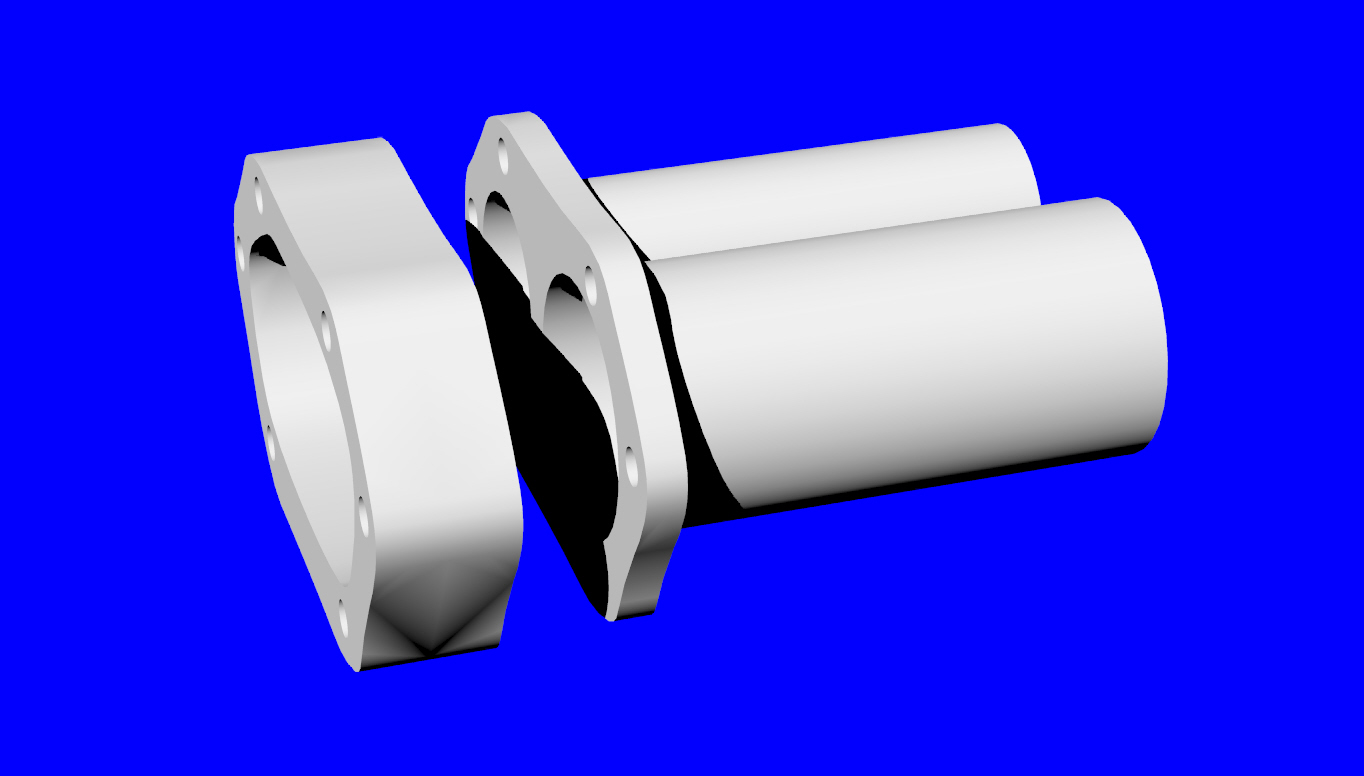
I did a 3D of a steel spacer shown here.

Also a large 3 inch exhaust tube could be welded over a 3 inch hole
in the existing back cover to allow the flap more freedom to open fully.

A bit of porting on the waste gate might help.

Paul Lamar

The Rotary Engine NewsLetter.  Powered by Linux.
ACRE NL web site. http://home.earthlink.net/~rotaryeng/
Copyright 1998-2004 All world wide rights reserved.