Where is the forward quote Brian? I officially shoot you :)
I may not let you post messages from now on :)

Yes! Which makes sense because the two rotor fires twice per rev.
The gear failure was caused by the overloaded failed prop shaft bearing
close to the back of the bull gear. It is overloaded due to the necessity of
cantilevering the bull gear off the back of the prop shaft plus the high
tooth separating loads. No large bearing around the outside of the bull
gear, as used by Allison, was implemented in the early Power Sport
design as I recall.

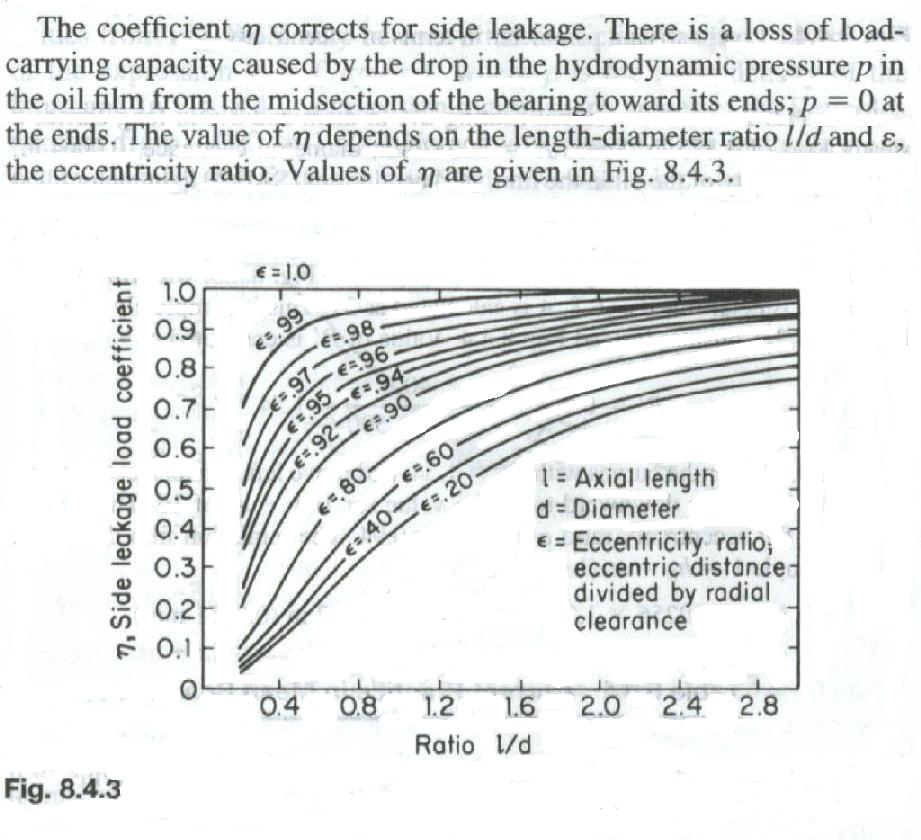
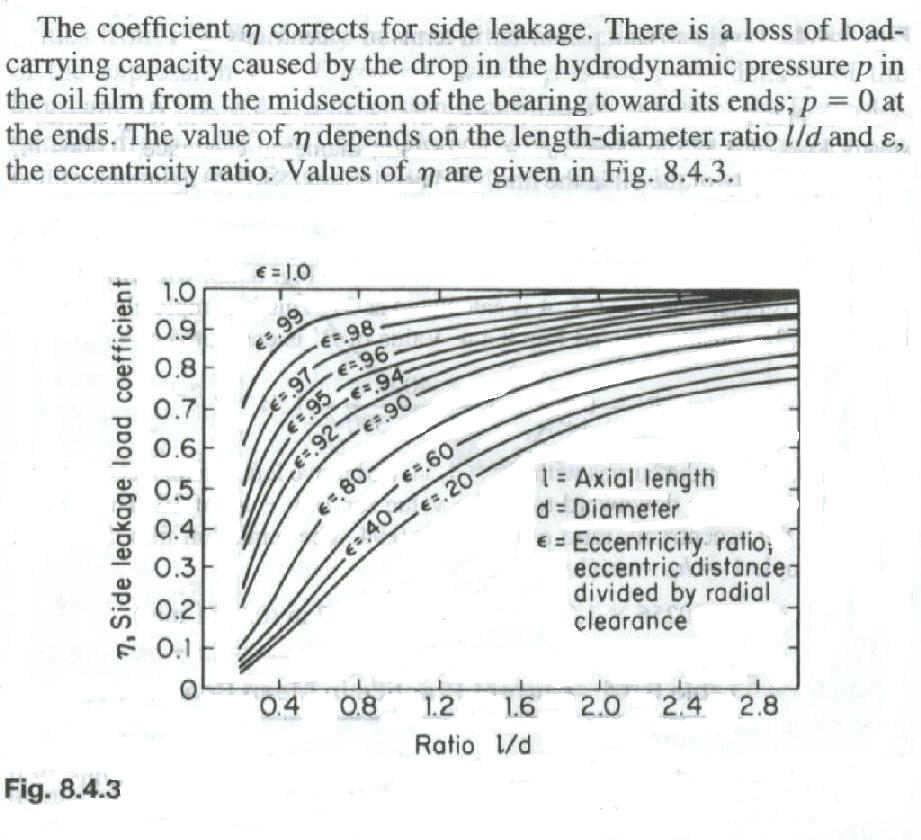
BTW oil pressure fed plain journal bearings must have a certain range of width to
diameter ratios or they don't work. In the case of the Allison the bearing
was too narrow for its large diameter and therefore it required a high volume
of high pressure oil to work as well as it did. Here is a chart of that.
This is from Marks Standard Handbook for Mechanical Engineers. From the
point of view of Allison in 1935 this was hindsight.

Also BTW this is why you cannot adequately fillet an automotive V8 crankshaft
to make it live as long as a real aircraft engine crankshaft. Fatigue life is
a strong function of the fillet radius. Automotive V8 engines
are too short (hence so too the crankshaft) for heavy duty  aircraft use.
Engine length is everything to an automotive stylist. This little engineering
mistake caused Orenda to go bankrupt after spending 50 million and stiffing the
Canadian tax payer 30 million on the Chev big block derived Orenda aircraft
V8 engine project.

Those that fail to learn from history are doomed to repeat it.

Paul Lamar
Paul,
That picture of the spur gear-did it have two damaged teeth at the3 o'clock position?

Brian
The Rotary Engine NewsLetter.  Powered by Linux.
ACRE NL web site. http://home.earthlink.net/~rotaryeng/
Copyright 1998-2004 All world wide rights reserved.