Magnesium Overcast by Dennis R Jenkins ISBN 1-58007-042-6
The story of the Convair B36. My all time favorite airplane.
At first glance it appears to be a shallow coffee table book
but there is lots of very factual information. Especially
the info on the Pratt & Whitney turbo compound engine.
I was unaware that Pratt & Whitney also toyed with the turbo
compound in addition to Allison and Curtiss Wright. Unfortunately
a lot of this data remained secret for far too long. The
turbojet came along about this time nipping the applied aircraft
turbo compound engine R&D in the bud. No telling what would
have happened had the turbo compound principle been applied
to the wankel from the out set. The achilles heel of the
piston turbo compound was the exhaust valve. When the valve broke
up in service it would take out the turbine on the way out the
exhaust pipe. Needless to say and as you all well know by now
the wankel has no exhaust valves to fail. The Pratt and Whitney
R4360 TC was not successful in the B36 due to packaging  problems but
it did show promise in the B50C and the XR-12 Rainbow prototype.
The R&D was canceled because of the turbo prop and turbo jet were
deemed to replace all large aircraft piston engines.

Paul Lamar
-Marc de Piolenc wrote:
The paper by Wiegand and Eichberg states that "Commercial airliners
[sic] using the Turbo Compound engine are the Lockheed P2V, Martin P5M,
Fairchild C-119 [!], the Lockheed Constellation, and Douglas DC-7..."

Obviously I was wrong about the Stratocruiser...

I also forgot to mention that I have a very rare account of P&W's
flirtation with turbocompound engines, published in their corporate
history, now long out of print.

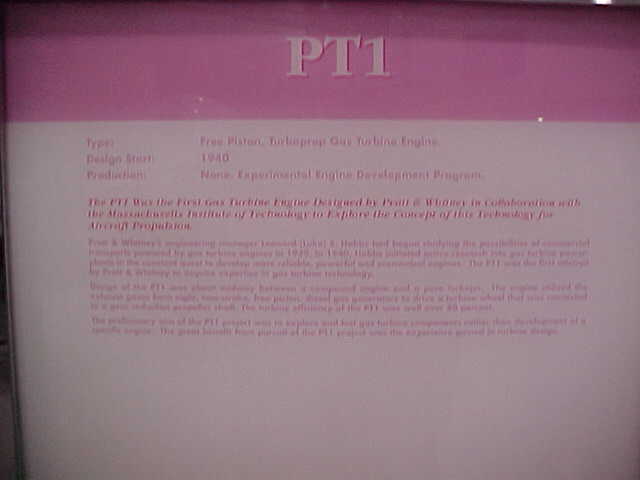
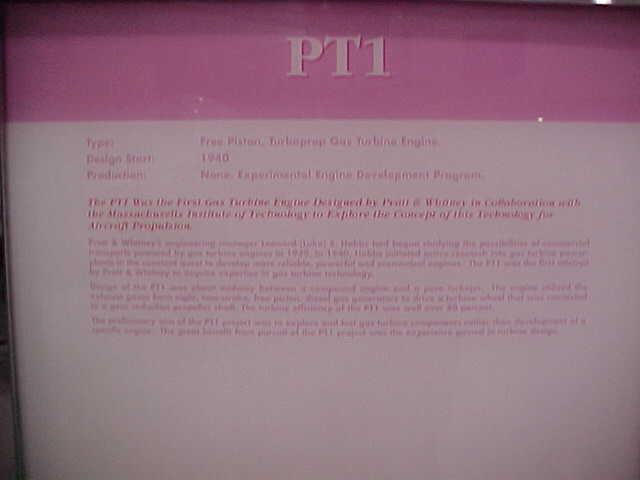
Most people don't know that the designation PT-1 was given to a
free-piston gas generator/gas turbine arrangement which was developed
quietly, with company funds, over a period of years before being
abandoned due to the poor altitude capability of the engine. Such an
engine would have been ideal for long-range helicopters, but that
mission was discovered only twenty years later, and I can't find any
evidence that those studying compound engines for helicopters in the 70s
and 80s ever found P&W's work. I found Dr. Alexander Kalitinsky, father
of the program, retired in southern California, and he let me interview
him about the program over lunch at a Japanese restaurant. Fascinating!
Before giving up, they developed many improvements to free-piston gas
generators, all well documented in patents and as far as I can tell
totally ignored by all subsequent researchers.

Marc de Piolenc
certified compound and free-piston engine fanatic
"P&W's flirtation with turbocompound engines, published in their corporate
 history, now long out of print."

Any chance of scanning that in?

Paul Lamar
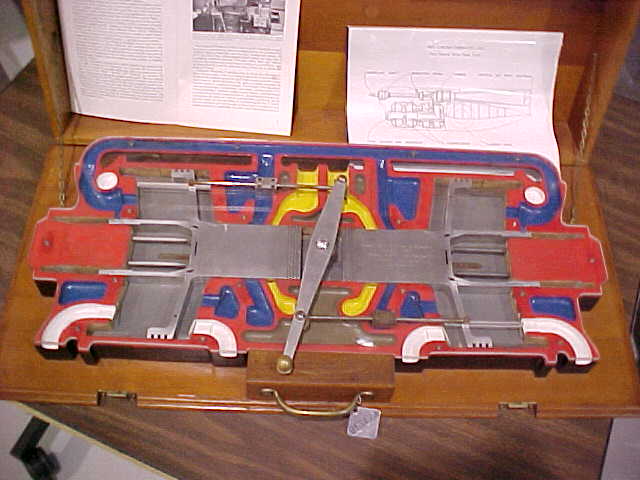
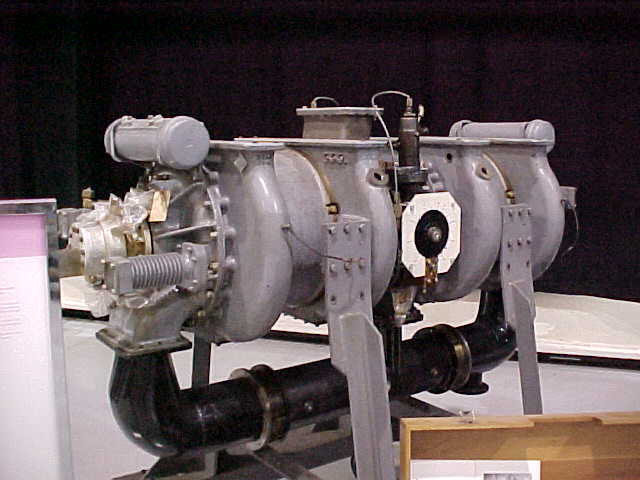
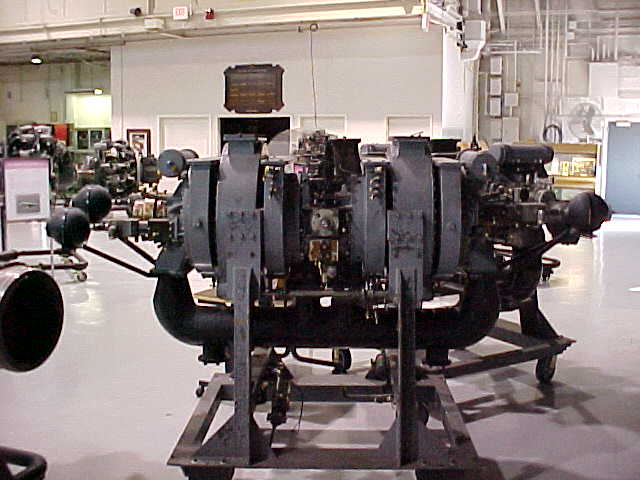
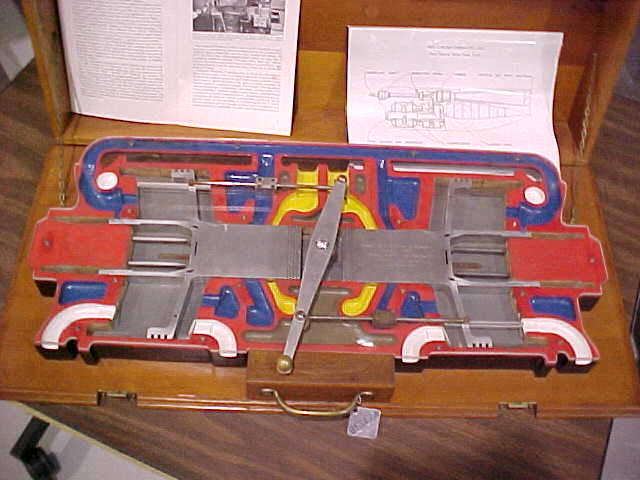
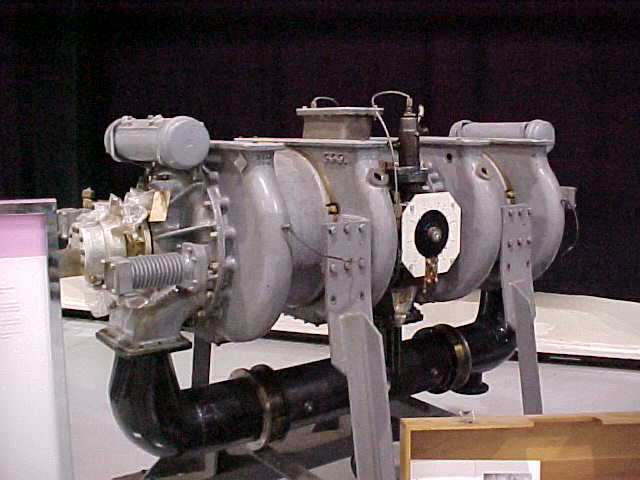
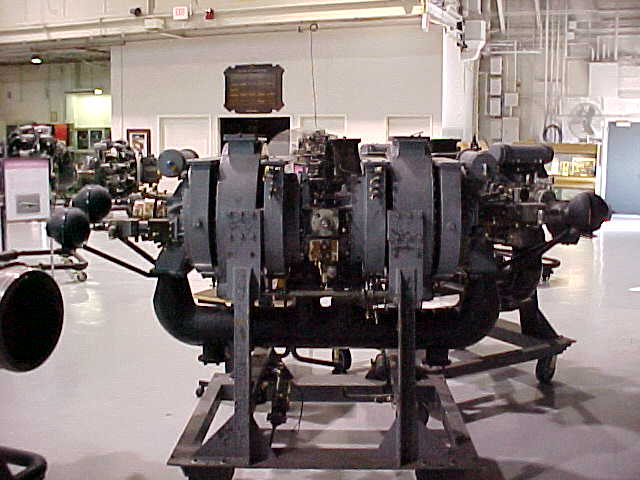
Here are a few pictures I took at the P&W museum of the free piston
engine. It was a mystery engine of the month on here a few years ago.

Paul Lamar

The Rotary Engine NewsLetter.  Powered by Linux.
ACRE NL web site. http://home.earthlink.net/~rotaryeng/
Copyright 1998-2004 All world wide rights reserved.