I have been thinking about this some more and with a bit of software
I think the electric motor in the electric assisted turbo charger
can be used as generator. With a computer controlled clutch on
the turbo compound output shaft all sorts of possibilities become
available.
"Weinstock, Rob" wrote:
snip

This is a really interesting idea -- an electric turbo-compounder.

To me, the key question would be the continuous power rating of the
motor. My assumption is that this is intended for intermittent duty,
since it kicks in when the compressor needs to be accelerated, and the
mass being accelerated is relatively small.

The other technical problem to solve is one of controls for the
motor/generator. If it's a permanent magnet AC motor, a variable
frequency control will be necessary to regulate how much power is
extracted from the generator. For example, I was involved with an
electric car several years ago which had an AC induction motor. During
deceleration, we operated the motor in regen mode to recapture the
energy during braking and use it to recharge the main battery pack. This
could extend the range about 25%, but it was possible to lock the wheels
of the car during regen, depending on how aggressive a setting we
selected. If it's a DC motor, then the excitation has to be controlled.
i.e., an attempt to capture a lot of energy from the electric
turbocharger will simply stop the shaft from turning.

Finally, the efficiency of the motor has to be considered. While large
AC motors and brushless AC motors with exotic magnets can do better than
90%, small motors and DC motors are usually around 50-70%.

Regards,

Rob
Paul,
If you do a Google on "switched reluctance alternators, or generators,
or machines, or motors" (SRG"S or SRM"S) you will find many studies and
examples of brushless,  fairly efficient, fault tolerant devices which
can spin at turbo RPM's. Some of the work is related to auto
starter/alternators, some is sponsored by Wright Patterson for 20-60 KW
generators direct coupled to jet engines. These can spin up to 200,000
RPM because there are no brushes, permanent magnets, or rotor windings.
One study considered 4130 steel rotor laminations. Not the best
magnetics but good enough at the required stress levels.

The concept is old but the advent of the latest generation of fast
switching, high current, IGFET's has led to practical implementations.
I've been looking at them for possible use as an integrated
starter/generator in my single rotor motor.
The problem with electricity is wires. They have resistance.
Resistance increases with heat. If you can figure
out how to remove the resistance all would be well :)
P = E x I    E = I x R    P = I^2 x R
Paul Lamar
Paul

Let me get this straight. You are saying that  a turbo driving a 10 to 1
reduction gear box with a overrun clutch coupled to a rubber belt operating
in a narrow operational rpm band of 3K to 4K rpm shaft speed is more
efficient in increasing shaft horsepower than a full range highspeed
generator (98%) driving a supercharger PM electric motor (70%)  via a power
conditioner/controller (95%)?  Lets assume we use  adequate sized wires in
the short wiring runs and leave off the liquid nitrogen. Besides everyone
knows liquid helium is lighter;-)

Ten years ago I wouldn't have hesitated to agree with you.  Now I am not so
sure.  I still am willing to test both ways though.

I have another company for you to call please. They are also in southern Ca.
but seem to have a wider range of products and experience than Borman Inc..
Interesting efficiency graph.

http://www.calnetix.com/efficiency.cfm

Doug in Japan
Rather spectacular claims. They are sending me more data on what
they have available to buy so you can buy one and test it.

Paul Lamar
Paul,

Perhaps Borman Inc. is not doing well. Thanks for contacting Calnetix. You
have pretty good BS meter in your toolbox so you tell everyone your
impressions of them. If they have some usable item I'll make sure I fly the
puddle jumper  near there in October to speak with them in person. .... And
Dave thinks he is embarrassed in a 172:)

Doug in Japan
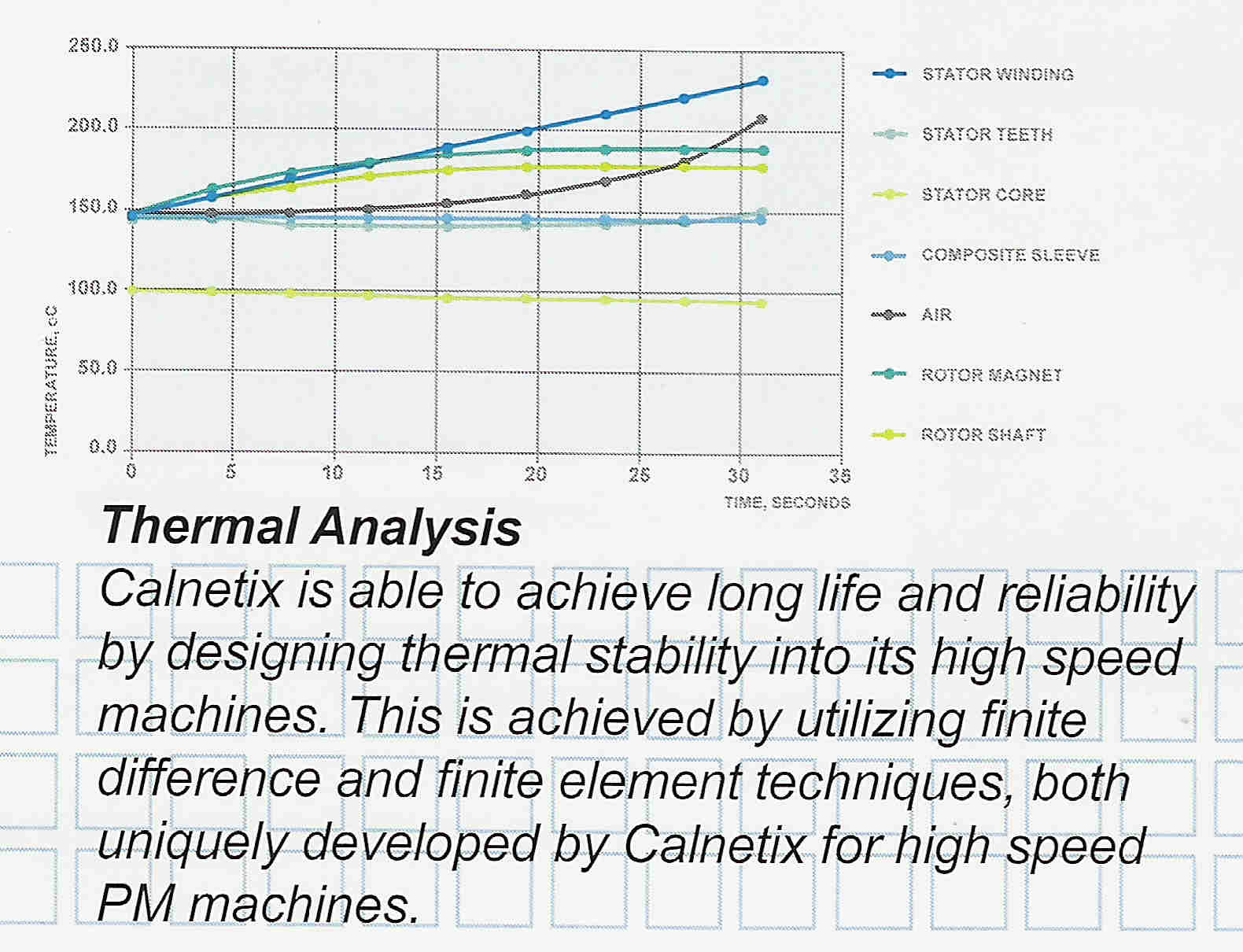
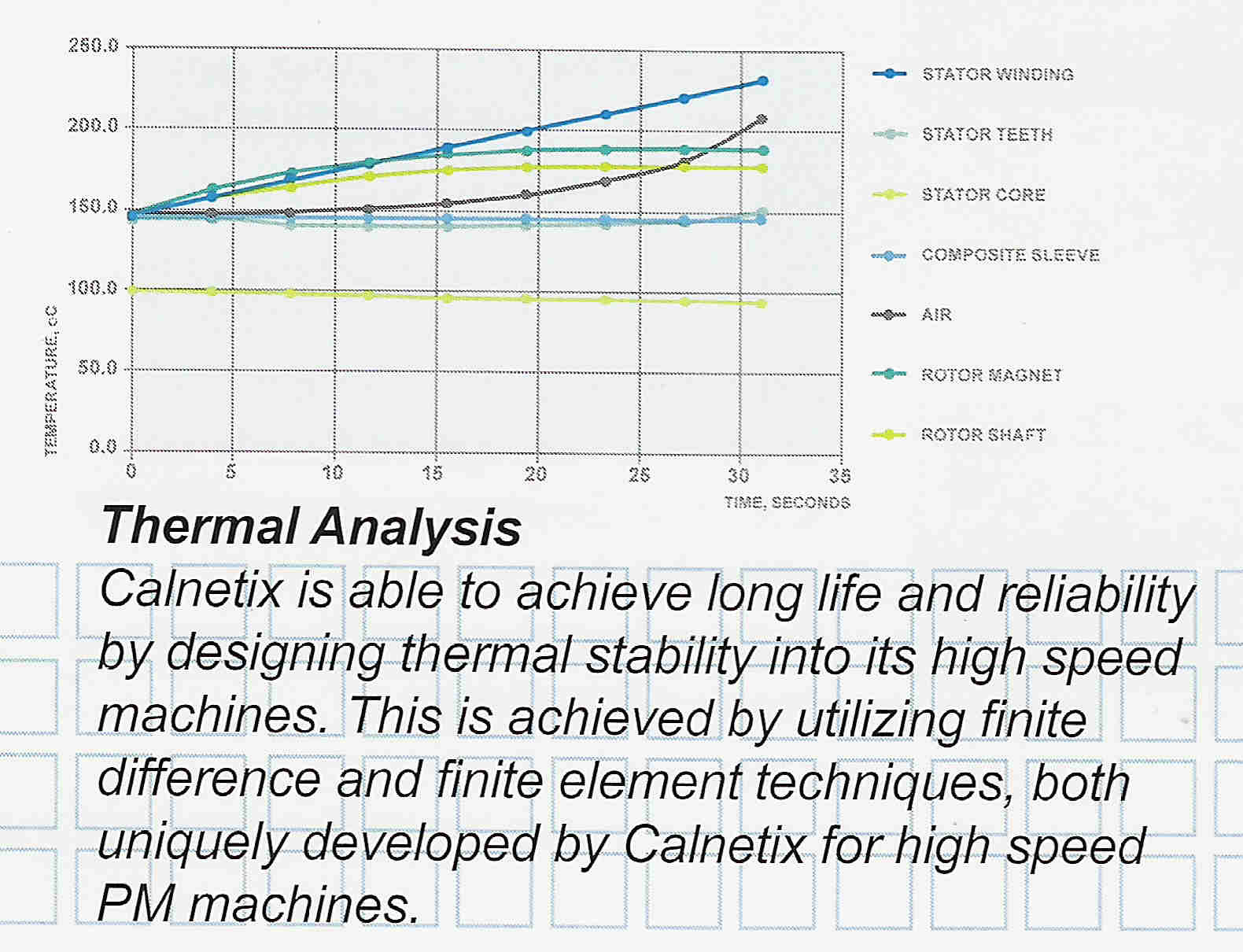
Well I got the brochure and there are some explanations for the extremely
high efficiency claimed. There was a graph in the brochure that was unreadable
with the naked eye even if you had 20/20 :) Real strange! Hmmmm. Why did they do
that? I scanned it in at 600 dots to the inch and here it is. Ah so 100 degrees
C temp rise in 30 seconds. Ah ha. This efficiency rating is instantaneous
when you first turn the generator or motor on. There was no sign of
an equilibrium temperature reached in this graph. Keep it going with
out serious  cooling and it could burn out in a few minutes. They do
mention cooling but no mention was made of liquid nitrogen or liquid
helium for that matter :) Cooling takes power and power must come from
someplace. The other main factor affecting efficiency is voltage.
The voltage is quoted at 900 volts for the motor mode and 890 volts
for the generator mode.

P = E x I    I = E/R

I (current..amps) = heat roughly...more or less.

The drawback to high voltage I already mentioned is sparks in a crash.
The other drawback to high voltage is you need a lot of battery cells to get
up to 900 volts. At about 1.5 volt per cell that is 600 cells. Roughly one
hundred times the number in your average car battery. In other words if
you were charging car batteries you would need roughly 75 to  100 connected
in series. There is some work being done on super capacitors but the insulting
properties of the dielectric used is open to question at 900 volts.
A third drawback to high voltage is the stator wire insulation must be
excellent. Particularly at high temps.

A drawback of the device when used as a motor is the 60,000 RPM.
Probably can be reduced with a ten to one spur gear. Peak torque
of the motor is only 15 foot pounds so that is not too much of a problem.

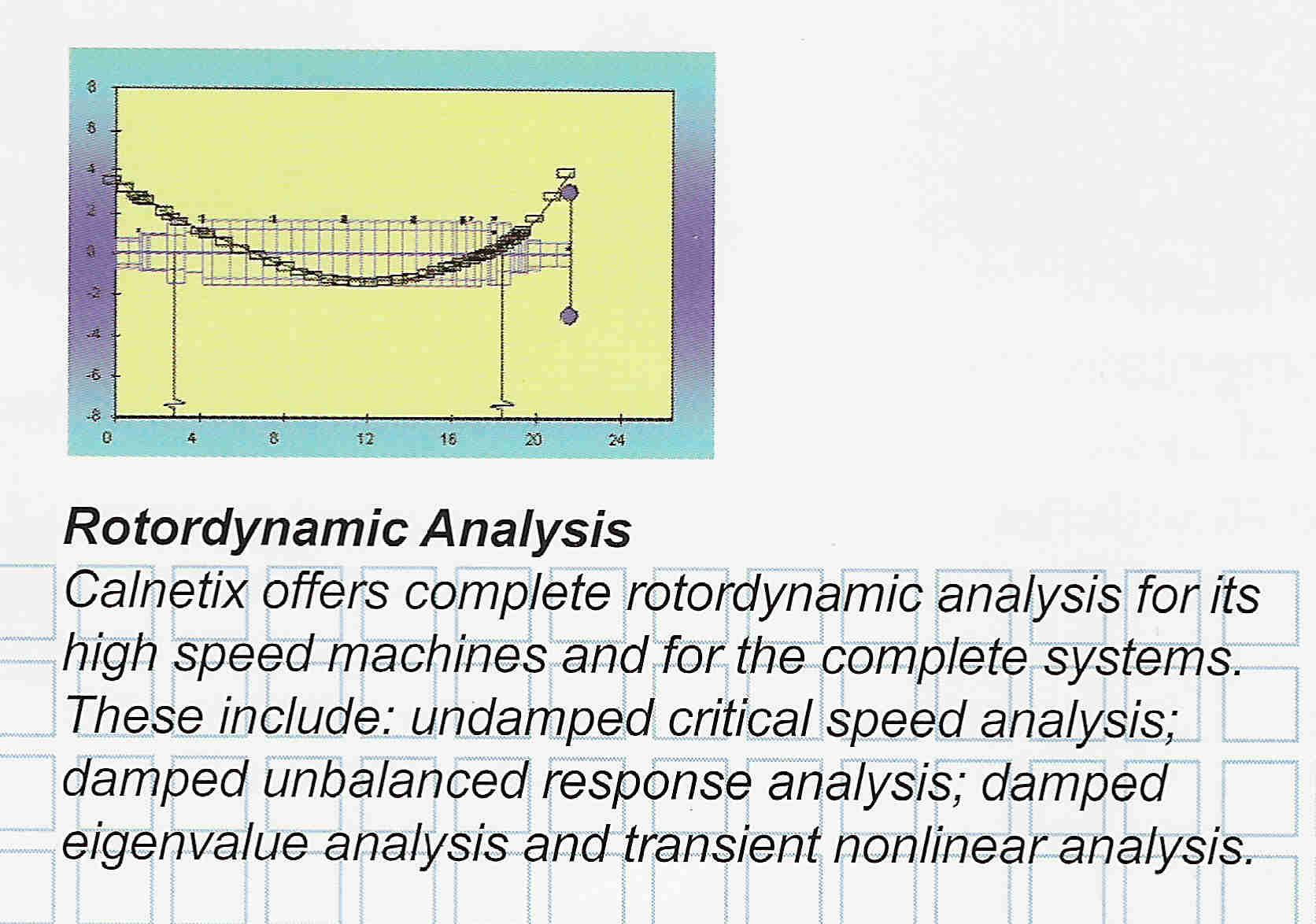
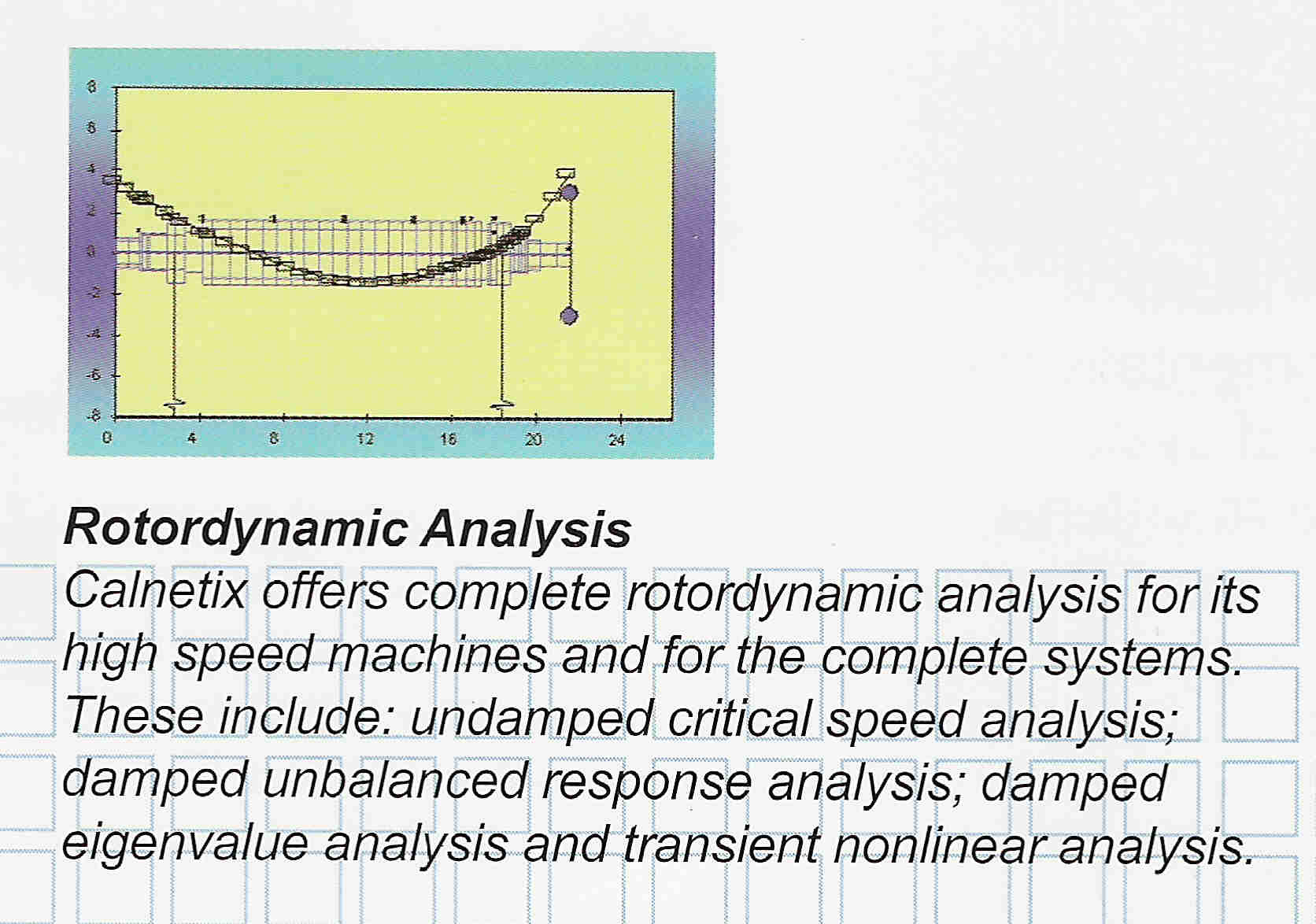
The second chart impossible to read was Rotordynamic Analysis.
Even at 600 dots to the inch. Caterpillar identified this as
a major development problem.

Weight, less gear box, is 220 pounds. Not so hot for a 134 HP motor.
220 pounds will buy you a 250 HP Mazda RX8 engine... 100 batteries
and a primary gear box not required. That is why both Honda and
Toyota limit the size of the hybrid motor/gen to about 50 HP more or
less to keep the weight down.

BTW Robin has a friend that lives on the top of our hill. He is
very disappointed in his hybrid car. It might take only 30 HP
to travel on the freeway and excess weight has little to do with
it. Climbing a hill in an overweight car with modest HP is another
story entirely. HP is so much weight lifted so high in a given
time period. If you charge the batteries when you get to the
top coasting down results in no energy savings.

I asked for prices and I got none.

Paul Lamar

The Rotary Engine NewsLetter.  Powered by Linux.
ACRE NL web site. http://home.earthlink.net/~rotaryeng/
Copyright 1998-2004 All world wide rights reserved.