Paul,

So trying to run the rotary on diesel most efficiently we are
basically
looking at exploring optimum boost levels, eliminating turbo lag and
confirming timing sequence. Probably a different choice or new design
of
injectors is called for. Ditto spark plugs. All of these
aforementioned
areas would benefit enormously by having a  diesel guru.  I am still
searching for him or her.
When the student is ready the teacher appears huh? :)

Possibly the injector position might have to be in the direct 11:30
position
that the new engines reserve for hydrogen use as the volatility of
diesel is
different than gasoline. This can be found out trial and error. Lots
of
variables. Time to start narrowing them down. As I understand it turbo
compounding would be an additionally  merit to enhance the BSFC in the
3K to
4K rpm cruise range. Francois feel free to jump into this
conversation at
any time now:)

Thanks

Doug
OK Doug, I jump in...although I don't want to get too wet in this
particular discussion.  My positions are as follows:

1. Paul has a well understandable prejudice against turbo diesels.  In
European cars, they have indeed made GREAT progress in the last 5-10
years.  Now, I don't know where Paul sets the line between an evolution
and a revolution, but let's say that it has been a spectacular
evolution.  Top of the line turbo diesels (not yet the smaller ones) are
becoming a pleasure to drive and that's definitely new.  Now, I share
with Paul the opinion that diesel is not the right technology for
aircraft engines, for all the reasons he listed and some more.

2. Having said this, IMHO Paul is correct to say that this is not a
diesel head newsletter...  :-)

3. To go to a "diesel cycle" or compression-ignition rotary makes no
sense and Rolls-Royce proved it.  As mentioned, the main reason is the
geometry of the combustion chamber....

4.  Rotary engines DO run perfectly well on heavy fuels (diesel fuel,
jet-fuel, etc) but in a direct-injected, spark-ignited mode.

5. Curtiss-Wright/John Deere, followed by Rotary Power International
developed the SCORE (Stratified Charge Omnivorous Rotary Engine)
technology which worked pretty well (I visited RPI 2 years ago and saw
impressive bench results: BSFC of 0.39 lb/hp.hr on Jet A) but not quite
well enough (Dave Atkins told me he visited the RPI facility last year
and saw dozens of carbon-fouled spark plugs with labels saying that the
engine failed to start after 50-60 hours, etc).  Our reading of that
$100M research project is that: a. they were on the right track, but b.
they were too early and didn't benefit from 2 or 3 key technologies:
very high-pressure common-rail technology, direct digitally controlled
timed injection and modern, high-energy ignition. And c., it is
geometrically very hard (if at all possible) to fit dual ignition in a
SCORE engine of the size we need in aircraft, making it very difficult
to adapt to aviation use and to certify.

6.  The key to a jet-fuelled aviation rotary are therefore in the
development of the right injection and ignition systems.  Mistral has a
few ideas on the subject... but will keep them quiet for the time
being...  I am sure you understand.

So, please let's stop using the word "diesel" for a heavy-fuel powered
engine that is NOT compression ignited.

Cheers,  Francois
As I recall Francois, Mark Wrathal and I did see some side by side dual
spark plug engines at Diamond. I may have some pictures around here.
Ah so here it is. Diamond engine rotor and housings are a bit wider
relatively speaking.

You might have to cast a different rotor and machine a different combustion
chamber. I always thought a slightly wider rotor would give a slightly better
combustion chamber shape. Heck since you are making all your own parts
anyway you could make a slightly wider version and have the benefit of
more displacement than a 13B. Then you could place the common rail
injector between the two spark plugs with dual diagonal lateral nozzles
aimed at the rotor face to bounce off and hit the plugs.
If one displaces the injector up or down from this point one
risk leakage between chambers.

Here too is another idea. I don't really know if this ever worked
but it was being done for a heavy fuel rotary here in
the states by a company called Pats for 10KW APU service. This too
will require a custom rotor with little or no combustion chamber
recess. This is to keep the compression ratio up in the presence of the
new combustion chamber volume. Another idea is to machine a plate
to fill in the existing combustion chamber in the rotor and braze
or bolt it in place. Just for testing. From the looks of it I don't
think Pats ever tried a spark plug. They may have been going for
true diesel operation. I think Pats was somewhere in Maryland and
they may still be in business as they sold other aircraft parts.

Ah so here it is. Google came through again.

http://www.patsinc.com/

                        Marketing and Sales
                        Director of Sales & Contracts, Ted Santos
                        Phone - 410.381.5533
                        Fax - 410.290.6966
                        E-mail: SystemSales@PatsAircraft.com
                        9570 Berger Rd.
                        Columbia, MD 21046

                         Phone, 410.381.5533
                         Fax, 410.290.696

Looks like they gave up on the wankel and went with a small turbine APU.
Perhaps they will share their experiences.

Paul Lamar
Francois, I expect you already know this but according to the Bosch web site the common
rail systems are not as high pressure as the unit pump/unit injector systems.
Common rail systems are around several thousand psi while unit injectors
are on the order of 25,000 psi. I think that is what Wankel Gmbh used. As I understand
it the higher the pressure the better the atomization and fuel burn.
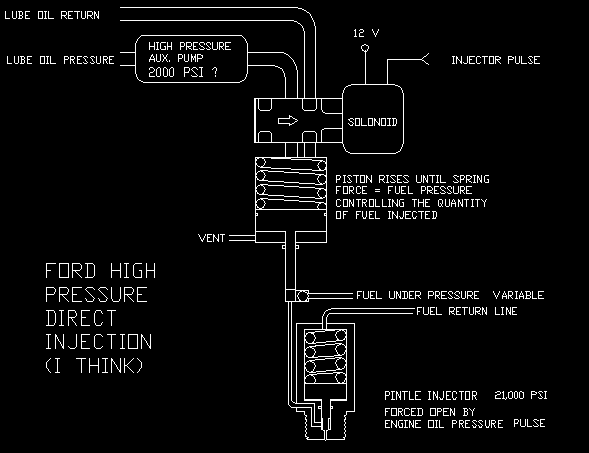
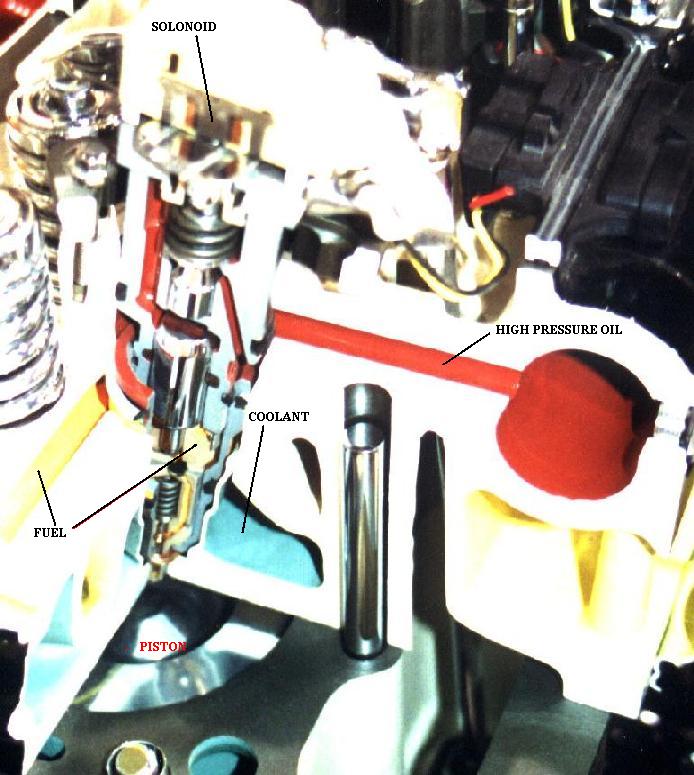
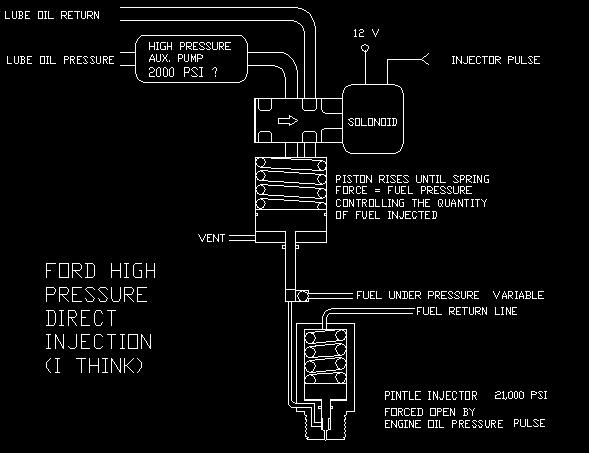
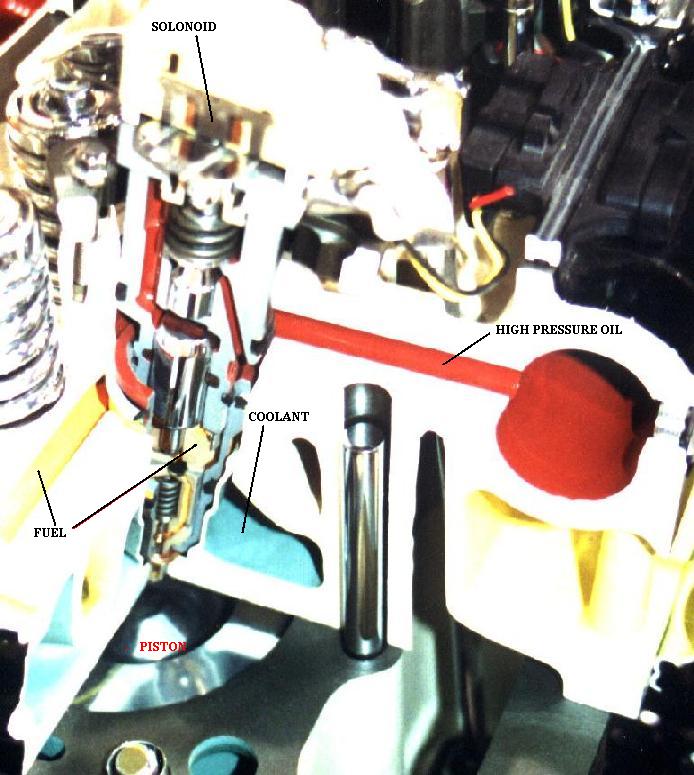
Ford diesel  trucks use a high pressure unit injector that uses engine oil pressure
to enhance the injection pressure to around 21,000 psi.

Paul Lamar

The Rotary Engine NewsLetter.  Powered by Linux.
ACRE NL web site. http://home.earthlink.net/~rotaryeng/
Copyright 1998-2004 All world wide rights reserved.