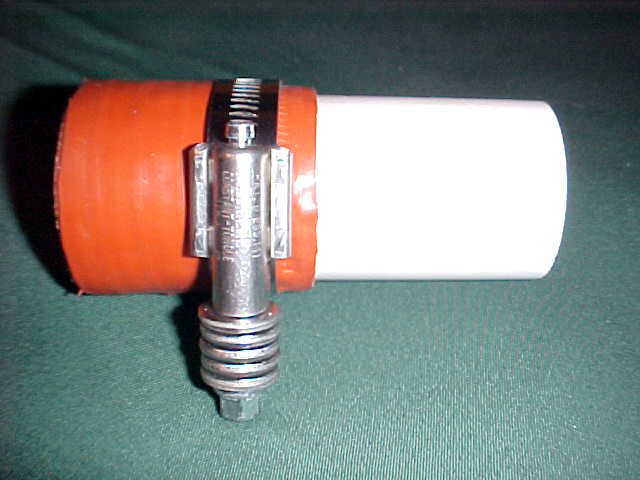
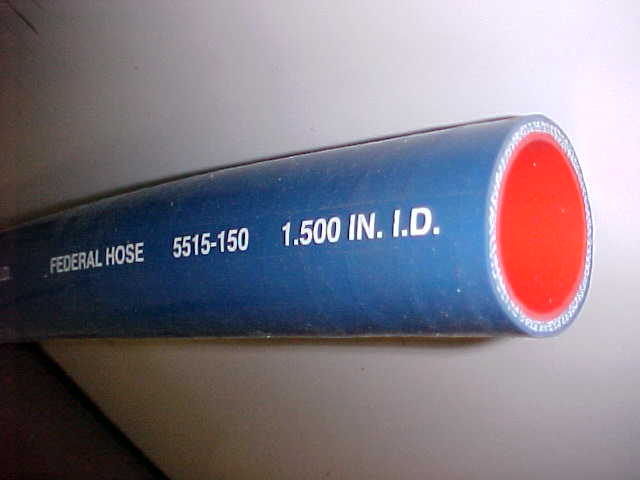
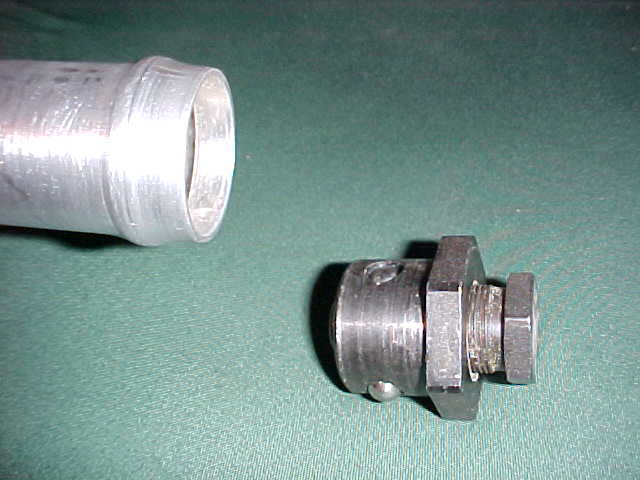
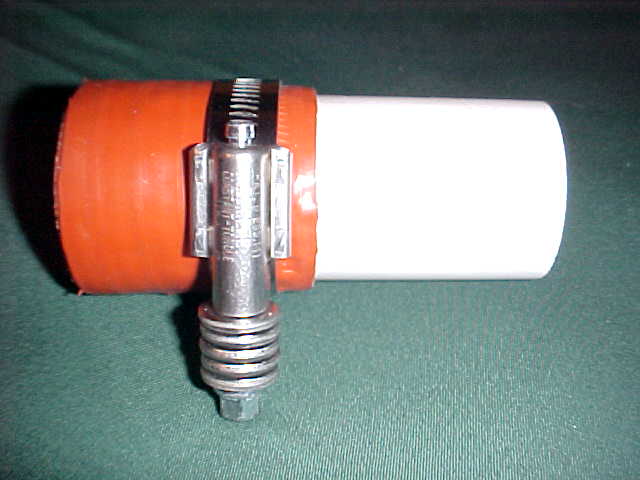
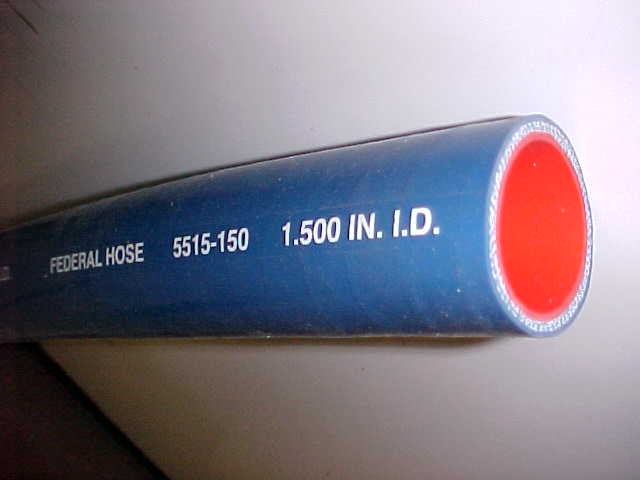
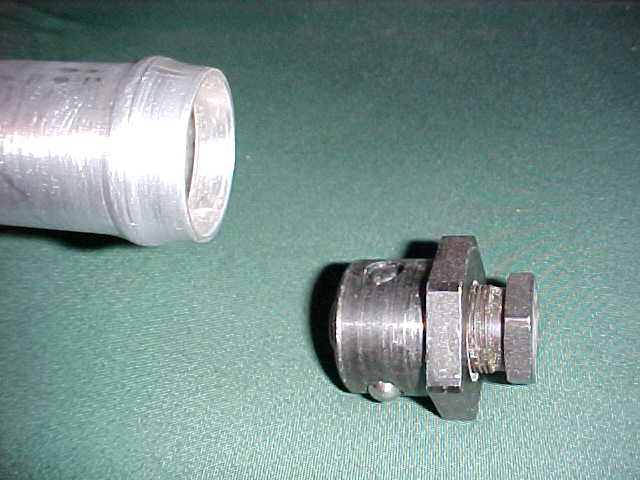
We have lost two airplanes to stupid failed cooling hose connections.
Fortunately nobody was seriously hurt. A cooling system failure
can cause you to crash just as surely as a connecting rod breaking
(if we even had connecting rods). So pay attention.
Always use Breeze constant torque hose clamps or something similar
and silicone rubber hose.

-------------------------------------------------------------------
Dear Mr. Lamar The purpose of this letter is to reply to you from a
conversation we had at a rotary engine workshop on July 29th at OshKosh.  I
was working as a volunteer being a technical counselor, during the course of
the discussion I interrupted and stated a reason for testing cooling systems
with a voltmeter which you had expressed your interest in my replying to you
about this.  For background I am a retired engineer with most of my
experience being in troubleshooting of engines (all types and fuels) plus
drive trains and electrical systems for Hyster Forklift Co for 30 years. I
have also been interested in aviation for years obtaining my pilots license
in 1968.  In the course of my work I became interested in learning all I
could about cooling systems as overheating and cooling system problems were
prevalent in forklifts.

In 1984 I came across an article in an equipment magazine on cooling system
problems from an electrical current passing through the coolant and
destroying the corrosion inhibitors in the antifreeze. I received permission
from the publishers to copy and send this information out to our dealers and
was able to resolve many problems using this information, copy is
attached for your review.  While using this information in various field
situations I realized that as the antifreeze ages it's properties chemically
change and we can encounter a battery style of problem.  The reason for this
is that the engine cooling system will be composed of dissimilar metals of
aluminum, cast iron, brass, copper, lead in solder, etc. As the cooling
system fluid changes with time or a stray electrical current going through it,
the conditions for a battery (anode-cathode) develops. We can appreciate
this better if we define a battery as any two dissimilar metals in an acid
solution.

Over the years I found that you can always test a system with a voltmeter as
the article suggests and you can actually see the system degrade with time
if you have the same vehicle present and you know its past. I used my own
vehicles as test vehicles to firm up my thought process. I would only change
one part of the article from my own field experience and that is the test
with an aluminum engine or some part of the engine being aluminum. The test
at .15 volts is too high on a Japanese engine I use .05 as acceptable,
anything higher as too high. Most cooling systems will test .00 when new or
fairly new. The tests for an electrical current are very good too but if
present the antifreeze will lose its additives rapidly. I would suggest you
get a voltmeter or multimeter and test a few cooling systems for your own
education and you can see the correlation.

A field test about 6 years ago was done by Gates Rubber Co in conjunction
with Texaco (antifreeze supplier) Cummins Diesel and Detroit Engine Co. The
purpose was to see if it was feasible to supply diesel engines that could be
guaranteed for one million miles without overhaul. The results were very
interesting with the cooling systems being the Achilles heel of the engines.
They found that if the antifreeze mix proportions were not 5O/50 they would
suffer from "precipate" damage to the water pump seals. That hose clamps
would always loosen with time and age and better clamps needed to be
incorporated, also that if the system went to an acidic condition it was
possible to leach the carbon black out of a rubber hose especially in a bend
and the fabric would be weakened and fail. All of the tests led to different
ways to make radiator host/shrink bands and antifreeze chemically different.
GM picked up on this test and changed the GM antifreeze which has increased
the change periods for their antifreeze.  I hope I haven't confused you by
going on too much but I find cooling systems very interesting.

Best regards

[signed]

Wally Clingan


Thanks for the letter Wally.

I have added you to the list. If it gets too much let me
know and I will take you off immediately.

Paul Lamar

The Rotary Engine NewsLetter.  Powered by Linux.
ACRE NL web site. http://home.earthlink.net/~rotaryeng/
Copyright 1998-2004 All world wide rights reserved.