Paul Carey wrote:

Hi Douglas and Paul

In my discussions with Theo, the Neptune owner who sold me the Power
Turbine, he could talk endlessly about the PT blade design and material
specs, and from memory he called it a "bucket" design - the blade can absorb
most of the exhaust gas energy under load (as in - connected to the engine).
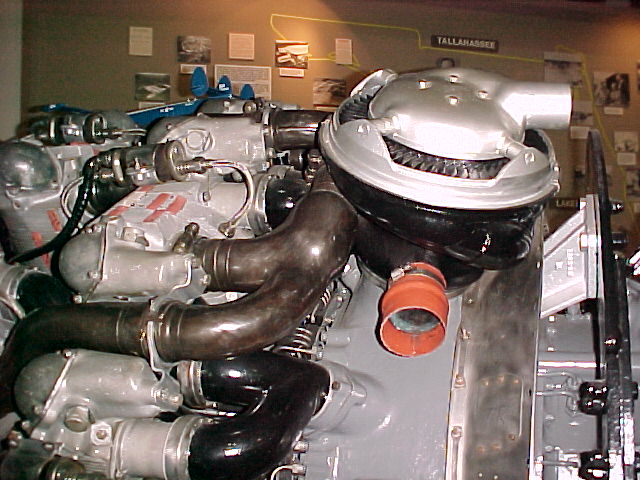
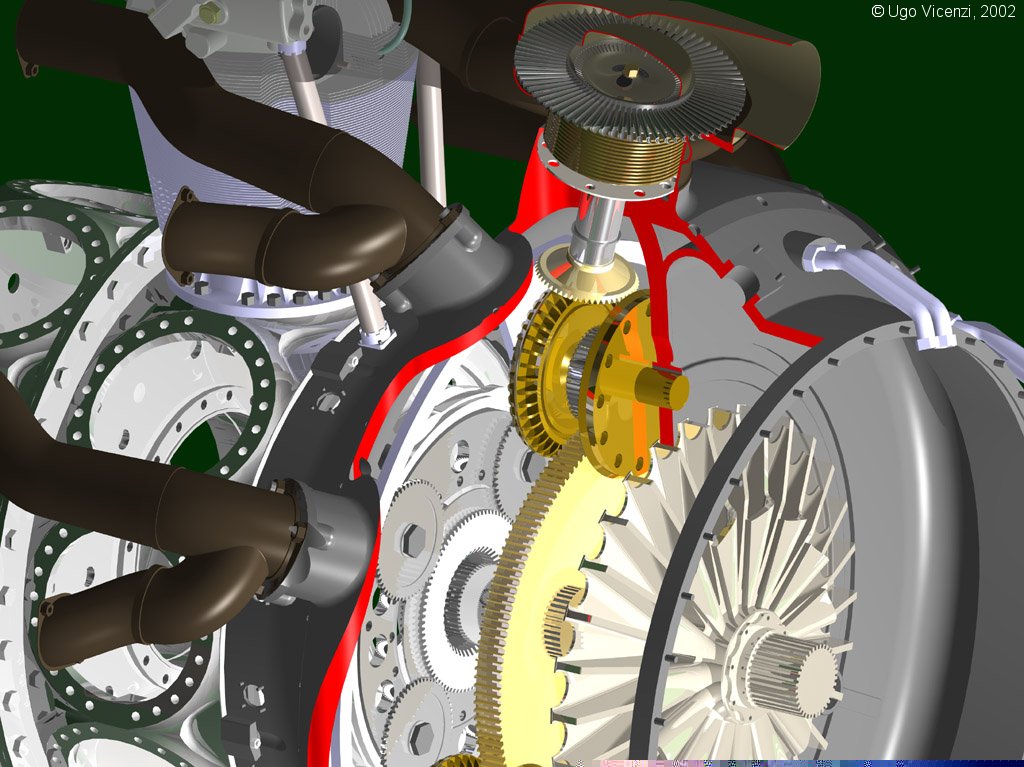
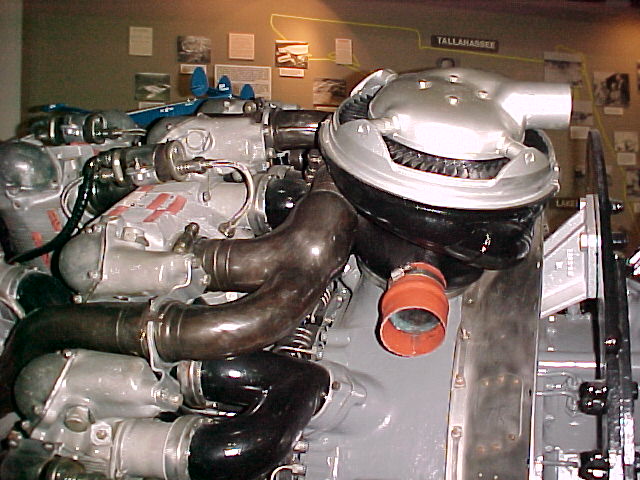
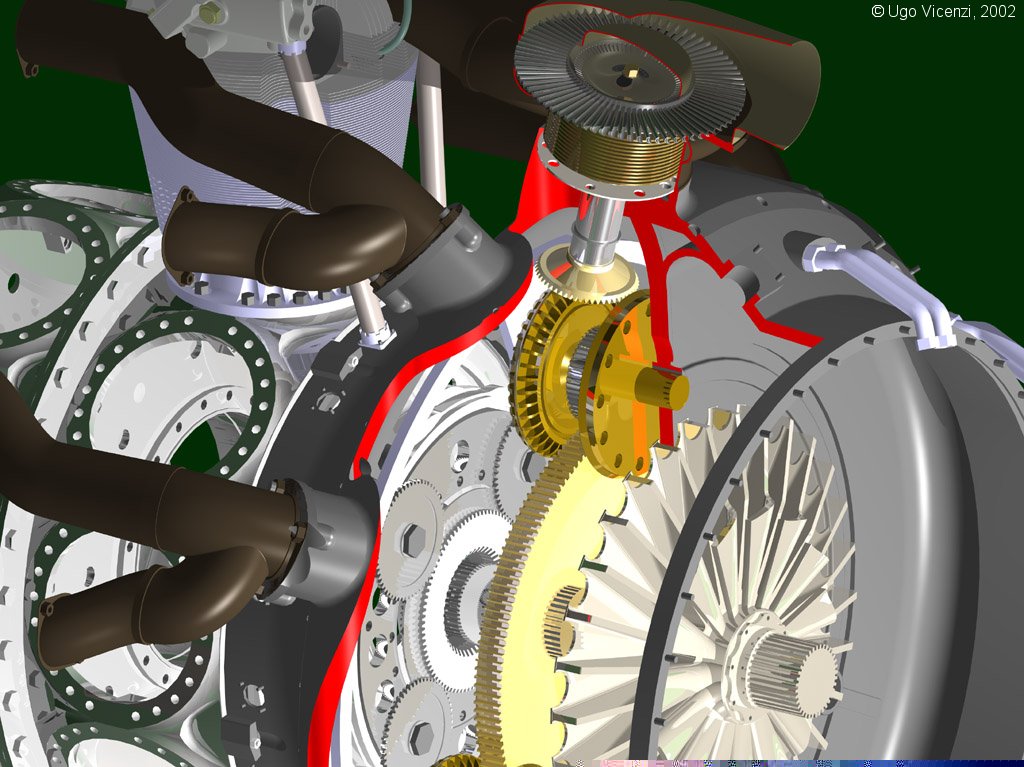
You can see the attached photos of the blades, the angle of attack and
double wall. The wheel is driven clockwise in these photos.
I wonder how a turbocharger, designed to free rev with no load, will handle
being direct driven. Will the turbine be able to absorb enough energy, and
what will the gas path be doing?

Regards PC

Paul Carey LAME, MC
Aero Group Pty Ltd ACN 109 854 015
Aero Management - aviation consultants.
www.aeromanagement.com.au
(08) 9371 5205  0418 959 892
 Hello Paul Carey,

Interesting picture. I was just wondering today if anyone had a design that
could capture most of the rotary exhaust energy. Power Turbine is that the
company name or product name?    Actually I was wondering where to get some
specs. on how much exhaust gas flow is coming from the Mazda rotary engine.
We know the area of the ports so if we could measure the hot exhaust gas
speed then we could  calculate the cubic meter/sec  at different rpms. Temp.
would give us density.

How would you use this turbine shown to compound your race engine?

Initially I mentioned to Paul L. that a fool proof way to test the turbo
compound system would be to have one exhaust manifold with two turbos
connected to it.  One to drive the compressor and one to drive the eshaft
through a power reduction unit if needed or just a magnetic slip clutch if
the turbo speeds and torque where in the right range.   Each turbo would be
designed and sized for its application and have a throttle valve on its
intake.  Weight and cost were considered to be drawbacks. But then again
CVT and gear boxes are also heavy and expensive.

This double turbo concept is still on my agenda to test and  would give us
an idea of how far we could  push the turbo merits.

This turbo you are showing looks to have some high lift blades and I would
assume it turns fairly slow.  Can you point me toward some specifications?

I'm curious on why you would mention driving the turbocharger. Wouldn't that
be the same as a supercharger?

Doug in Japan
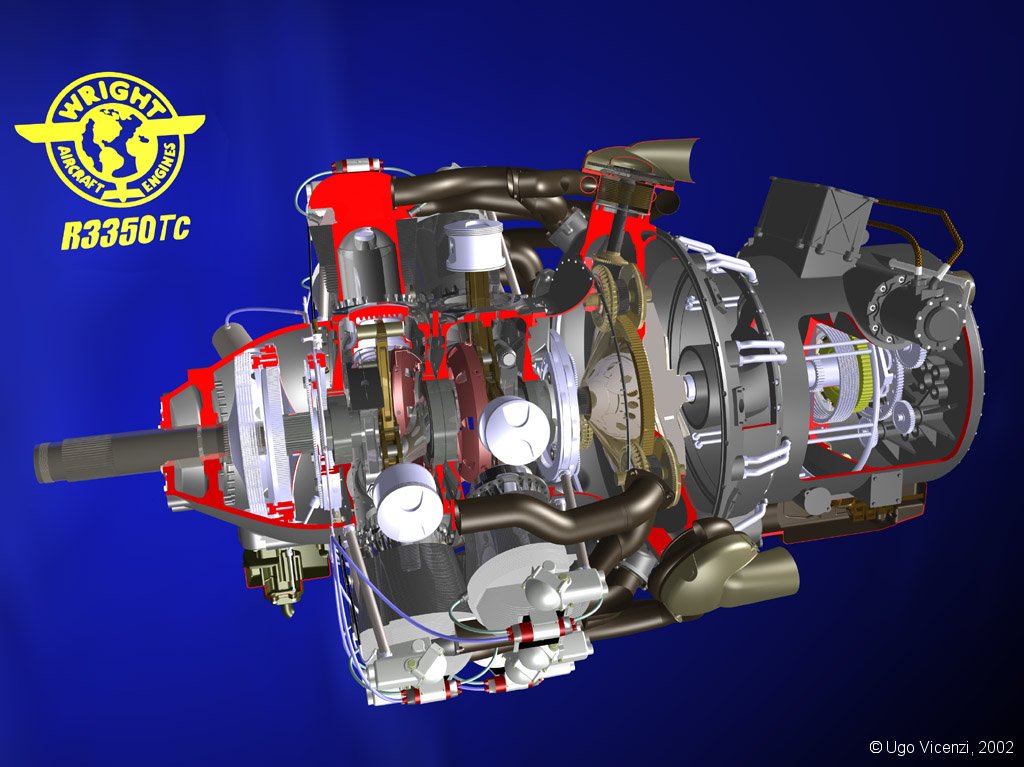
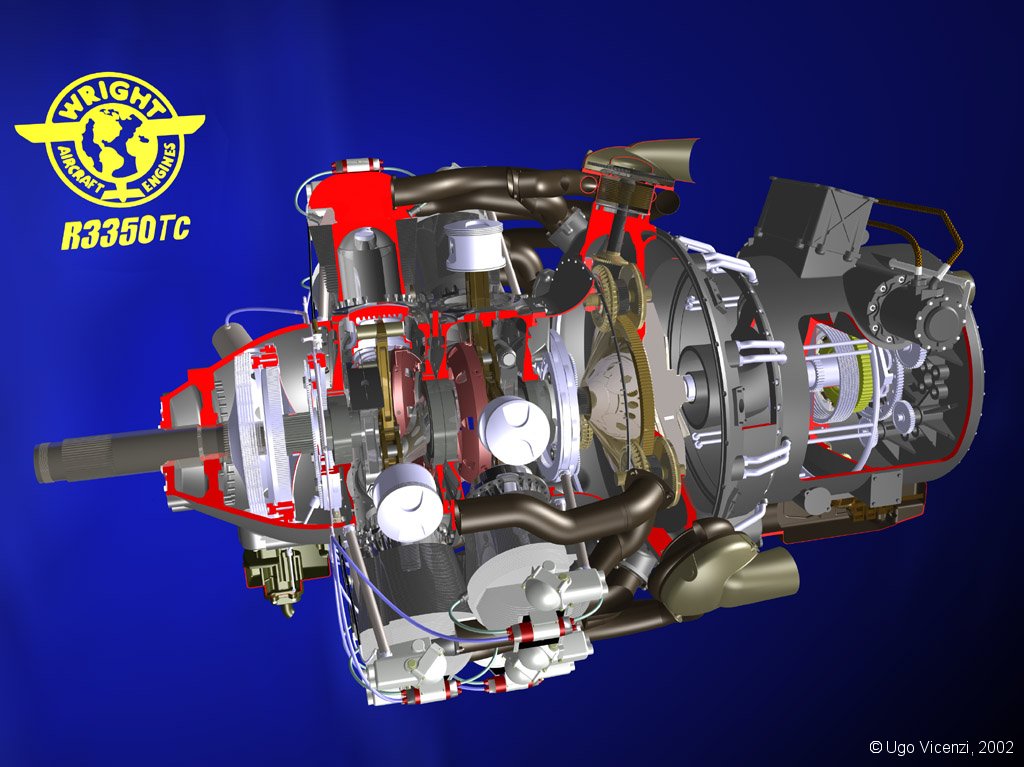
What you are looking at here Doug is on of three 300 HP blow down turbines
normally installed on the CW R3350TC 3800 HP aircraft engine.

Paul Carey, I would try mounting just the turbine wheel direct drive
on the end of the E-shaft nose of the 3 rotor and fabricating some exhaust
nozzles out of light weight Inconel.

Paul Lamar

The Rotary Engine NewsLetter.  Powered by Linux.
ACRE NL web site. http://home.earthlink.net/~rotaryeng/
Copyright 1998-2004 All world wide rights reserved.