DaveLeonard wrote:
Here is the latest update from Tracy on the Renisis installation:

I was beginning to think the R         enesisswapwasamistake.Upuntilnow,the
engine felt weak compared to the 4 port 2nd gen I've been flying although I
haven't really had a chance to test it's max output due to cooling concerns.

Just got back from first flight test after making several changes.  Yes, I
know that it is best to change one thing at a time so the results can be
accurately correlated but that must be balanced against the time available.
It takes me an average of 5 hours to do each preparation/flight test/data
evaluation and this does not include the time required to make the changes.

Changes
Main change was:   Replaced NACA scoop / SCAT duct air inlet with ram-air
inlet.

Other changes included adding an additional coolant temp sensor before
coolant passes exhaust ports, cleaner cooling air exit from right rad and
oil cooler (result of removing the SCAT duct) and external stiffener on
water pump inlet hose (to prevent collapse in the event of negative
pressure).

I had intended to just test the pre-exhaust / post-exhaust  coolant temp
after installing added temp sensor but since weather delayed the flight
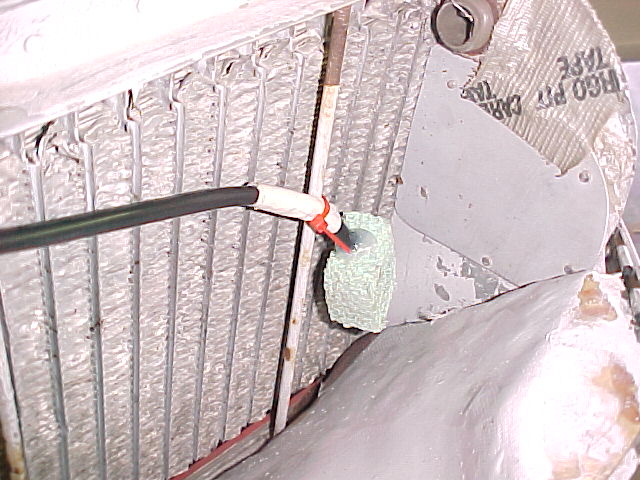
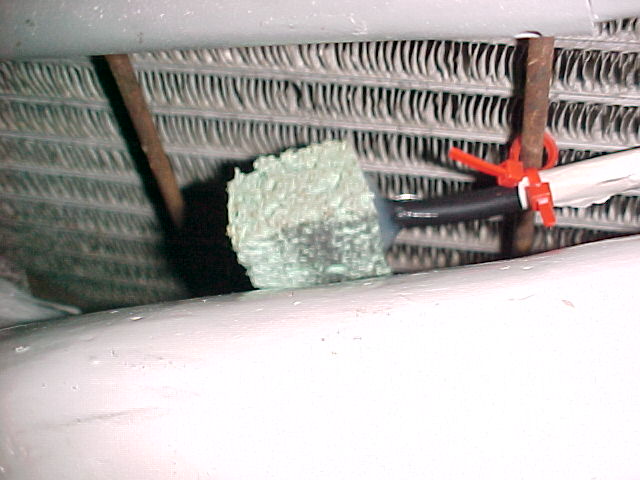
test, decided to add the ram-air scoop while waiting.  This was a very quick
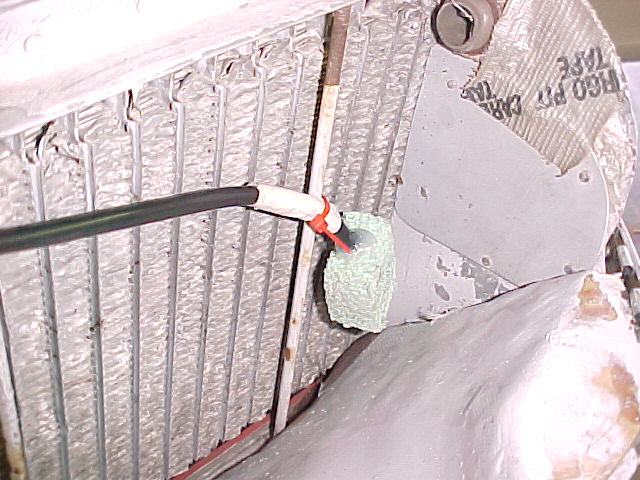
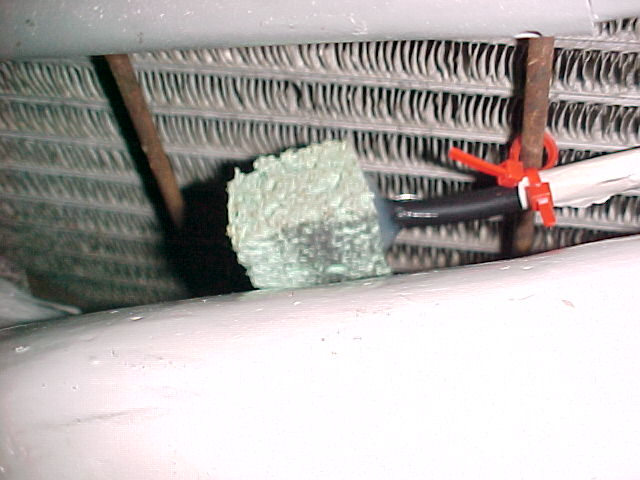
& dirty implementation so don't laugh too hard at the pictures.  The SCAT
duct on top of the picture with top cowl off was snaked around the engine
compartment and connected to a NACA scoop on bottom right of cowl.  Removing
it may have been responsible for some of the cooling improvements.

Test Results

Cooling.
After takeoff, leveled off at 1000 ft to measure coolant temps.  At fuel
burn of 5.5 gph the post exhaust coolant temp was 10 degrees higher than pre
exhaust.  This would account for almost all the temp rise over the 2nd gen
engine.   OAT was 3 - 4 degrees cooler than on previous tests but all temps
seemed to be down about 10 degrees.   ???   Lower temps may be due to better
airflow through cowl as a result of removing SCAT duct.   I'll take it!

Started slowly adding power and trimmed airspeed to 120 mph.  Measured
pre/post exhaust coolant temp deltas between 25% and 90% engine power as
computed by EM2.  Power was limited by engine speed (fixed pitch prop) and
MAP at test altitude.  Delta went from low of 10 degrees F at 25% to high of
16 deg at 90%.  post exhaust temp reached a high of 222 at 100%

Oil temps reached a high of only 190 F.  This was significantly lower than
on 2nd gen engine under similar conditions.  Could be due to ceramic coating
on rotors, better cooling inlets, better thermo efficiency on Renesis, or
(your guess here).  Since oil cooling is the critical number in the rotary,
this was an especially welcome result.

Cooling Conclusions
The extra heating of the coolant by the exhaust is real but of no
significant impact.  Only critical coolant temp is when it is flowing over
the combustion chambers of the rotor housings.  It is not significantly
higher here than it was on the 2nd gen engine.  Not a scientific test but I
did not sense the slight fall-off of power in the Renesis that I did on the
2nd gen when coolant temps went above 180F.

Why there was a 10 deg F overall reduction in coolant temps  with only a 3
deg reduction in OAT is still not explained.  Possibly the SCAT duct removal
or the water pump inlet stiffener.  Not likely, but it could even be due to
the additional cooling air outlet area from the butchered cowl around the
ram-air inlet.

Ram Air inlet results
The added power was evident from the moment of throttle up on take-off.
ROC felt like the old RVotter again!  After temp testing was complete, a WOT
run was made at altitude of 4000 msl.  On initial throttle up, full
atmospheric pressure was indicated on MP gauge and MP increased as aircraft
accelerated to 221 TAS indicating that ram-air recovery was in-fact
happening.  Was still accelerating when test concluded.  Did not have time
to make multiple runs to accurately measure how much pressure recovery there
was.  Inlet and diffuser is in very crude form so will refine this plumbing
before doing careful measurement.  Cooling stayed within limits during test.

Overall impression was that peak power on Renesis even in its crude state of
tune had now equaled the 2nd gen at the height of it's refinement.  The 2nd
gen had a slight edge in power when the engine was at lower rpm in climb.  I
could feel the Renesis start to come 'up on the pipe' as revs increased at
higher airspeeds.
 Now it's time to start tuning that intake manifold.  The runners are near
their minimum length right now.

Tracy Crook
And this is the low power four port RX8 engine.

What RPM are you running Tracy at 221 TAS?

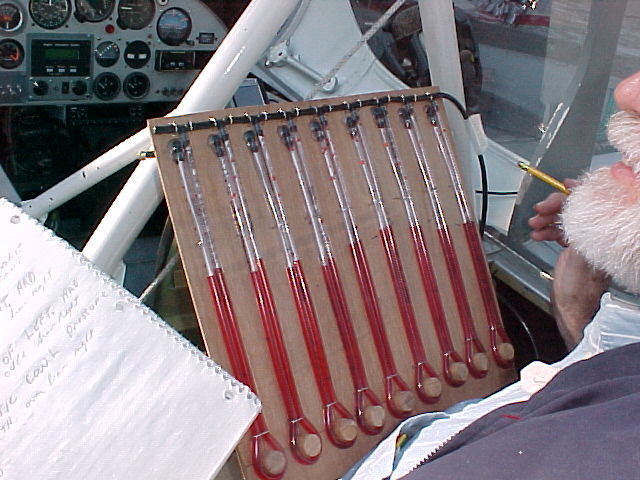
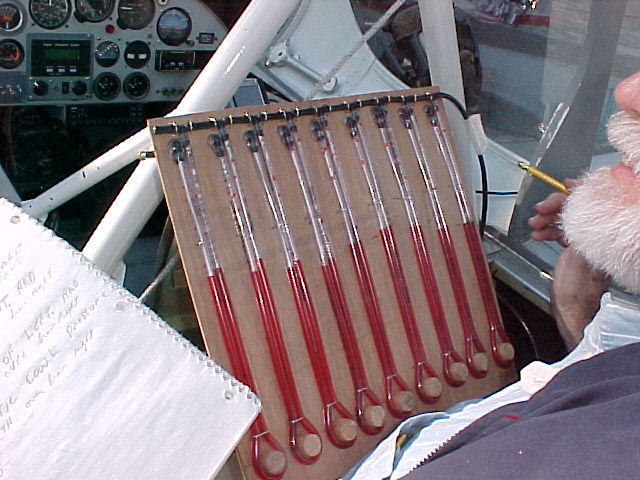
It is easier and faster to develop the cooling system using water manometers
and air pressure than it is just recording engine temperatures. As far as the
heat added to the coolant by the side exhaust ports we don't have any base line
data from the peripheral exhaust ports. They too add heat to the coolant.

Paul Lamar

The Rotary Engine NewsLetter.  Powered by Linux.
ACRE NL web site. http://home.earthlink.net/~rotaryeng/
Copyright 1998-2004 All world wide rights reserved.