"Weinstock, Rob" wrote:
One of the things I'd like to understand better is how/why the
13B
is
superior to the Renesis, breathes better, but makes ~66% of the
peak
power.

Otherwise, very informative!

Regards,

Rob
They raised the RPM where peak power is generated by adding 30%
to
the intake
and 17% to the exhaust port areas.

HP = (Torque x RPM) /5252

Assume for the moment torque is constant.

So 8500/6500 x 185 HP is 240 HP.

I also think they made some sort of improvements in the oil
pressure
system.
I am pretty sure the rotors are not significantly lighter in
weight.
A peripheral port version of the RX8 motor should generate well
over
325 HP with a Lemans type fixed intake system at 8500 RPM. Even
with
side exhaust ports.

I don't agree the RX8 engine is a step backwards. Perhaps a
little
more
heat is rejected to the cooling system but the later timing of
the
side
exhausts ports does indeed result in more energy being extracted
from the
fuel.

Until we have an RX8 engine on a dyno I don't think we will find
out
what
the best BSFC is. I am sure the BSFC at low RPM/power levels is
far
better than the older engines. That was Mazda's main focus on
developing
the side exhaust ports.

When the electric assisted turbo charged version of the RX8
engine
appears
you will see much better acceleration performance out of the
RX8.
Probably exceeding the acceleration performance of the stock
1995
third
gen 260 HP sequential turbo charged RX7 despite the extra weight
of
the RX8.

Paul Lamar
Rob, and Paul

All engineers are a wee bit biased towards what they know
works:)
Mazda
people are no exception. Remember one of guys, Mr. Kagawa,
designed
the
LeMans 4 rotor intake system. The context in which they were
speaking
was
that the  P port exhaust engines breath easier and....
Mr. Nakane said for turbo applications the exhaust P-port is
superior to
the the high drag and heat absorbing side port RENESIS.

I sure if I asked them what is good about the RENESIS they would
could have
mentioned a lot of things, such as a bigger water pump, and, and?

No seriously if the engine has enough ummph to power a
turbo-charger
the
configuration should get better BSFC. and I'll still want to use
it.
If not
then I'll be more than happy to make up a 20B from parts. For
potential
power and all around use in majority of aircraft I think the 13B
has
a
fantastic cost/performance ratio and this dog still has a few
tricks
to show
us.

Speaking of P ports.  Jerry do you need to know the exact ID
dimension of
the P-port used in the LeMans?  A little late perhaps since I see
you
already have it bonded in.

Doug in Japan
Doug, sorry I misread the paragraph above. I thought you were
asking
for the Leman P port numbers. Yes I would like to have them.
However,
the Leman p Port and the Racing Beat P port which are similar to
each
other are intended for much higher rpm operation. Jim Mederer told
me
they would not work well at our rpm.  He advised going to a much
smaller port. Based on the calculations of Rolf Pfieffer our port
did
in fact end up  smaller.   Our port is aimed at the 6000 to 7500 rpm
range.  It will run well up to about 8500 rpm but after that a
bigger
hole is needed. Jerry
Jerry,
What diameter butterfly did you end up using?  I have an old drawing
that shows 1.5" which also happens to be what Paul Yaw recommended
(maybe 3 years ago?). I couldn't read the drawing that Paul L. just
sent.
Ken Powell
Ken,  the bore of the throttle body at the housing face is 1.5 inches.
The butterfly is 1.625 inches.   The larger size is to make up for the
volume lost due to the butterfly itself taking up space.    Jerry
Jerry I checked with my friend and my notes from that meeting.  The Lemans
Port opening in the rotor housing is 51mm in diameter.  As you might know
the manifold bolts to the engine and curves upwards 90 degrees.  The ID in
this short section is 50mm.  On top of this manifold's horizontal flange is
bolted another variable length manifold that is curved at a approximate
angle of 45 degrees back towards the engine. The inside OD in this part is
51mm.

As for different tuning lengths and pressures I will need some help
interpreting the graph. I'll bring it with me when I come to USA next month.
 The data was gathered  2-22-1989 BTW.

My friend believes the best BSCF of the NA 13B would be at air/fuel ratios
of 16  and 210 grams/PS/Hour.  That is about 0.462.  Perhaps Tracy has
experience running on leaner mixtures.

BTW I am bringing a digital movie and still camera.  If you are interested
and meet up with me either at Tracy's or along my route I would like to take
pictures of your airplane or of your parts, and a short video clip along the
following lines.

Hi my name is ............... and I am currently flying/or building a .....
airplane for ..... years.  And then a brief several word message like "Fly
Rotary" "Go Mazda" or whatever.

I can turn the data over to Paul when I see him and perhaps Mark and Mark
can add it to the DVD they are making. What do you think? I am trying the
backdoor approach with Mazda now and it seems quite a few engineers are
thrilled that you guys are flying behind the engine.

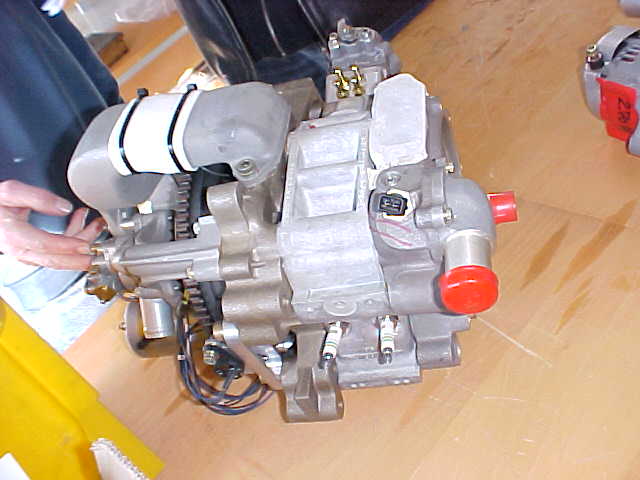
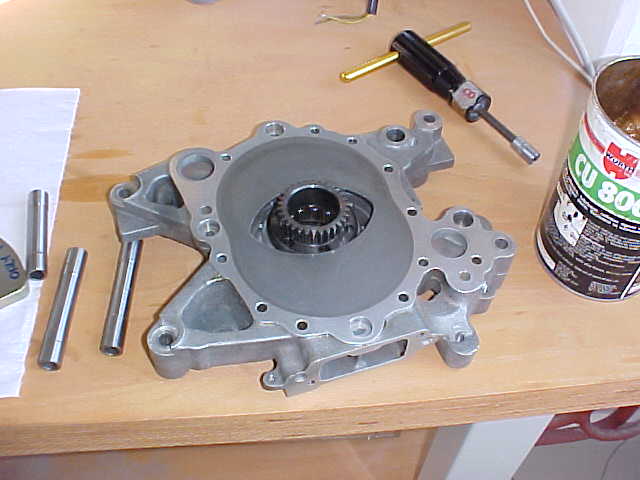
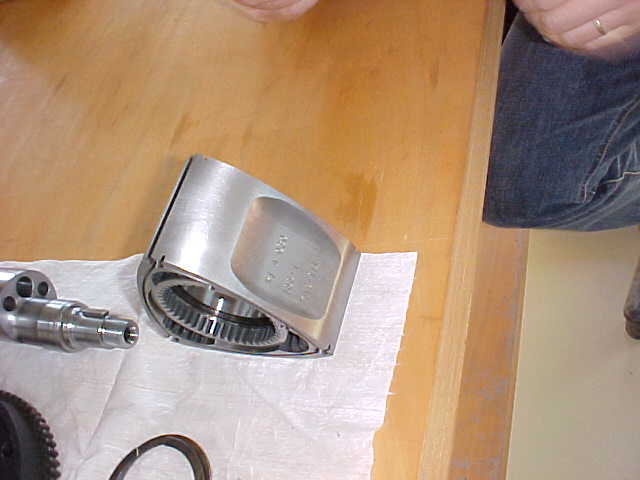
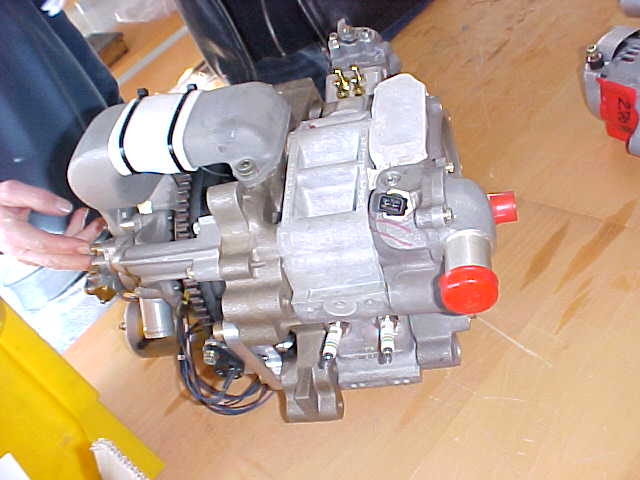
My friend wants to know where he can find out more information about the
Diamond one rotor wankel engine.  I sent him a jpeg file on the engine but
have been unable to find any website advertising or displaying these
engines. Perhaps that is because they don't want to.

Doug in Japan
I have a few pictures that Mark Wrathal and I shot at the factory.

Paul Lamar

The Rotary Engine NewsLetter.  Powered by Linux.
ACRE NL web site. http://home.earthlink.net/~rotaryeng/
Copyright 1998-2004 All world wide rights reserved.