I had a long  talk with Walt of Marple Aviation SZP today about fuel
systems. Walt has 50 years experience working on all types of light aircraft.

Fuel system failures are the leading cause of light aircraft
crashes.

Walt said most of the problems have to do with vents. People
try to run the vents back into the fuselage and therein lies the problem.
If there is a low spot in the vent line Walt maintains fuel accumulates
and blocks the vent. He suggest running the vents out to the end of the wings
and using  Andair check valves on each vent line. At high speed the the
dynamic pressure in the tank will be roughly .7 psi at 200 MPH.

Walt says it is essential that before you fly your home built you must set it up
at max angle of climb and measure the fuel flow out of the system with the fuel
rail and injectors disconnected. For a 13B NA it should be about 25 gal per hour.
35 gal per hour for a 13B turbo and 50 gallons an hour for a 20B turbo.

3/8th inch line should be a minimum. 1/2 inch line or larger for the higher power engines.
Use only AN quality fittings. No rubber hoses and hose clamps.

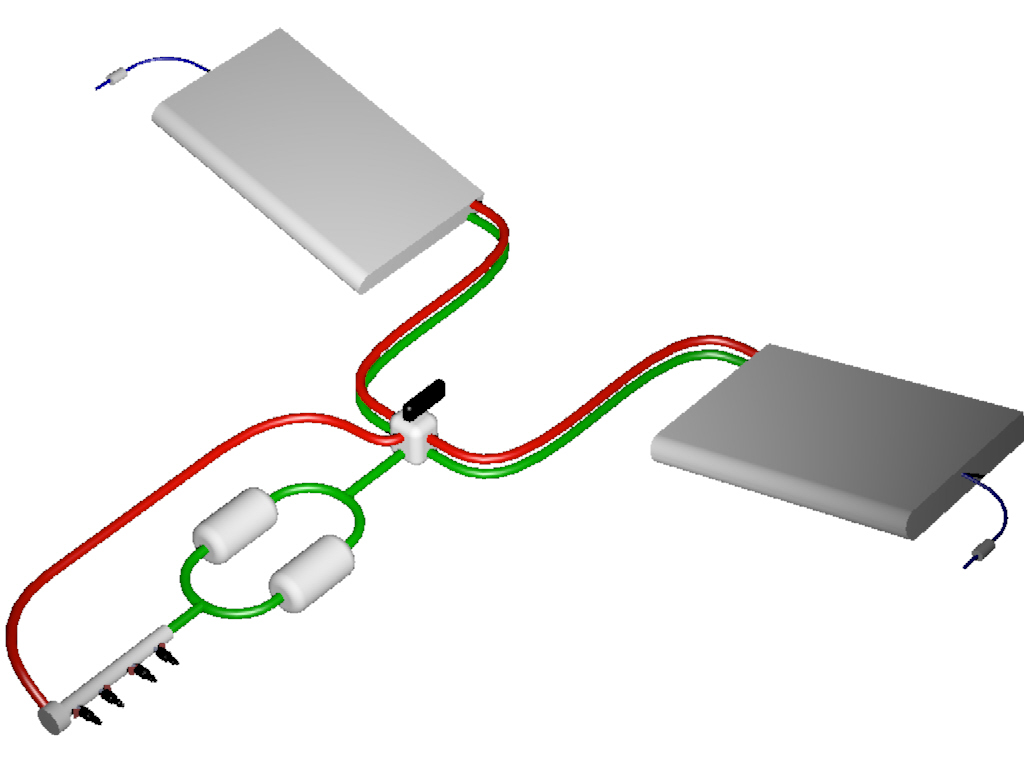
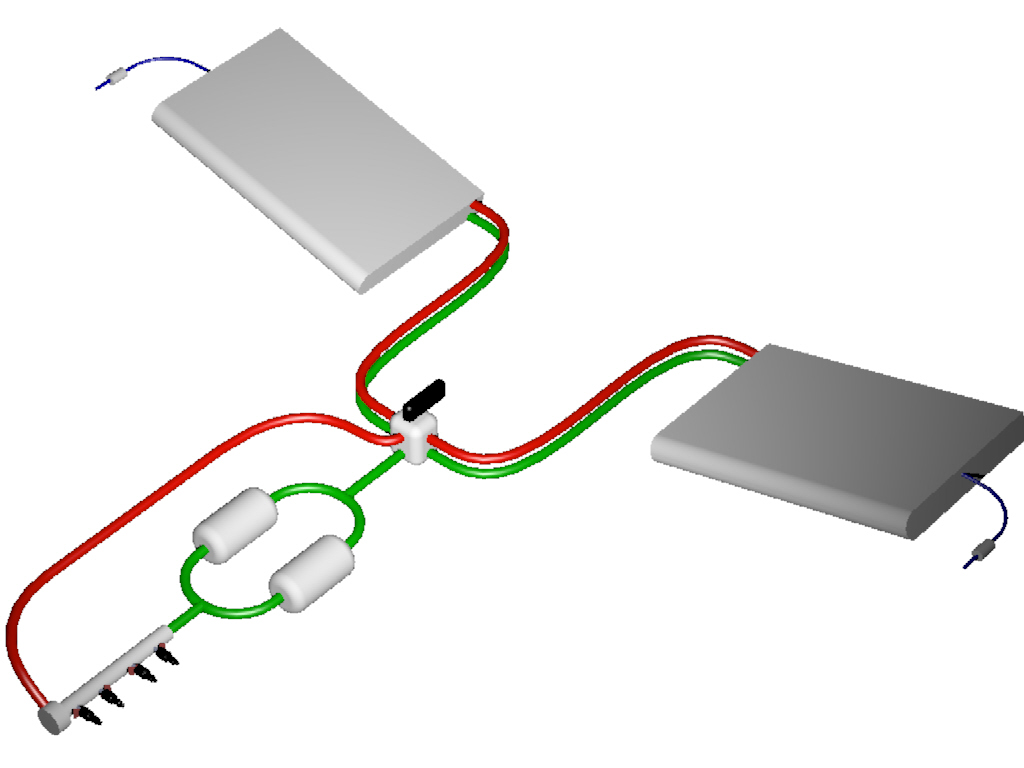
I exaggerated the dihedral in this revised 3D.

Paul Lamar
Phil White wrote:
I know that fuel injection system in cars utilize high pressure pumps inside the fuel tank, utilizing the fuel as a coolant to the pump.
        Has such a system been used in aircraft?
Seems that a 2 pump system could feed the fuel rail thru check valves and then a valve could be included in the return line to direct return fuel to the supplying tank (or might be used as a
transfer system to balance the wings, if needed).
        Since I haven't read of such a system on ACRE, there must be something I am missing.  Anyone care to educate me as to why that's not used on a/c?
Phil  RV-10 emp done, waitin' on wings
One problem with that is there is no backup pump. If you exhaust one tank
and are running on the other and if the pump fails in that tank you crash.

You could use four in-the-tank pumps. Two in each tank. One backup in each
tank. You also need to maintain these pumps so some sort of large area
sealing plate with many little screws would be necessary.

Another problem is two separate operations are required to switch tanks. One
mechanical and one electrical. This  increases the possibility of  pilot error.

The system in this 3D is as about as simple as can be IMHO. Its only unique
requirement is a two level valve.


Paul Lamar

The Rotary Engine NewsLetter.  Powered by Linux.
ACRE NL web site. http://home.earthlink.net/~rotaryeng/
Copyright 1998-2004 All world wide rights reserved.