Way back in the early 30's when NACA was just getting started they commissioned the
National Bureau of Standards to study radiator design for aircraft use.
NACA Report No. 86 Properties of Special Types of Radiators by S.R. Parsons.
They coined a term they called "Head Resistance" and assumed there were no
ducts or diffusers. In other words the radiator was stuck below or above
the engine out in the air stream. Air flowing through the rad was the
same as aircraft forward speed.

They came up with a term called "Figure of Merit" where the heat dissipation
was compared to the "Head Resistance" given in HP dissipated per HP
consumed in aero drag. Wonderfully simple and to the point.
This "Figure of Merit" number varied greatly with the speed but at 120 MPH it was on
the order of 10. No higher speeds were investigated but the trend was definitely
downward at higher speeds. In other words the cooling drag was about 10% of
the total drag on the airplane at 120 MPH. A remarkably low number. At higher
speeds it would be progressively worse.

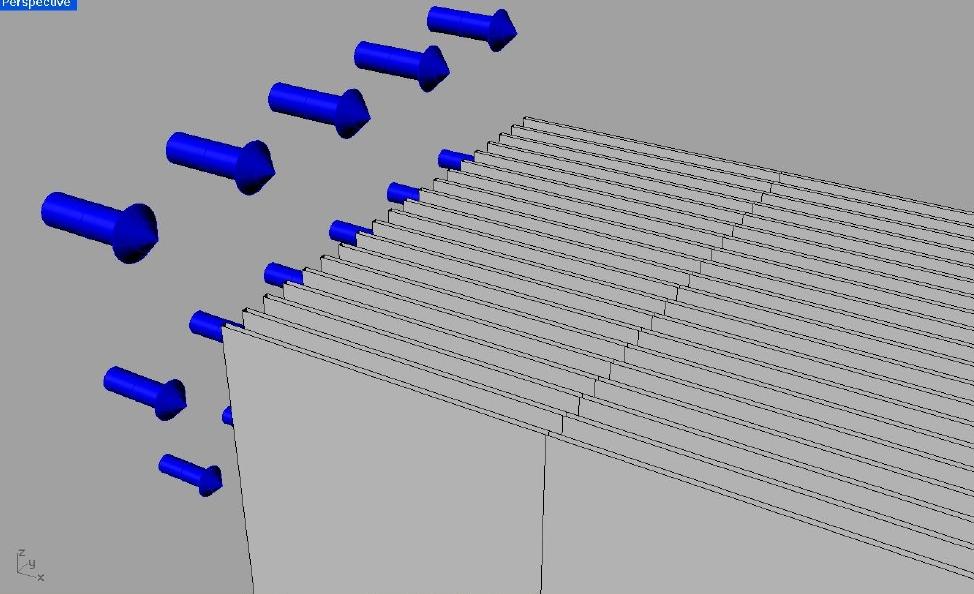
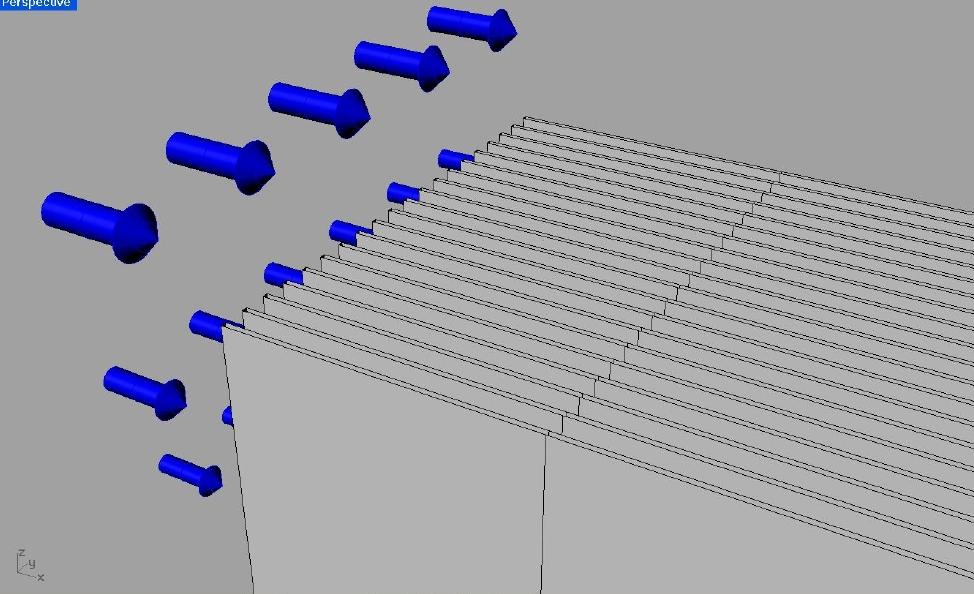
What was interesting about these radiators was the water channels consisted
of 1/16th inch thick hollow flat plates on the order of 12 by 12 inches. That made
the radiator 12 inch high by 12 inches thick along the direction of the airflow.
The thin hollow plates were spaced between 1/4 inch and a 1/2 inch. There were no
fins separating these plates so the possibility of these plates withstanding 50 psi
internal pressure was non existent. I think they assumed the cooling system was
operating at atmospheric pressure. They also felt the fins greatly increased
the Head Drag and decreased the Figure of Merit.

They discovered that rad thickness made little or no difference in the Figure of Merit.
I suspect however they did not take into consideration the increase in air
temperature as the air flowed through the rad reducing the delta T.
All test assumed the delta T was a constant 100 F I think.

No Reynolds number effects were taken into consideration.

No water pressure drop or water velocity studies were made in this report.

My point is there is possibility that this approach may have merit for use in ducts
if some of the mechanical problems for pressurized cooling systems can be solved.

However this all flies in the face of modern heat exchanger theory as exemplified
by the 20 million dollar post WW II Kays and London study. Interesting.

Also check out NACA Technical Report No. 61 Head resistance of radiator cores.

Paul Lamar

The Rotary Engine NewsLetter.  Powered by Linux.
ACRE NL web site. http://home.earthlink.net/~rotaryeng/
Copyright 1998-2004 All world wide rights reserved.