Please read this and suggest improvements.
Ask any question no matter how seemingly dumb.
That is the only way I will know if it is understood.

Paul Lamar
-"Giffen A. Marr" wrote:
Paul
Looks good with a couple of changes. You need to do a word search as you
have dropped the second "t" in pitot in a couple of places. In your third
example under "heat balance" you state "The most recent Mazda RX8 engine is
far better than this." In the next sentence you state that you have no
numbers to verify it. How can you make the statement if you do not have a
good analytical analysis? You really stress the "thin" radiator. Building an
aircraft is a continuing process of compromise. For the high speed aircraft,
such as the RV's and Lancair's, should there not be more of a compromise on
the thickness. I have kind of settled on a rule of thumb that you need about
300 cubic inches/rotor for water cooling, therefore a 20B would require 900
"3. I assume that by good design, that number could be reduced somewhat, but
by how much? If the heat rejection is 1/3 for oil and 2/3 for water, I will
need 1200 "3 of radiator volume to keep the engine cool.
Giff Marr-
Obviously my spell checker was confused about pito :) Good points. Thanks.
That was a very early rotary engine  I happened to have the heat balance
on. I need to make it clear that Mazda has made large strides in efficiency since
then. At a steady 55 MPH the RX8 gets 27 MPG despite the fact rotaries are not
known for low power efficiency. Tracy is seeing .46 BSFC or so with the RX8 engine
there fore the heat balance must be more favorable.

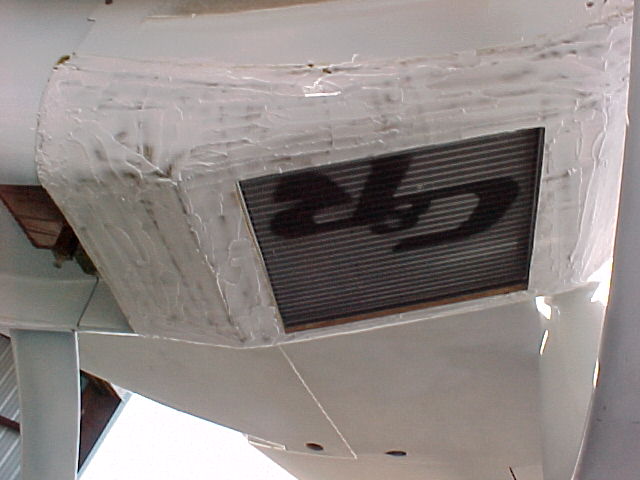
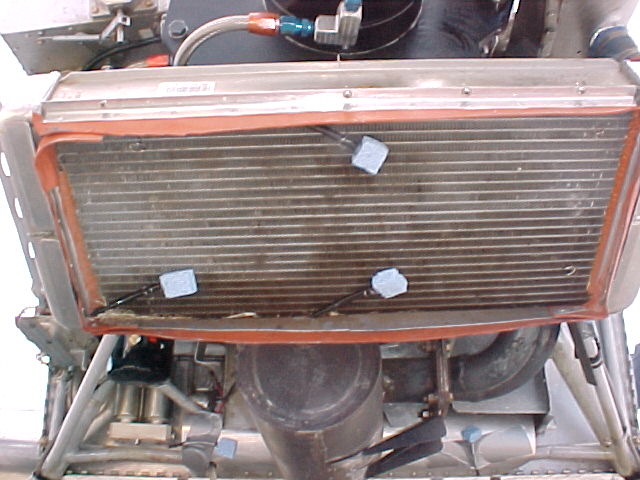
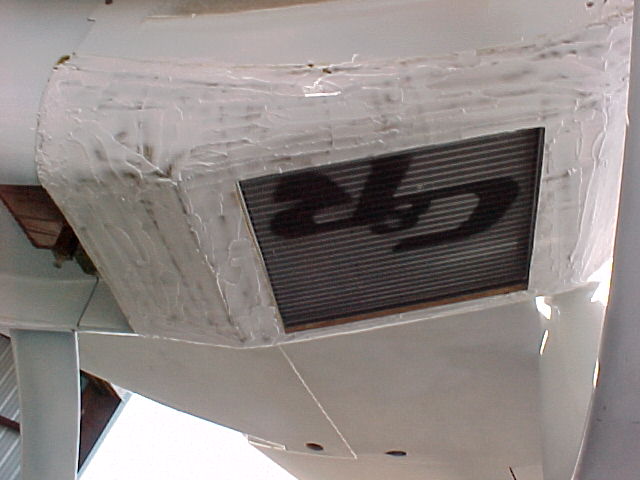
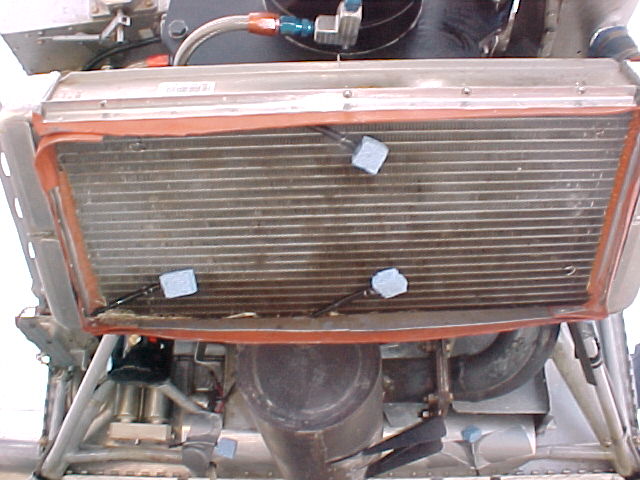
I totally agree with you on the compromise issue.Currently I AM recommending
2 inch thick and your number of 300 cubic inches per rotor. Better to shot gun
it and see what happens. Helps to cover mistakes in scoops/ducting/exit areas.
Hard to add more cooling later if it is inadequate to begin with.

On the other hand we have not seen wide spread use of thin radiators,
cowl flaps and good scoop/duct/exit  design yet so I am not convinced 300 cubic inch
per rotor will ultimately be required. Perry Mick is getting along with much less
than that (about 175 cubic inch per rotor. One inch thick.) and Chuck Dunlap is almost
there with about 225 cubic inch per rotor 2 inches thick  as I recall in both cases.

Paul Lamar

The Rotary Engine NewsLetter.  Powered by Linux.
ACRE NL web site. http://home.earthlink.net/~rotaryeng/
Copyright 1998-2004 All world wide rights reserved.