As I see it there are too possible choices.
You can use two evap cores like Tracy does or you
can use a one or two inch thick core of a wide selection of sizes.

In the first case the core total core volume is about 700 cubic inches
give or take a few.

In the second case it can be almost anything you want it to be.

Here is the correct setup for getting the most cooling out of an evap
core with the smallest size opening for minimum aerodynamic drag.
If the geometry is changed in anyway they will be less effective
and you will be in uncharted territory. The core face needs to be
perpendicular to the central axis of the diffuser. This also assumes
there is nothing straight back behind the core for at least five inches.
I assume the pressure behind the cores will be ambient (static). The
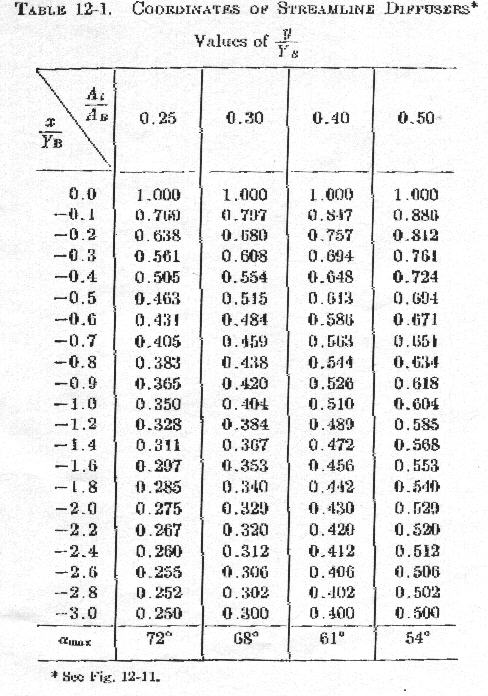
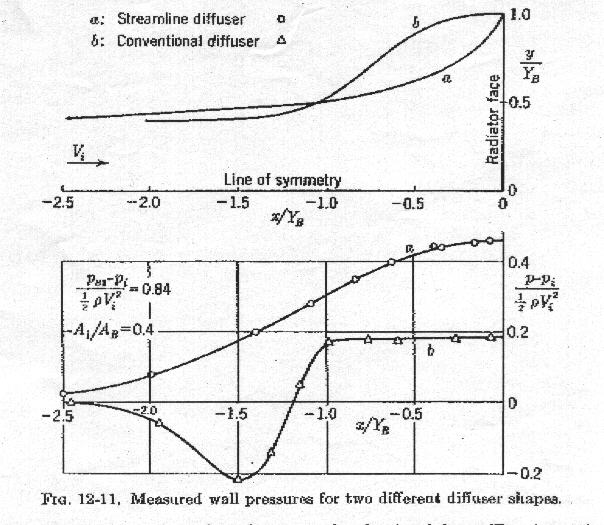
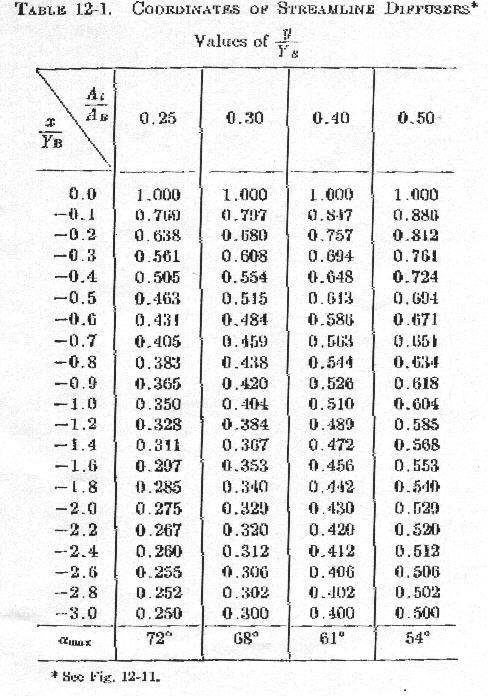
K&M coordinates of the diffuser shape are given in the chart below.

You will need two of these. Good luck fitting them under the cowl.

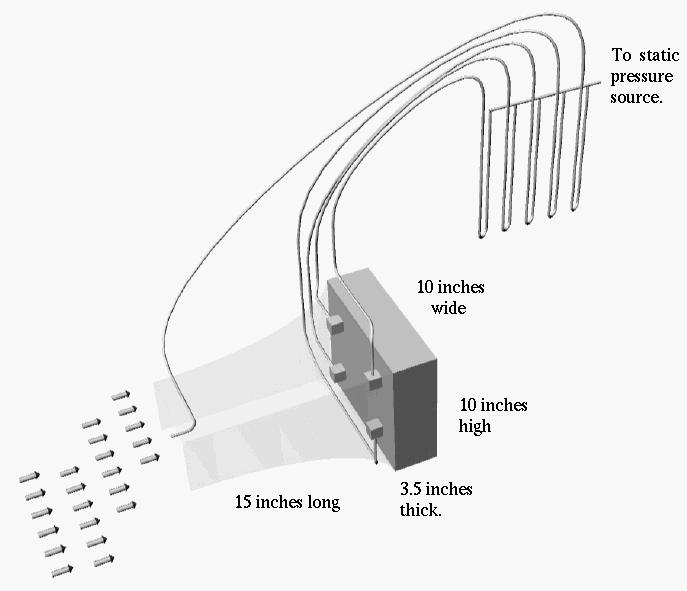
The pitto tube at the mouth of the K&M diffuser should see aircraft air speed.
If it does not the porosity of the evap core is too restrictive and a larger
opening will not help. The opening is already too large for the porosity of
the core at that air speed and power level. If it sees air speed and the
evap cores are still not cooling adequately  you could try opening them up a bit. If
you open them up and the cores still do not cool the intrinsic heat transfer
capability of the evap core is inadequate and there is nothing you can do about it.
So far nobody has done it under all climb and ambient conditions with evap cores.
I know of one person that gave up completely after many changes when he tried a
5.5 inch thick core despite a well done P51 type scoop/diffuser and air exit.
He never got out of the pattern.

On the other hand the thin rad can be adjusted in size using the same measuring
techniques to match the opening size to the porosity of the core and optimize
the heat transfer for any climb speed and power level. I assume in this case
you are using a K&L wedge shaped diffuser with nothing within 20 inches behind
the core. That means the core needs to be adjacent to one wall of the cowl
totally open to the outside air with flapped louvers to recover some of the cooling
energy.  My guess is you want to start with a core two inches thick and about 600 cubic
inches or 20 by 15 by 2.

The porosity of the core you buy, whether they be evap cores or car radiators,
you have little or no control over. You pretty much have to take what you can
get. The porosity of a one inch thick core is probably twice as open as
a two inch core for a given airspeed through the core it will probably
cool about 66% as well as a two inch core. Another guess on my part.

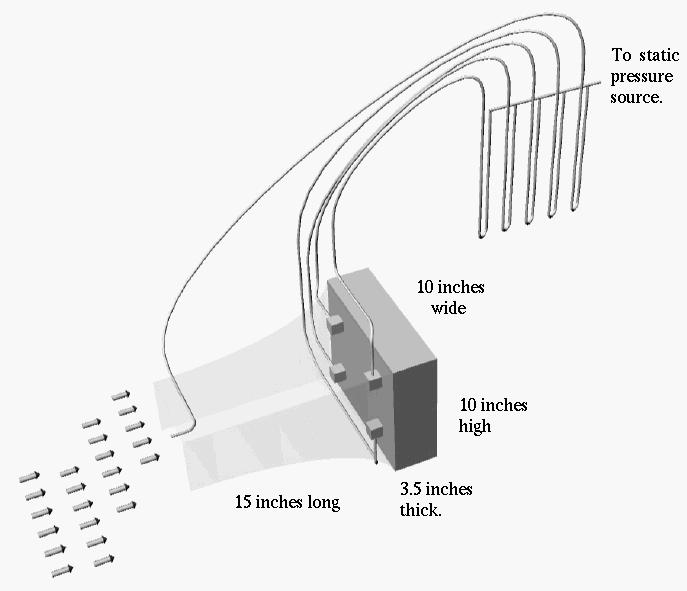
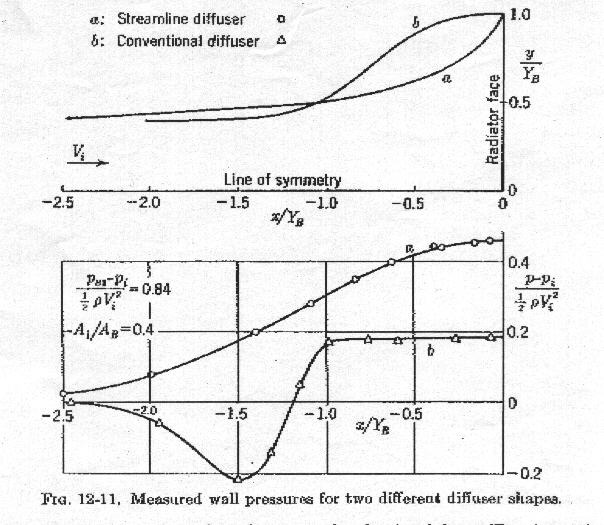
The four pressure taps on the face of the core are a check on the pressure
distribution. If they are equal the diffuser is doing its job. The magnitude
of the pressure will depend on the air speed and the porosity of the core.

Paul Lamar

The Rotary Engine NewsLetter.  Powered by Linux.
ACRE NL web site. http://home.earthlink.net/~rotaryeng/
Copyright 1998-2004 All world wide rights reserved.