Ken

I believe my Seawind wings are made of the same Dow vinyl ester
resin. No
epoxy resin on my plane I am told. I am still compiling my notes
and I
hope
to present the report of my trip to Baylor University in Waco
Texas.
Suffice
to say that their lab was very professional and well funded and
they have
numerous planes running on 95% ethanol. Two of the planes are
certified
Cessnas I they had a Velocity that went across the Atlantic on
ethanol and
a
Pitts they use locally.  One drawback to ethanol is cold starts.
They
solved the problem by installing a small heater coil to the fuel
system
that
only needs to be on for a few seconds.  They sloshed their tanks
with some
kind of sealant (I am waiting for the brand name now) and they use
appropriate fuel lines that are resistant to alcohol.  They have
been at
this research for more than 20 years and seem to have licked all
the
problems. They also have several grad students working on
different
projects
and several dyno booths.  I will have to find out more info about
sloshing
tanks.  It seems like an iffy process at best.
What percent alcohol fuel are you using Ken?

Doug in Japan
Doug if I were you I would leave the R&D to Baylor and focus
on your goal. Use aluminum tanks. You have plenty on your plate.

Paul Lamar
Paul,

Yes I have taken your advice to heart and have looked into designing
two 53
gal. tanks (one for each side) to replace the present 110 gal. wet
wing.
That challenge is even greater and involves assuring the strength of
the
wing is unaltered, as I would now have to make a good bond between
the
aluminum tank with its internal ribs and the fiberglass skins. I wo
uld
still have to slosh the tanks or Proseal them. Hey if it isn't one
thing it
another. Nah... I'll wait a bit on this one and see if a solution
:)
presents itself.

On a lighter note I am making progress on setting up the 13B to
begin turbo
compound testing next month.

Doug in Japan
Doug,

If you are using 5/95 gasoline/ethanol, as memory serves me this
mixture is
little more aggressive than pure ethanol. I'll see if I can dig up
the old
charts showing the effect of blending ethanol with gasoline on
standard NBR
fuel hose.  Data are always convincing.  Unless you plan to run 85/15
gasoline/ethanol mixtures, the Jeffco system should be plenty of
protection.
It is what Bill Schertz and I have in our wet wings. The testing I
did with
the 85/15 fuel blend (the most aggressive blend ratio) looked fine
after
about one month of exposure. No cracks or crazing. Either fluid
alone is
not that bad as far as exposure to polymers. There is something
magic about
the 85/15 ratio that really tears up polymers. As far as my wings
go, unless
I run gasahol, I'm not in the least concerned about leakage through
the
Jeffco. Avgas and standard mogas do not present much of a problem
with
Jeffco.

Building and then sealing aluminum tanks would be a real pain and may
leak
more than your wet wing ever would. If you really want to go that
route, I'm
fairly certain automotive fuel tanks are made from high density
polyethylene.
Maybe somebody could mold a couple HDPE tanks for you or you may find
some
existing HDPE tanks that could fit your wing geometry. I've never
looked so
have no idea of what's available.

Good luck,
Charlie Smith
KIS Cruiser 4021
Charlie,

Thanks for your advise and warnings. I share your sediments, ... I mean
sentiments, and plan on initially using 5/95 blends gasoline/ethanol
like
Baylor University is doing and benefiting from their know-how. A year
from
now with Baylor Univ.'s assistance I'll try diluting the ethanol with
biodiesel.  In the formulation of biodiesel about 20% ethanol or
methanol is
used along with traces of sulfuric acid (in the acid phase of the two
step
method) and then caustic soda/methanol or KoH/ethanol in the base phase
to
crack the fatty acids and convert them to esters. Esters are drain off
the
top and further washed and micro filtered.  Biodiesel readily mixes with
ethanol and  has a built-in lubricating quality when run in 50% or
greater
concentrations in diesel engines.

These high concentrations of heavy fuel probably will not bode well for
the
rotary engine performance but perhaps I can find a compromise that has
some
lubricating merit at say 20/80 blends???

In reviewing my Seawind wing assembly manuals today I came across a lot
of
calls for aluminum drain plates, and aluminum pipe.  Not good for high
concentrations of ethanol.  The SeaWing wet wing uses the leading edge
between the "D" shaped ribs as a series of eight chambers that are
grouped
into "main"  (6 chambers) and "auxiliary" (two chamber) tanks to prevent
fuel sloshing all the way out towards the wings. I thought incorporating
baffles in tanks prevented that but I am lacking the expertise on the
nature
of fuel flow in uncoordinated flight attitudes like say a side slip to
landing. The wings do have a 3 degree dihedral which should convince the
fuel to go the correct way during coordinated flight.

Of course it is feasible to have HDPE tanks  blow molded to fit those
cavities and connect them together or ditto for welded bladders. For
fuel
line I'll go with stainless or Kynar with the later being much more
flexible.

The manual suggests coating the insides of the tank with DOW Derakane
470-36
if the plane will be running on unleaded or in tropic environments where
internal temps. could get up to 125°F. This resin probably won't
be strong
enough for my purposes. Obviously after the top skin goes on, only two
of
the fuel chambers on each side can be accessed, to further coat the tank
leading edge bond seam and the upper part where the skin bonds to the
ribs
and spar.

Another option is to install   1 inch  metal inspection screw-in ports
in
the top of each chamber which I could conceivable..... Uggh!!...
introduce
a sealing liquid to slosh or squirt around. I would need to add a
coloring
agent to verify I had an good uniform coating. Might end up screwing up
the
fuel

About Baylor Univ.,

They are a multi-million dollar funded branch of the university which
tries
to sample air quality as well as develop fuels for aircraft that are low
polluting.  They are situated in the heart of oil country but seem to
have
good results and good press.

They modified the Pitt's I0-540 Lyc. engine and were able to install
helicopter pistons and raise the compression ratio to 11:1. because of
the
low vapor pressure of ethanol  The aluminum tanks they used were sloshed
with a chemical to prevent the slight oxidizing effect ethanol has on
aluminum.  In performance the engine was producing 300Hp and now is
putting
out 350Hp.

The spark is modified and as Lynn H. can surely attest to, the spark
duration is longer.  One problem I mentioned on a previous post was the
difficulties in starting the engine in temperatures under 55° F.

They solved it with two different approaches.
1.  Start on gasoline from a small tank and the switch to alcohol.
Nah!:(
2. Use a 300 watt fuel line heater from a Dodge 'Celebrity' and turn it
on
for only 10 seconds.  Yes...This way seems more elegant.

I was shown one of their dyno rooms that had a small 4 cylinder aircraft
engine on the stand and besides the usually array of pipes and
intravenous
drips, they had pressure sensors rings under each spark plug. One of the
researcher's discovered that each power stroke exhibits  a unique
pressure
signatures  and as such can visually indicate  desirable tuning
characteristics. I am not sure but I guess they might have found a way
to
monitor near detonations events as well. The researcher mentioned
something
about the certain spikes showing up in the burning event.

In order to catch this moment the grad student wrote his own software
and
used a sampling rate of 44,000/sec. or roughly 1000 times per
revolution.
Now all I have to do is find the memory card adapter so I can send you
some
pictures.

Doug in Japan
Doug,
Baffles are a good idea and easy to incorporate!!
George (down under)
 Paul and everyone,

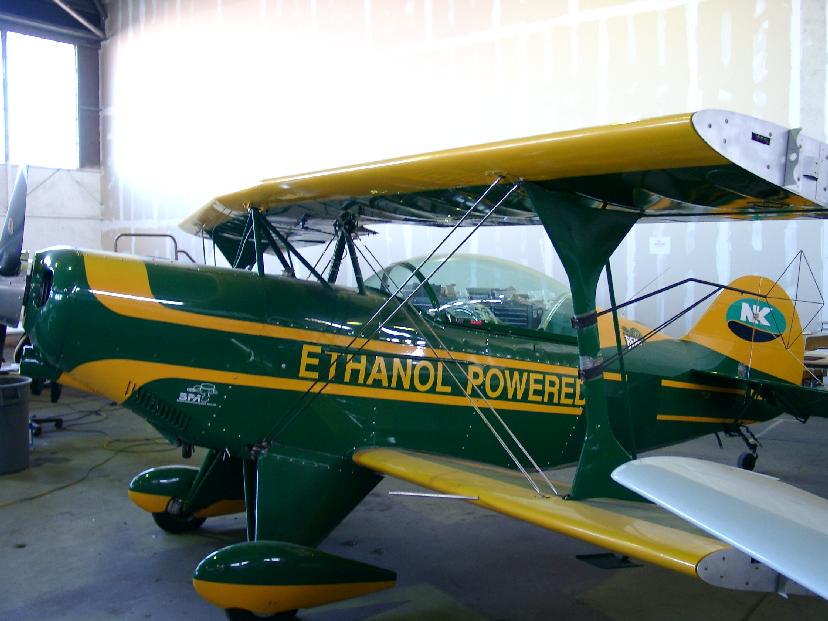
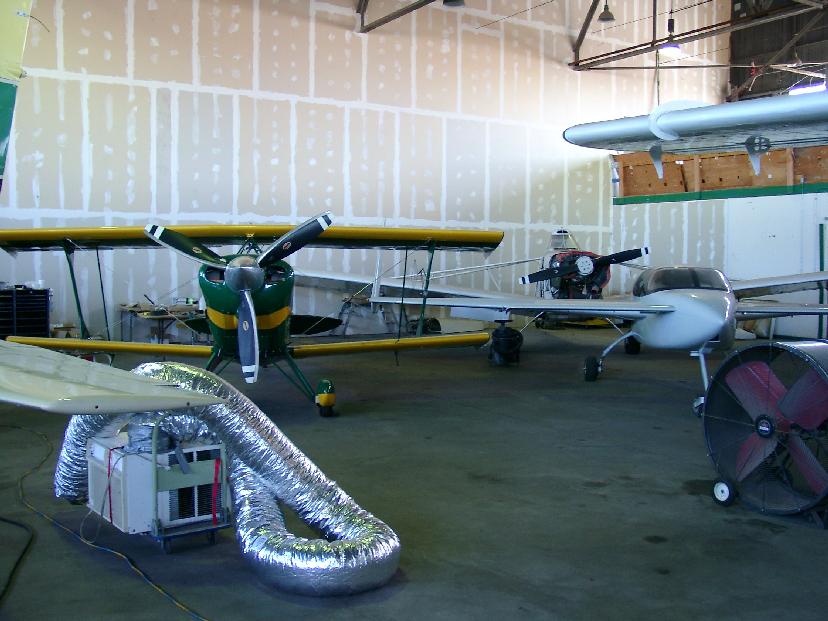
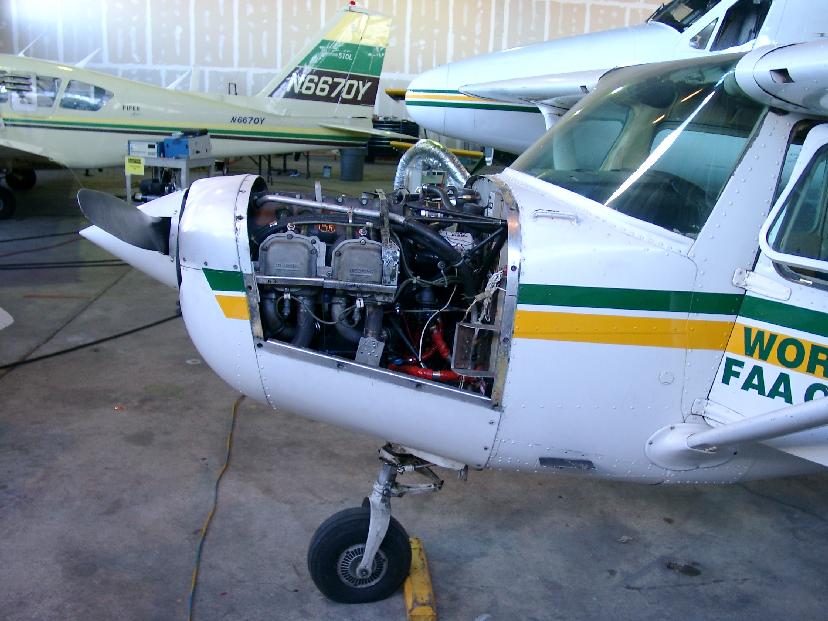
Here are a few of the planes already running on ethanol.  The C-152 and 172
are certified. Somewhere in this hanger is an turbo jet twin Commander?
running on biodiesel.  Interesting place.  More info. at Baylor Univ. in
Waco Texas  or see        http://www.ethanolmarketplace.com/
for ethanol made from corn.  Now researchers are finding ways to make it
from many different organic waste materials. If you

Doug in Japan
The Rotary Engine NewsLetter.  Powered by Linux.
ACRE NL web site. http://home.earthlink.net/‾rotaryeng/
Copyright 1998-2004 All world wide rights reserved.