Charlie,

Going back to 27 th Feb 2002, you recommended  a 2 part polymer,
polysulphide from Morton Chemical.
I kept this info as I know how much a problem this can be.

There are also coatings recommended and sold by Wicks and Spruce(
can't
remember what they are).

So what do you think of this Jeffco Novelac ?
George (down under)
George,
Polysulfide is a type of rubber.  I have never tested it in gasohol
but
it does have an excellent reputation for being resistant to very, very
aggressive solvents.  Whether this would extend to gasohol fuel is not
personally known to me but the performance of fluorinated
polymers are well
characterized.  The automobile industry does not use polysulfide for
one
reason, it is extremely expensive and it is not promoted by the
manufacturer.  BTW, Morton does not make this material anymore.
I believe
they got out of the business a year or two ago.  I understand it is
being
made in France; probably by a division of Total.
I used the Jeffco product to seal my tanks based on how it performed
in
the gasohol fuel testing I did. Gasohol is deadly compared to
most anything
else you might put into the tank.  I wanted to use polysulfide but it
was
going to cost about $400 to go that route and I did the job
with Jeffco for
about $100. The Jeffco is just not nearly as flexible as polysulfide.
As a side note, I understand from my colleagues in Europe
that biodiesel
(RME) can also be quite aggressive in the high pressure common rail
fuel
injection systems.  It seems they run under very high pressure
causing the
fuel to get hot as it recirculates.  With the presence of water, the
fuel
can decompose to form a highly oxidizing acid that attacks rubber
components.  This may be something to keep in mind when
deciding on rubber
parts or inspection schedules for those types of fuels.
Charlie Smith
KIS Cruiser 4021
Charlie,
Thanks , that clears that up for me !
George (down under)
Charlie
You are definitely right about RME. If can be quite aggressive IF the
producer didn't properly process the fuel. Sometimes glycerol remains and
that is definitely water absorbent and combined with traces of caustic
soda,
and soap and methanol is corrosive and can carbonize the engine. It it so
easy to make that sometimes people make it to easy and don't test it at
each
processing stage

Doug in Japan
The fuel tanks in the wings I am currently flying on are made from
Dow 411-350 vinyl ester resin and I did not slosh the tanks and have
had no problems and I use gasohol.  I am now making a new set of
wings and have considered sloshing these  tanks.
Also note that the Randolph sloshing compound that is alcohol
resistant is  vinyl ester based.

Ken
Ken

I believe my Seawind wings are made of the same Dow vinyl ester resin.  No
epoxy resin on my plane I am told.  I am still compiling my notes and I hope
to present the report of my trip to Baylor University in Waco Texas. Suffice
to say that their lab was very professional and well funded and they have
numerous planes running on 95% ethanol.  Two of the planes are certified
Cessnas I they had a Velocity that went across the Atlantic on ethanol and a
Pitts they use locally.  One drawback to ethanol is cold starts.  They
solved the problem by installing a small heater coil to the fuel system that
only needs to be on for a few seconds.  They sloshed their tanks with some
kind of sealant (I am waiting for the brand name now) and they use
appropriate fuel lines that are resistant to alcohol.  They have been at
this research for more than 20 years and seem to have licked all the
problems. They also have several grad students working on different projects
and several dyno booths.  I will have to find out more info about sloshing
tanks.  It seems like an iffy process at best.
What percent alcohol fuel are you using Ken?

Doug in Japan
Doug if I were you I would leave the R&D to Baylor and focus
on your goal. Use aluminum tanks. You have plenty on your plate.

Paul Lamar
Paul,

Yes I have taken your advice to heart and have looked into designing two 53
gal. tanks (one for each side) to replace the present 110 gal. wet wing.
That challenge is even greater and involves assuring the strength of the
wing is unaltered, as I would now have to make a good bond between the
aluminum tank with its internal ribs and the fiberglass skins.  I would
still have to slosh the tanks or Proseal them.  Hey if it isn't one thing it
another.  Nah... I'll wait a bit on this one and see if a solution :)
presents itself.

On a lighter note I am making progress on setting up the 13B to begin turbo
compound testing next month.

Doug in Japan
Doug,
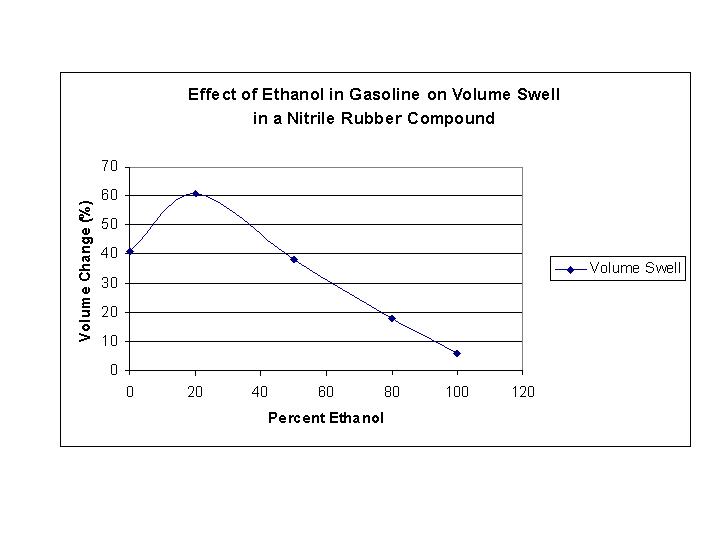
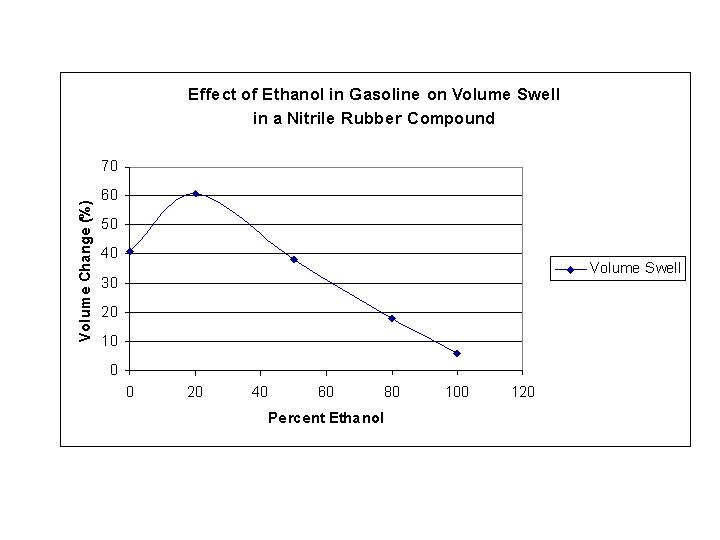
If you are using 5/95 gasoline/ethanol, as memory serves me this mixture is little more aggressive than pure ethanol.  I'll see if I can dig up the old charts showing the effect of blending ethanol with gasoline on standard NBR fuel hose.  Data are always convincing.  Unless you plan to run 85/15 gasoline/ethanol mixtures, the Jeffco system should be plenty of protection.  It is what Bill Schertz and I have in our wet wings.  The testing I did with the 85/15 fuel blend (the most aggressive blend ratio) looked fine after about one month of exposure.  No cracks or crazing.  Either fluid alone is not that bad as far as exposure to polymers.  There is something magic about the 85/15 ratio that really tears up polymers.  As far as my wings go, unless I run gasahol, I'm not in the least concerned about leakage through the Jeffco.  Avgas and standard mogas do not present much of a problem with Jeffco.

Building and then sealing aluminum tanks would be a real pain and may leak more than your wet wing ever would.  If you really want to go that route, I'm fairly certain automotive fuel tanks are made from high density polyethylene.  Maybe somebody could mold a couple HDPE tanks for you or you may find some existing HDPE tanks that could fit your wing geometry.  I've never looked so have no idea of what's available.

Good luck,
Charlie Smith
KIS Cruiser 4021
Doug,

I have attached a graph which I reproduced from a 1979 technical report at my company detailing the effect of ethanol content on a typical nitrile compound similar to what would be used in a fuel hose.  Note how it peaks at 20% in this study.  This is typical of alcohol/fuel blends.  Notice that at 95% ethanol, the volume change is nearly the same as 100% ethanol.  That change is less than half of what pure gasoline causes.

Charlie Smith
KIS Cruiser 4021
The Rotary Engine NewsLetter.  Powered by Linux.
ACRE NL web site. http://home.earthlink.net/~rotaryeng/
Copyright 1998-2004 All world wide rights reserved.