The big problem is the several airplanes powered by Power Sport
P-port
engines don't show up at the big air shows and they don't race. Is
something wrong?

In the good old days Everett Hatch and Allan Tolle would show up at
most
large air shows. Allan would blow everybody away in the time to
climb
and go 238 MPH in the Sun 100. Everett untimely death set us back
at
least 10 years and maybe 15 at the rate we are going.

Paul Lamar
Matt Prather wrote:
Is there a longevity cost on a p-port engine?  Other than turning it
faster (which isn't directly a problem), are there any problems with
the rotor seals?

Regards,

Matt---
Nobody has worn out a rotary yet. Fractured apex seals from
detonation
yes.
Swallowed bolts yes. Lost all oil and engine failed or caught fire
from
bad plumbing
or bad oil coolers  yes. (many times). Lost all coolant and had to
land
yes.
(several times) But nobody has worn one out yet.

Paul Lamar
Paul Matt,
There has been some assertions to that on some web sites, even
Francois is
under this impression.
I personally believe it stems from  the racing game where extremely
high RPM
where PP's excel, do wear our engines faster. As well as the factors
of
detonation etc.
However at our RPM range and conditions it's only breathing better.
In fact I think the blast of fuel and air on the apex seal helps to
keep
them cool. Wasn't that why the oil injection was directed at the
centre of
the Apex seal, to cool the hottest part of the seal!
George ( down under)
When Mazda won the Leman 24 hour race race they disassembled the 2"
p-port engine and
and attempted to measured the wear. They found NO discernible wear as
the
dimensions of the parts were within the manufacturing tolerances of
the parts.
Here is an RPM histogram. This engine generated 173 HP per rotor
Normally
aspirated. In two rotor terms for the arithmetic challenged that is
345 HP.

Francisco Iannette told me using his ceramic apex seals the projected
life
of the engine was 20,000 hours in constant speed generator service
based
on a several thousand hour test and by measuring the apex seal wear
very
very carefully.

Star Mazda rent a spec race cars run for several 10 race  seasons
without touching
the engine. These cars are now within two seconds of the lap times of
five times more expensive Toyota Atlantic cars and use dead stock RX8
engines.
Failures if they do occur are caused by external factors. However
lots can go wrong. Missed or inappropriate shifts can force over
revving.
Apex seals run at 500 degrees F or higher. Dirty oil will wear the
seals
faster. Over heated oil will break down. Mobile one full synthetic I
happen
to know for a fact due to my  own test will withstand oil temps  twice
what
non synthetic oil will withstand. Failure of the oil injection pump
and plastic
oil lines is common in old Mazda street cars. That is usually the
cause of
the demise of street cars. You see many old RX7's with over 300,000
miles on them.

That is not to say apex seals do not wear. They do but it is difficult
to get any sort of handle on that as you would probably have to run
several engines for well over 3000 hours in typical aircraft use
in very controlled conditions to find out. Tracy ran his first engine
for 950 hours as I recall and due to a design flaw in the Ross gear
box it failed the Mazda e-shaft thrust bearing so he had to rebuild
the engine. He opted for a more powerful version. I saw the apex seals
and they were far from worn out. I did see a little wear on the sides
of the seals but I think Tracy was not running 2 cycle oil in the fuel
at that time. He was using Marvel Mystery oil. My test indicated that
MM oil was less than well suited for lubing apex seals with a low break
down temp. The bottom line is we don't really know the life of the
engine.
Could be for the rest of your life.

Paul Lamar
It is important to note that PP engines have more power than any other
configuration starting at about 2000 RPM.  They are not low RPM dogs,
that is a myth.  I also dont' see how they would be harder on apex
seals, remember that the exhaust ports have been peripheral until very
recently.

Francois, I hope Mistral will develop Peripheral Port engines soon, it
will make your power to weight ratio even better.

Hans
I have driven a long tuned p-port manifold NSU RO80 in Europe and I will
tell you it pulls fine from low RPM.

Paul Lamar

-----------------------------------

Hello Hans,

Peripheral porting undoubtedly gives the best power to weight ratio, I fully
agree with you on this point.  We may do a PP 3-rotor engine for Reno some
time in the future (we have a couple of racers ready to put them on their
plane).  But Mistral Engines chose to position its engines as the best in
reliability, longevity and low maintenance, not sheer power.  It's a
business-oriented choice.  I am not saying that peak power is unimportant,
only that we don't want to sacrifice what we consider to be of prime
importance for 10 or even 20% more power (except, as I said, for racing
applications).  We believe that PP technology is not best for reliability
and longevity of the apex seals.  An unproven statement, I concede. I'd love
to be proven wrong.

Best regards to all,

Francois

PS:  a friend of mine as 2 NSU RO80's for sale.  Anyone interested?
I would be but I have no room to park it in my hangar or garage.

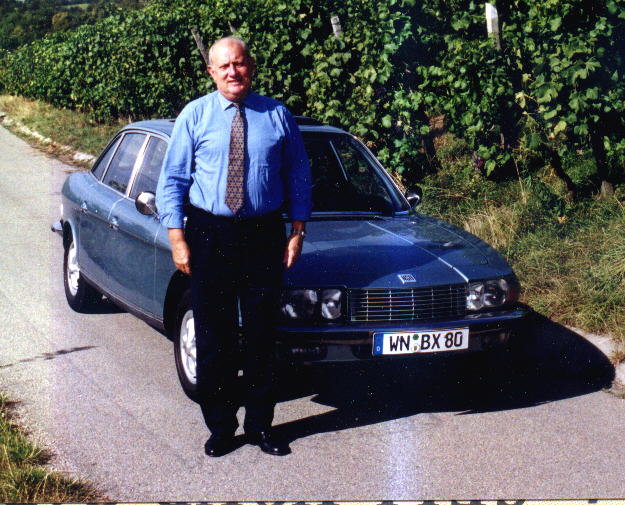
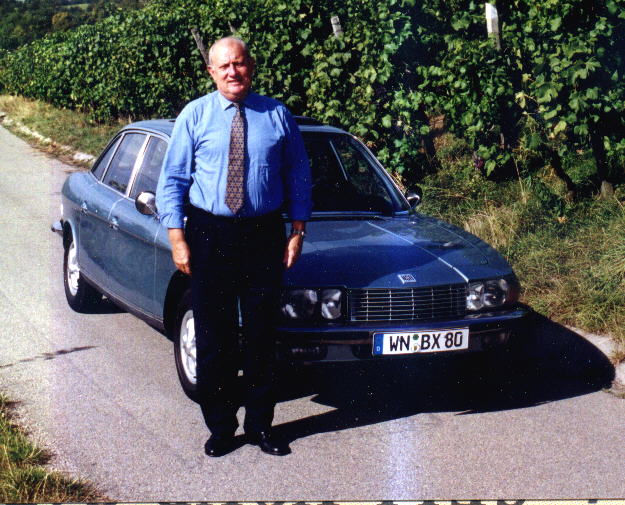
Here is a picture or Juergen Bax and his RO80. This is the one I drove.

BTW I disagree on apex seal longevity due to the cooling effect on
the apex seals as they pass the intake port. My guess is they
would run at a cooler temp than the current 2nd and 3rd gen side intake port engines.
The apex seals in the RX8 engine probably run even cooler than a P-port engine
as the side exhaust port no longer subjects the apex seals to hot gases.
Now it is the side seals you need to be concerned with :)

Paul Lamar

The Rotary Engine NewsLetter.  Powered by Linux.
ACRE NL web site. http://home.earthlink.net/~rotaryeng/
Copyright 1998-2004 All world wide rights reserved.