If you had perfect fuel vaporization and distribution you still would
not get much better than about .45 BSFC due to the fact the engine
is a rotating combustion chamber engine. As such this means extra heat
is lost to the coolant. This is also the reason the engine can tolerate
high HP through turbo charging without melting.

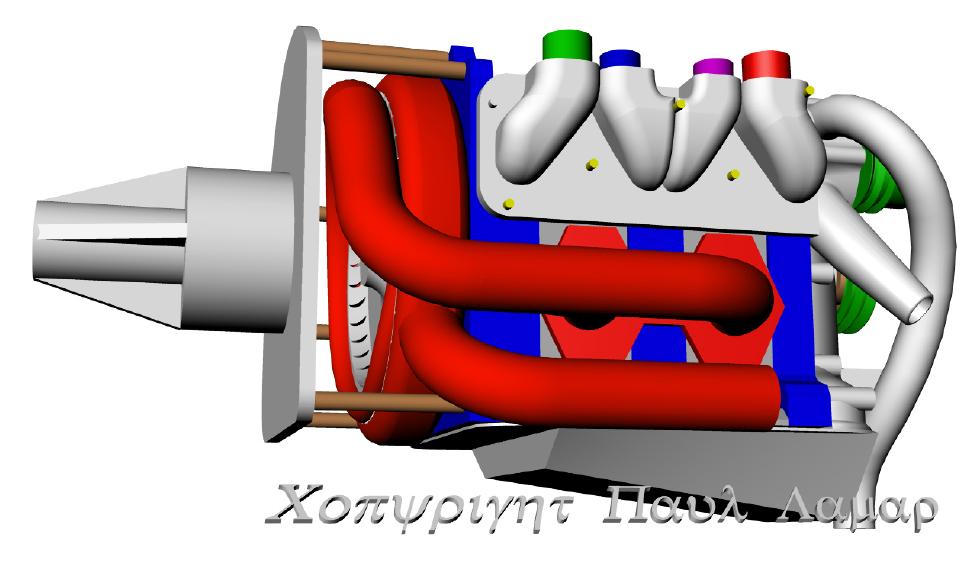
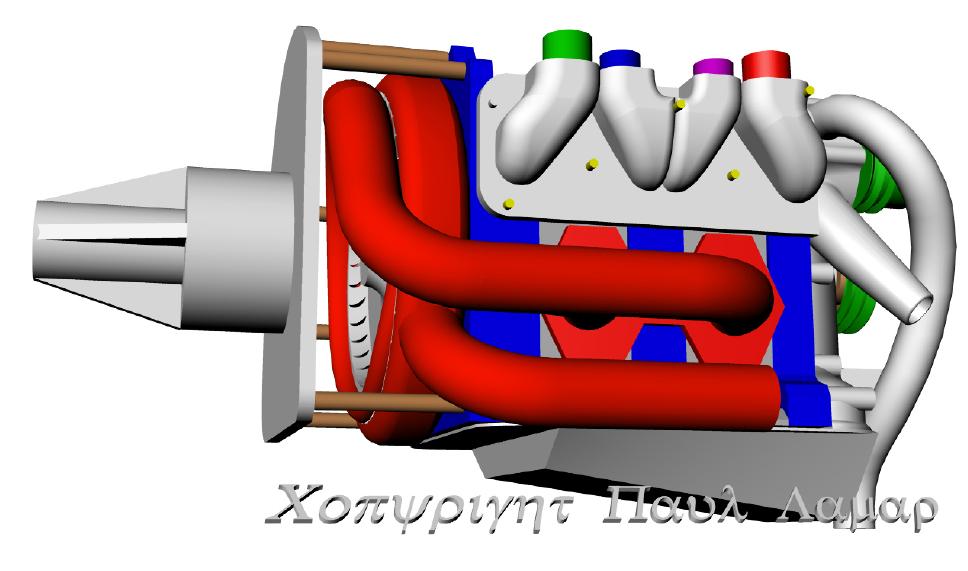
This NA configuration is the simplest way to turbo compound. The rotary is unique
among intermittent combustion engine in that it inherently
operates in the 5,000 to 10,000 RPM range. The same RPM range as a 12 inch gas
turbine. No gear box required. Mark Wrathal does not think it will work
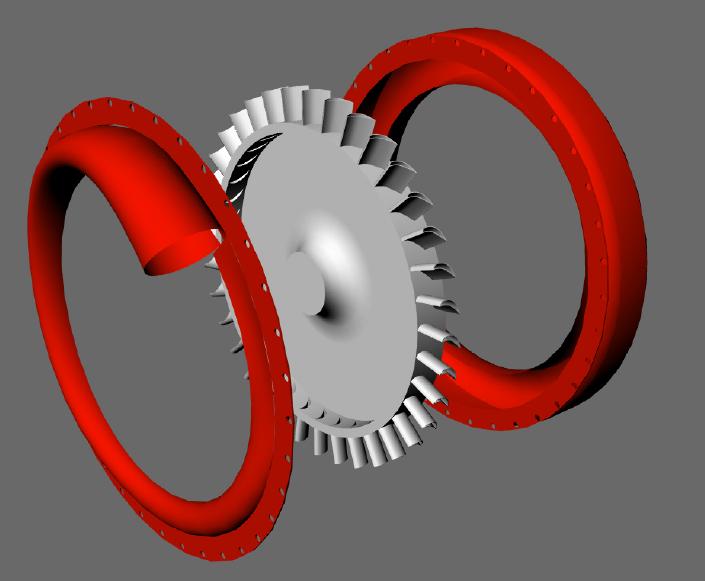
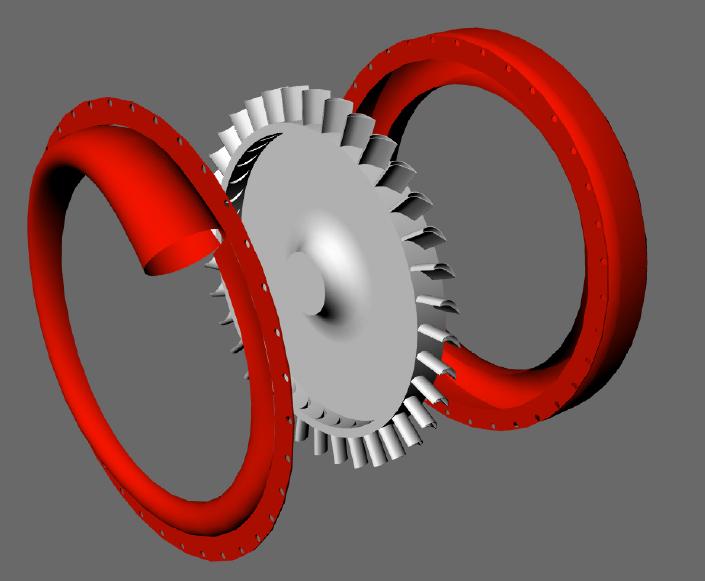
but I am not convinced yet. The blades shown here are probably way too
long. I'll do a shorter blade version 3D in the future. Note the hollow air cooled
blades. Exhaust collector is not shown yet. A new GM starter/alternator
can be used to start the engine.

The turbo compound rotary is inherently more valuable than an aircraft piston
engine because the direct operating cost can be up to 20% lower in fuel cost.
Not to mention the much longer TBO with ceramic apex seals. No small pure
turbine engine can compete anywhere near this HP level in cost or BSFC.

The consequent 20% increase in range of the aircraft is something money can't
buy up until now.  Although the engine weight will be somewhat higher there will also
be available 20% more HP (40 HP) for take off. All this assumes one can match the level
of technology Curtiss Wright achieved with the R3350 TC 55 years ago.

Paul Carey in WA has an R3350 TC blow down turbine and intends to marry it with his
blown 3 rotor. Each of the three R3350 TC turbines generated 300 HP so Paul's
turbine is about right for his 1200 to 1400 HP blown 3 rotor.

Paul Lamar
Paul, that is the best turbo compound layout I've seen yet!  Could you
marry the GM starter/alternator to the turbine 'wheel'?

Since it runs at relatively low RPM, could it be manufactured cheaper?

One step closer to the Rotary Reno Racer...

Chris Cosman
It replaces the alternator and is belt driven just like the alternator.
Saves a bit of weight but needs an electronic controller.

Paul Lamar
Here is the complete 321 SS sheet metal.

I think the turbine part is not as impossible to make as it looks.
I think Inconel tubing can be pressed into bucket shape using a hydraulic
press and male and female dies. They are only about an inch long.
Then the buckets can be tig welded to a 321 SS rim. Not totally out
of the capabilities of a home builder. It is possible to have the
outer rim of the wheel pierced in the shape of the buckets using
a computer controlled laser and a rotary table. If the ends of the buckets
are expanded slightly they a will be retained in the rim without
welding possibly.

The high stress turbine disk itself can be made from PH 17-4. A half
inch thick piece 12 by 12 is about $90. Yield strength is 145,000 psi.
It needs to be tapered in a lathe. Perhaps ground and polished
to increase the fatigue strength

The thing to do is copy a junk R3350 TC blow down turbine to get us
in the ball park. There is a pile of them over at Camarillo airport.
I'll stop by and see if I can pick one up.

Paul Lamar

The Rotary Engine NewsLetter.  Powered by Linux.
ACRE NL web site. http://home.earthlink.net/~rotaryeng/
Copyright 1998-2004 All world wide rights reserved.